APPEAR AS Confidential 300/352
12.1.2 CONFIGURING PORT-BASED INPUT REDUNDANCY
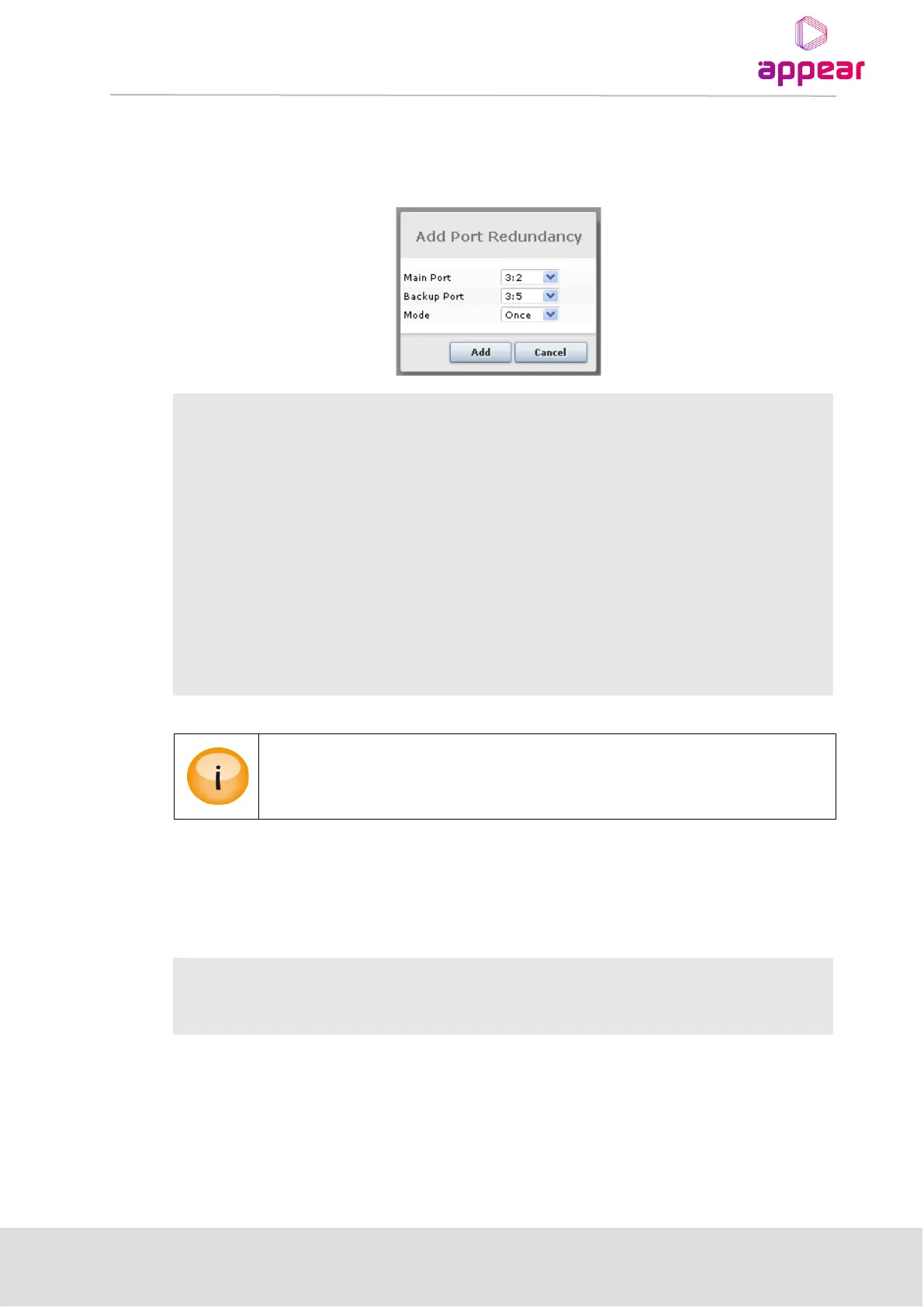
Port-based redundancy is set up under the Redundancy → Input node. Click on the Add Port button and the
Add Port Redundancy dialog below will appear.
Select a suitable mode for each redundancy pair. The following modes are available:
Once – Switch from main to backup when an alarm occurs on main and remain
there
Floating – Switch when an alarm is set on the service that is active, ignore clear
alarms
Reverting – Switch to backup only if there is an alarm on main but not on
backup; switch back when alarms on main are removed or set on backup (this is
the recommended mode).
2. When using port-based input redundancy, it is intended to have the same input structure for
both main and backup ports.
3. Port-based input redundancy applies to transparent transport streams and imported PIDs.
12.1.3 ALARMS THAT CAUSE SWITCHING
The system will automatically switch from main source to backup source based on the presence of alarms that
are selected in the Redundancy Switching Triggers page below.
Parameter is added to mention the number of seconds for the module to switch
connections from one backplane to another when alarm occurs.



 To Next Page