DMG 3200/3100/3000 – User Manual
Page 110 (306)
6.3.1 Scrambler Module Configuration
The scrambler module runs both the SCS functionality and the scrambler functionality on one
single card. The Scrambler supports both the DVB-CSA and AES scrambling algorithms – but
only one at a time.
The scrambler card supports up to 250 scrambled services, with a maximum total bitrate of
850Mbps.
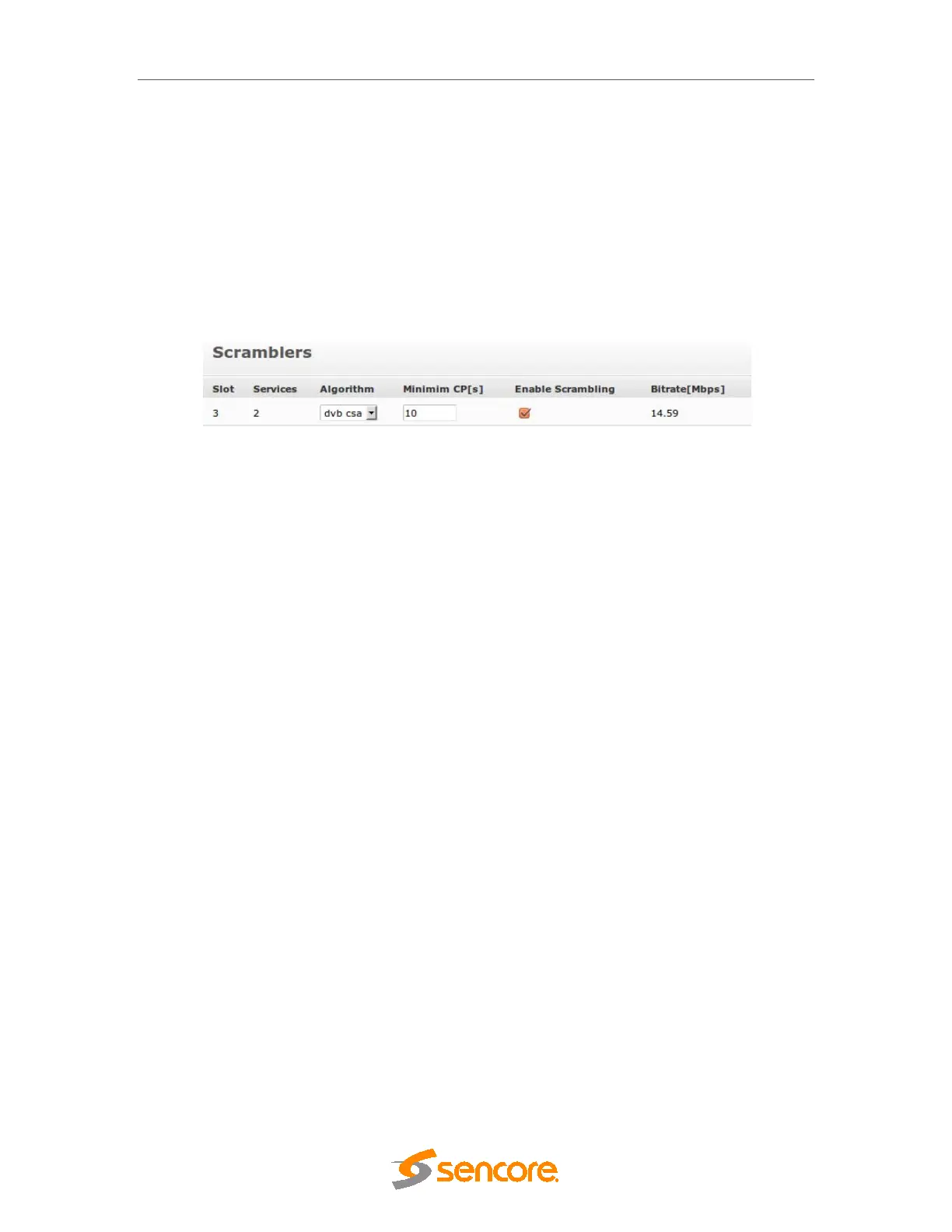
An overview of the scramblers present in the unit is available in the Conditional Access node
in the Navigation Tree.
Figure 6.18- Scramblers Overview
This configuration page gives a general overview of how many ECMs and EMMs have been
configured as well as providing a dialog to select which scrambling algorithm to run on the card
(available algorithms depend on the licenses and SW version installed). The options provided
here are based on the information reported by the scrambler card during startup.
6.3.1.1 Configurable crypto period on the scrambler
It is possible to configure a user definable minimum crypto period (CP) per scrambler card,
under Conditional Access → Scrambling (Figure 6.18). The minimum crypto period default is
10 seconds, which is the minimum crypto period supported, but can be set as high as 6553
seconds.
If the nominal CP duration is changed as a consequence of a user changing the minimum CP,
the change takes effect the next CP. Thus, the current CP is not interrupted (neither shortened
nor lengthened in time).
6.3.1.2 Selective Scrambling/Partial Scrambling
The scrambler card supports both selective and partial scrambling, implying that parts of the
content are sent in clear. Selection is done per service and is enabled during the configuration
of the output stream. Selective scrambling is only available for selected CA systems and
requires a license.
6.3.1.3 Configuring an ECM Generator Channel
A connection to an ECM generator is defined in the ECMG node located under the Conditional
Access
SCS node in the Navigation Tree. The connection to an ECMG establishes a
channel over which ECMs will be sent.


 To Next Page