7 SPEAKER CALIBRATION
To calibrate the speaker means to correct its anechoic
amplitude and phase response – that is, without the effects of
the room. This is the second step of the measure-calibrate-
configure cycle. DEQX-Cal will use the speaker measurement
or measurements taken earlier to generate these filters, via
the use of calibration templates.
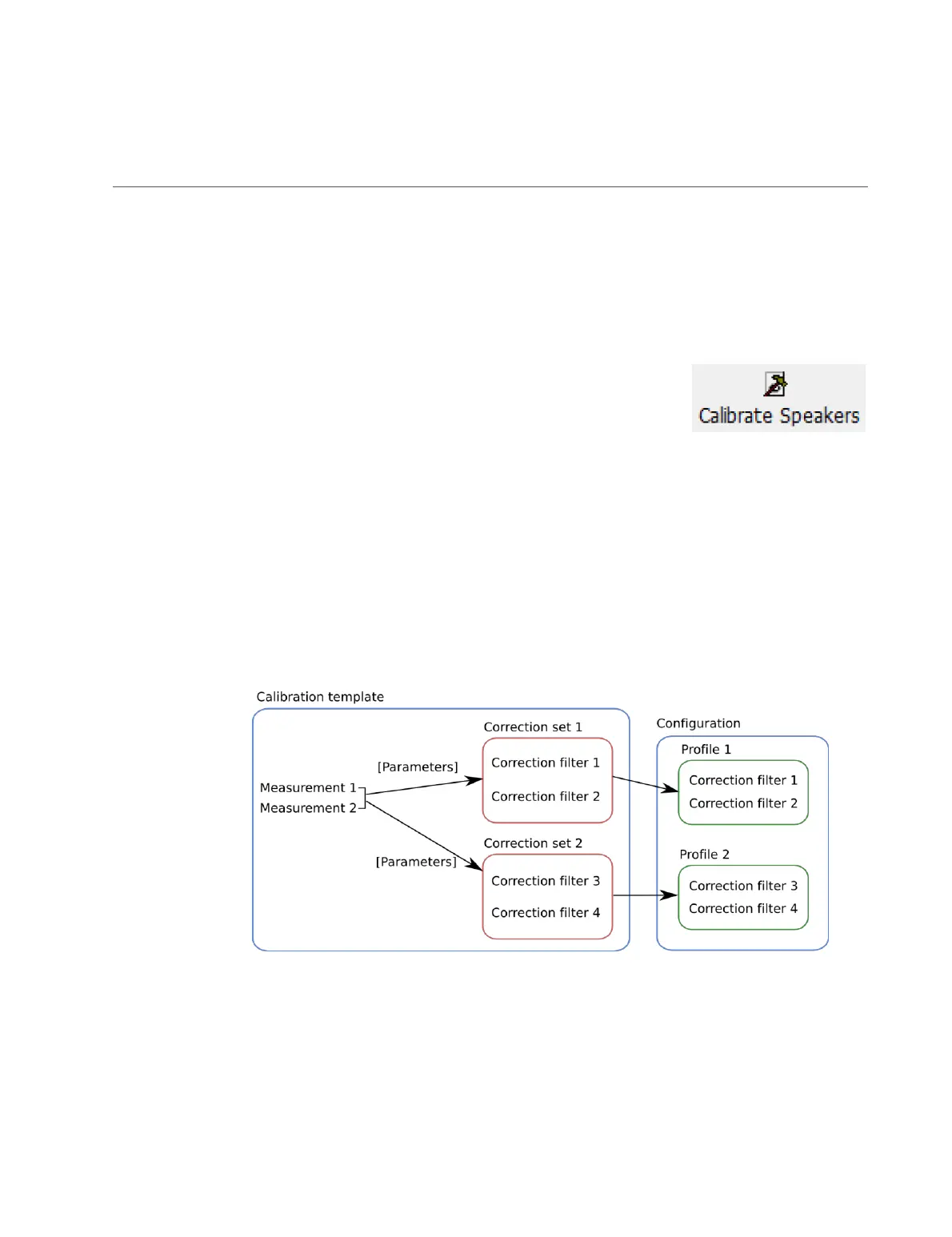
A calibration template is the container for sets of correction filters. When a calibration
template is created, one or more measurements are selected as “input.” Various
parameters are then specified in order to create a correction set, which contains one
correction filter per “input” measurement.
More correction sets can be created from the same measurements, but with different
parameters. These can be loaded into different profiles (see Chapter 9) to audition the
effect of the different parameters.
This chapter explains how to create a calibration template and generate correction sets
for the single-amp speaker configuration modes. To keep the presentation simple, the
examples show a single measurement being used for both speakers. Once you are more
familiar with DEQX-Cal, you can use a separate measurement for each speaker. (For bi-
amp and tri-amp speaker configuration modes, see Chapter 13.)



 To Next Page