GENERAL
M6040, M7040, WSM
G-36
Flush Cooling System and Changing Coolant
Anti-Freeze
• When using antifreeze, put on some protection such as
rubber gloves (Antifreeze contains position).
• If should drink antifreeze, throw up at once and take
medical attention.
• When antifreeze comes in contact with the skin or clothing,
wash it off immediately.
• Do not mix different types of Antifreeze.
The mixture can produce chemical reaction causing
harmful substances.
• Antifreeze is extremely flammable and explosive under
certain conditions. Keep fire and children away from
antifreeze.
• When draining fluids from the engine, place some
container underneath the engine body.
• Do not pour waste onto the grounds, down a drain, or into
any water source.
• Also, observe the relevant environmental protection
regulations when disposing of antifreeze.
If it freezes, coolant can damage the cylinders and radiator. If
the ambient temperature falls below 0 °C or before a long-term
storage, let out coolant completely, or mix fresh water with long-life
coolant and fill the radiator and reserve tank with the mixture.
1. Long-life coolant (hereafter LLC) comes in several types. Use
ethylene glycol (EG) type for this engine.
2. Before employing LLC-mixed coolant, fill the radiator with fresh
water and empty it again.
Repeat this procedure 2 or 3 times to clean up the inside.
3. Mixing the LLC
Put the LLC in coolant in the percentage (%) for a target
temperature. When mixing, stir it up well, and then fill into the
radiator.
4. The procedure for the mixing of water and antifreeze differs
according to the make of the antifreeze and the ambient
temperature. Refer to SAE J1034 standard, more specifically
also to SAE J814c.
• When the antifreeze is mixed with water, the antifreeze
mixing ratio must be less than 50 %.
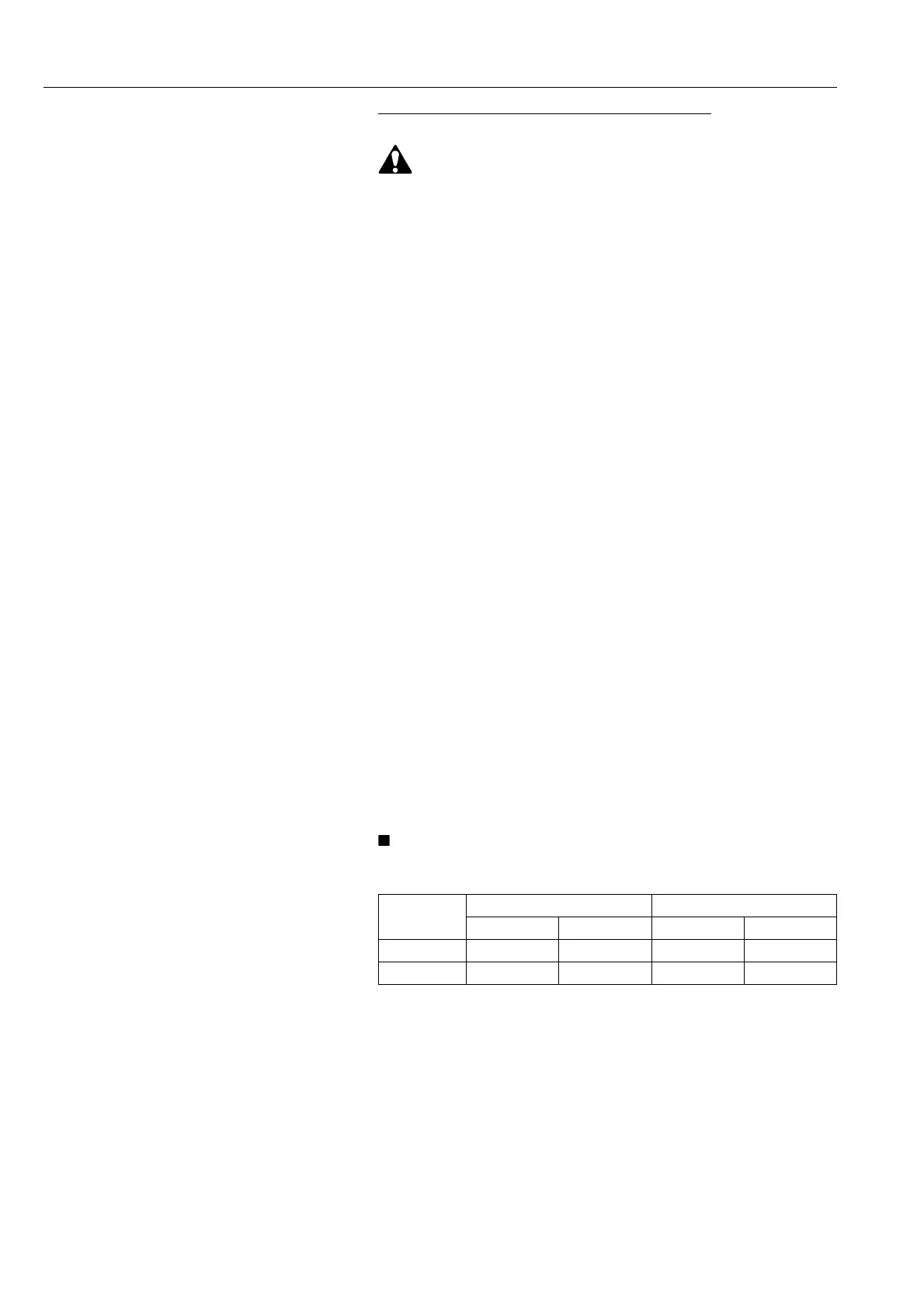
*At 1.013 x 1000000 Pa (760 mmHg) pressure (atmospheric).
A higher boiling point is obtained by using a radiator pressure cap
which permits the development of pressure within the cooling
system.
(To be continued)
Vol %
Anti-freeze
Freeze Point Boiling Point*
°C °F °C °F
40 – 24 – 12 106 222
50 – 37 – 34 108 226



 To Next Page