OPERATOR’S MANUAL
CMA-9000 FLIGHT MANAGEMENT SYSTEM
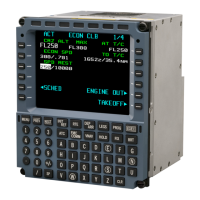
1.8.13 Engine out in Descent
utations of the ETA predictions, while assuming
computed speed when:
ned waypoint, or
stination airport speed restriction altitude, or
• Entering or exiting a ho
• Reaching the FMS cros
• Reaching E/D.
NOTES:
frozen. Additional
1.8.15
The descent path is constructed based on the assumption that the forecast local baro-setting entry (from the
DES FORECAST 1/2 page) will be set accordingly using the altimeter at or before the transition level is reached.
1. The transition from STD to QNH or QFE altimeter setting causes re-computation of the descent
vertical profile if:
• The QNH setting or its equivalent value for a QFE entry on the altimeter is different from
the forecast QNH entry or its equivalent for an QFE entry; or
• The transition level is below the airport speed restriction altitude, any altitude-constrained
waypoint or the End-of-Descent point.
Future Growth
1.8.14 FGCP Speed Intervention in Descent
The FMS uses the FGCP selected CAS or MACH for the comp
the crew will revert to FMS-
• Sequencing t
• Altitude is less than the de
he next speed-constrai
ld, or
sover altitude, or
ACT MIN FUEL DES 3/5
E/D(kt/nm) AT E/D
207/ 8 207/ 4638
MFUEL SPD TO E/D
.780/280 2023.0z/85.0nm
SPD REST WPT / ALT
240/10000 E/D/ 4638{
V/B V/S
3.9 3140
FPA VDEV
{SCHED 3.0 0
PROFILE}
• The target speed displayed in reverse video remains derived from the FMS.
• The FGCP selected speed has no effect on the descent profile, which remains
thrust or drag may be required to remain on the calculated descent path.
Altimeter Setting Effects on Descent Profile
Page F-45
August 17, 2010


 To Next Page