305
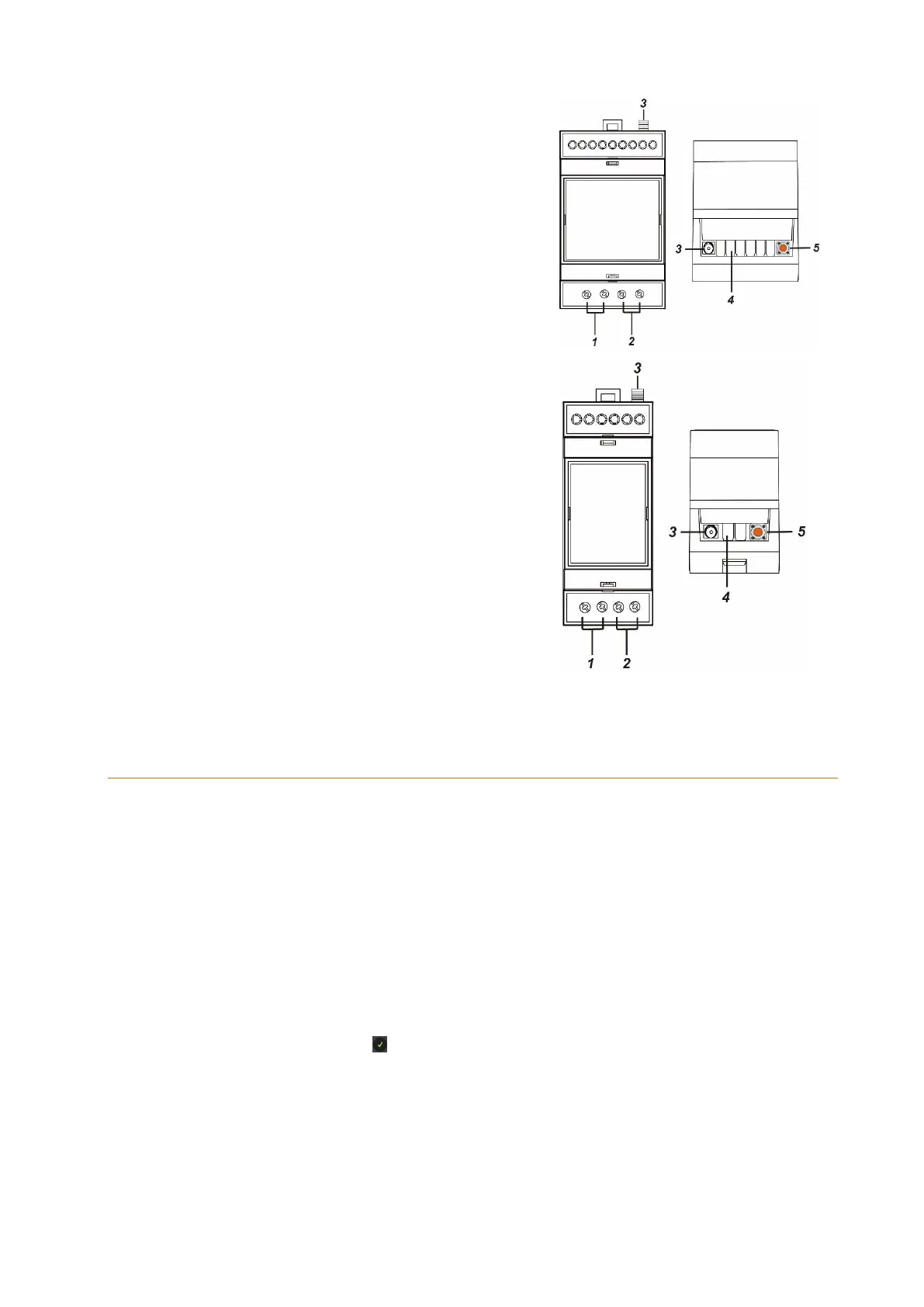
1. Current input
Neutral conductor = N / blue. Line conductor = L /
brown
2. Current output
Neutral conductor = N / blue. Line conductor = L /
brown
3. External antenna port
To increase the transmission power, you can
optionally connect the external antenna so that is
located outside of the control cabinet.
4. LED indicator
The LED indicator shows the status of the top-hat
rail:
1. On: relay on
2. Off: relay off
3. Flashes twice: signal transmission
5. Learn button
Pressing briefly activates or deactivates
the top-hat rail relay.
Pressing the Learn button for ten seconds
or longer resets the top-hat rail relay and
sends a connection request to the alarm
panel.
Connecting the top-hat rail relay and putting it into operation
1. Deactivate the power supply during the installation to prevent short circuits.
2. Connect the 230 V supply cable to the input (1) and the 230 V end device cable to
the output (2).
3. You can only add the top-hat rail relay to the alarm panel within the first three
minutes after having connected it to the power grid!
4. Open the menu “Sensors” “Add” and press “Start” in the web interface of the
alarm panel.
5. Press the Learn button (5) for approx. ten seconds. The LED lights up briefly and
you can release the Learn button. A connection request is sent to the alarm panel
and the LED flashes twice.
6. As soon as the alarm panel has received the connection request, the sensor list
shows the sensor. Press to add the top-hat rail relay to the alarm panel.
Range test:
1. Open the alarm panel menu “Sensors” “Range” and press “Start.”
2. Press the test button.
3. The sensor and the signal strength should be indicated. The higher the indicated
number the better the reception (1-9).


 To Next Page