215575 304 Revision B
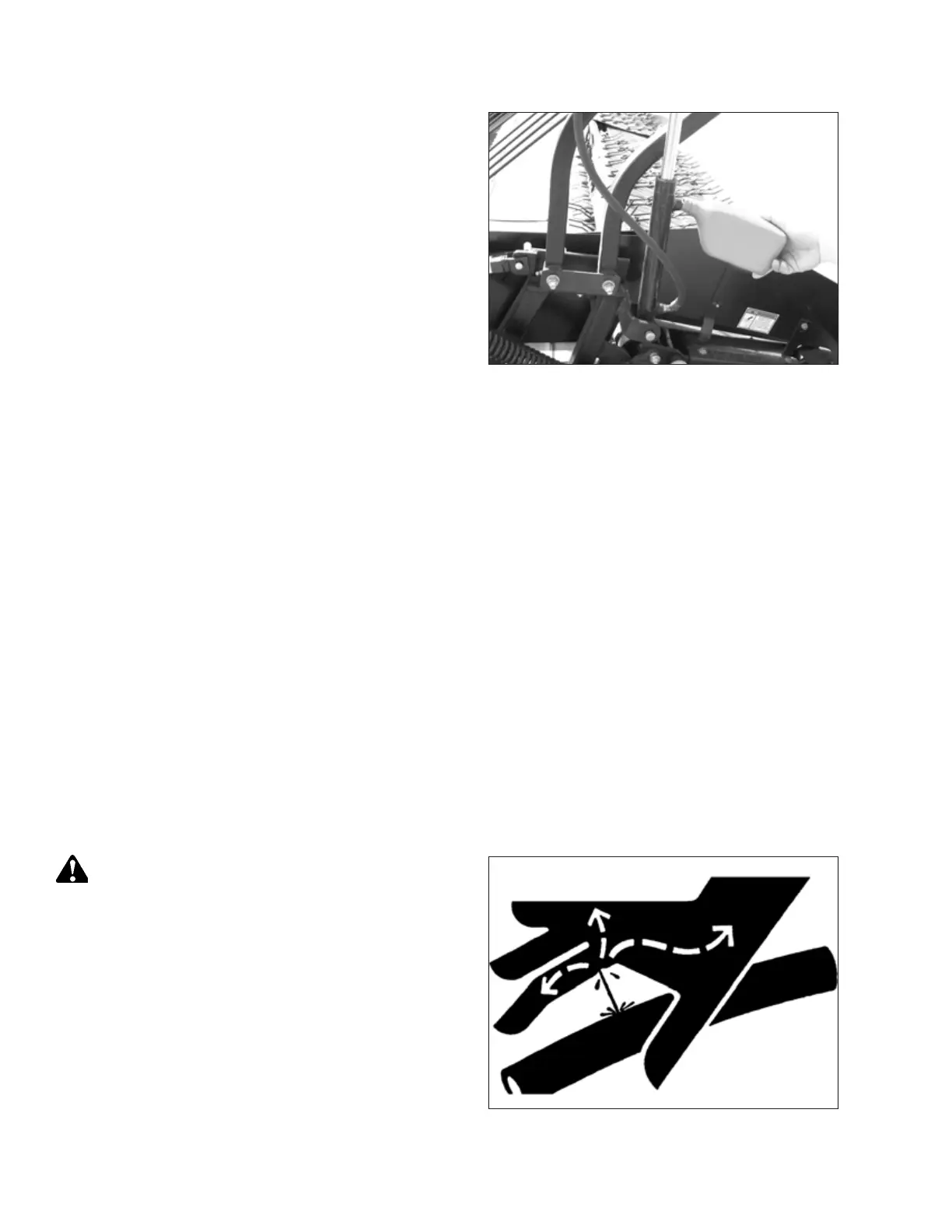
Figure 5.194: Bleeding Cylinder
4. Completely remove the bleed port plug (not shown).
IMPORTANT:
Completely remove the bleed port plug before applying
hydraulic pressure. If the bleed port plug is only partially
removed, the hydraulic oil pressure will damage the plug’s
O-ring.
5. Hold a plastic container up to the bleed port to collect
hydraulic oil.
6. Activate the combine’s reel lift control to apply hydraulic
pressure to the system. Hydraulic fluid will begin to flow
from the bleed port. Any air trapped in the lines will appear
as bubbles in the hydraulic fluid. Continue doing this until
the air bubbles disappear and a steady stream of oil flows
from the bleed port. Release the lift control to relieve the
hydraulic pressure.
7. Replace the bleed port plug and torque it to 0.8 Nm
(7 lbf∙in).
8. Raise the hold-down fully and disengage the hold-down safety props.
9. Cycle the cylinder 5–10 times by fully extending and fully retracting the cylinder. Ensure that the hold-down is level
while raising and lowering it, and that the slave and master cylinders are both working. Repeat the bleeding process if
necessary.
10. Lower the hold-down.
5.9.5 Hydraulic Hoses and Lines
Check hydraulic hoses and lines daily for signs of leaks. Replace any leaking or damaged hoses.
For hold-down hydraulic systems, refer to the following:
• Removing Master Cylinder Hose, page 305
• Installing Master Cylinder Hose, page 308
For draper drive hydraulic systems, refer to the following:
• Removing Hydraulic Motor Hoses, page 238
• Installing Hydraulic Motor Hoses, page 240
Figure 5.195: Hydraulic Pressure Hazard
WARNING
• Avoid high-pressure fluids. Escaping fluid can penetrate the
skin causing serious injury.
• Relieve pressure before disconnecting hydraulic lines.
• Tighten all connections before applying pressure. Keep your
hands and body away from pin holes and nozzles which can
eject fluids under high pressure.
• If any fluid is injected into the skin, it must be surgically
removed within a few hours by a doctor familiar with this
type of injury or gangrene may result.
MAINTENANCE AND SERVICING


 To Next Page