Chapter 1: Cyclone IV Transceivers Architecture 1–81
Self Test Modes
February 2015 Altera Corporation Cyclone IV Device Handbook,
Volume 2
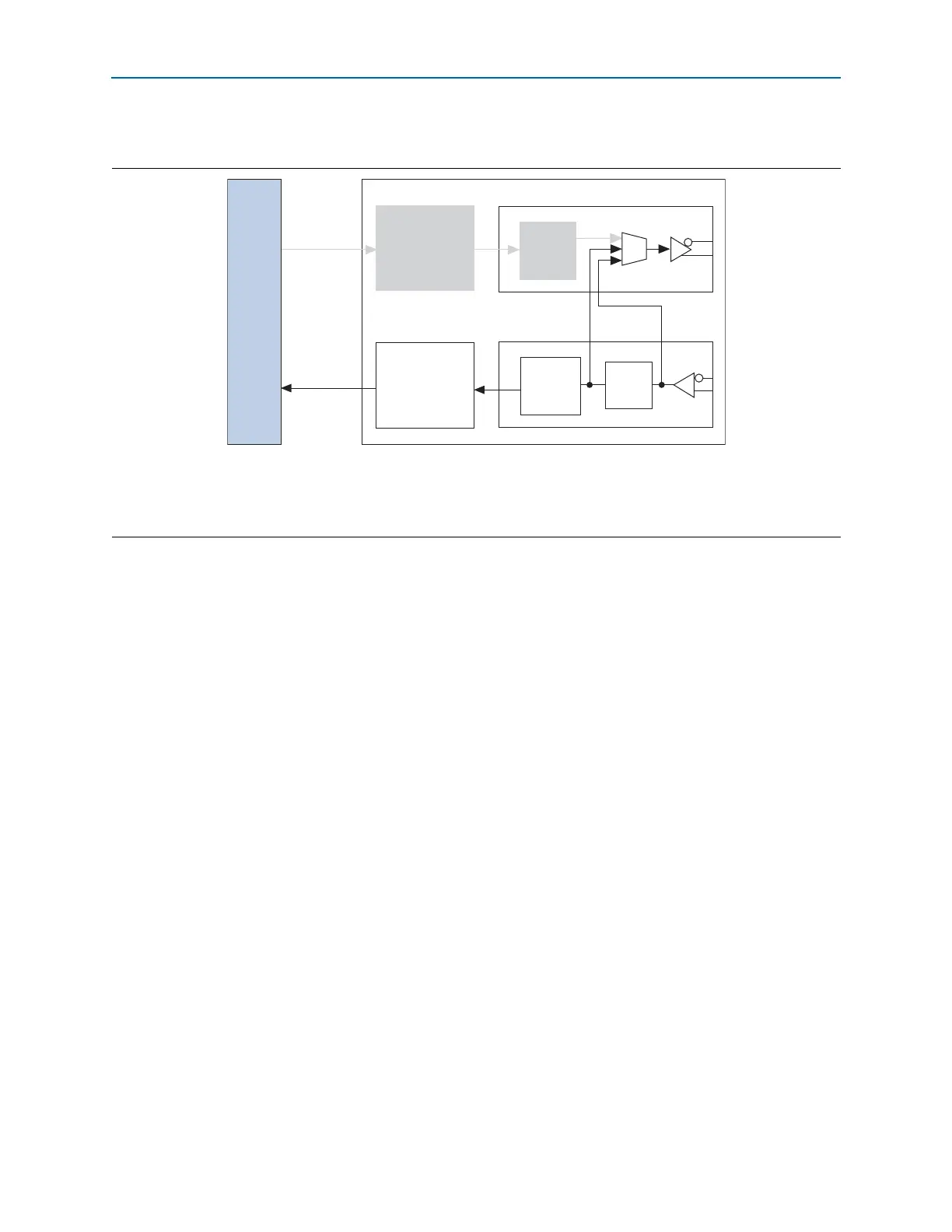
Figure 1–72 shows the two paths in reverse serial loopback mode.
Self Test Modes
Each transceiver channel in the Cyclone IV GX device contains modules for pattern
generator and verifier. Using these built-in features, you can verify the functionality of
the functional blocks in the transceiver channel without requiring user logic. The self
test functionality is provided as an optional mechanism for debugging transceiver
channels.
There are three types of supported pattern generators and verifiers:
■ Built-in self test (BIST) incremental data generator and verifier—test the complete
transmitter PCS and receiver PCS datapaths for bit errors with parallel loopback
before the PMA blocks.
■ Pseudo-random binary sequence (PRBS) generator and verifier—the PRBS
generator and verifier interface with the serializer and deserializer in the PMA
blocks. The advantage of using a PRBS data stream is that the randomness yields
an environment that stresses the transmission medium. In the data stream, you
can observe both random jitter and deterministic jitter using a time interval
analyzer, bit error rate tester, or oscilloscope.
■ High frequency and low frequency pattern generator—the high frequency
patterns generate alternate ones and zeros and the low frequency patterns
generate five ones and five zeroes. These patterns do not have a corresponding
verifier.
1 The self-test features are only supported in Basic mode.
Figure 1–72. Reverse Serial Loopback
(1)
Notes to Figure 1–72:
(1) Grayed-Out Blocks are Not Active in this mode.
(2) Post-CDR reverse serial loopback path.
(3) Pre-CDR reverse serial loopback path.
Tx PCS
Rx PCS
Tx PMA
Serializer
Rx PMA
Deserializer
To FPGA fabric
for verication
Transceiver
CDR
Tx PMA
(2) (3)
FPGA
Fabric



 To Next Page