B-4 PN: 10580-00343 Rev. H S820E UG
B-2 Measurement Overview Measurement Review
Line Sweeping
System performance issues are seen in two ways: excessive reflections (more
common) caused by impedance mismatches, or excessive insertion losses (less
common) caused by energy dissipated in the connectors or cables.
The two measurements that are used to determine communication system
performance are:
• Return Loss or Standing Wave Ratio (SWR) for reflections.
• Cable Loss (Insertion Loss) for insertion losses.
Remember that Return Loss and VSWR are typically Pass/Fail tests. They
both measure reflection, but they display the results in different ways. For
either measurement, set a limit line to the specification determined by the
carrier and make the measurement. If the ENTIRE swept frequency range is
below the limit line, then the test passes. If ANY part of the sweep is at or
above the limit line, then the test fails.
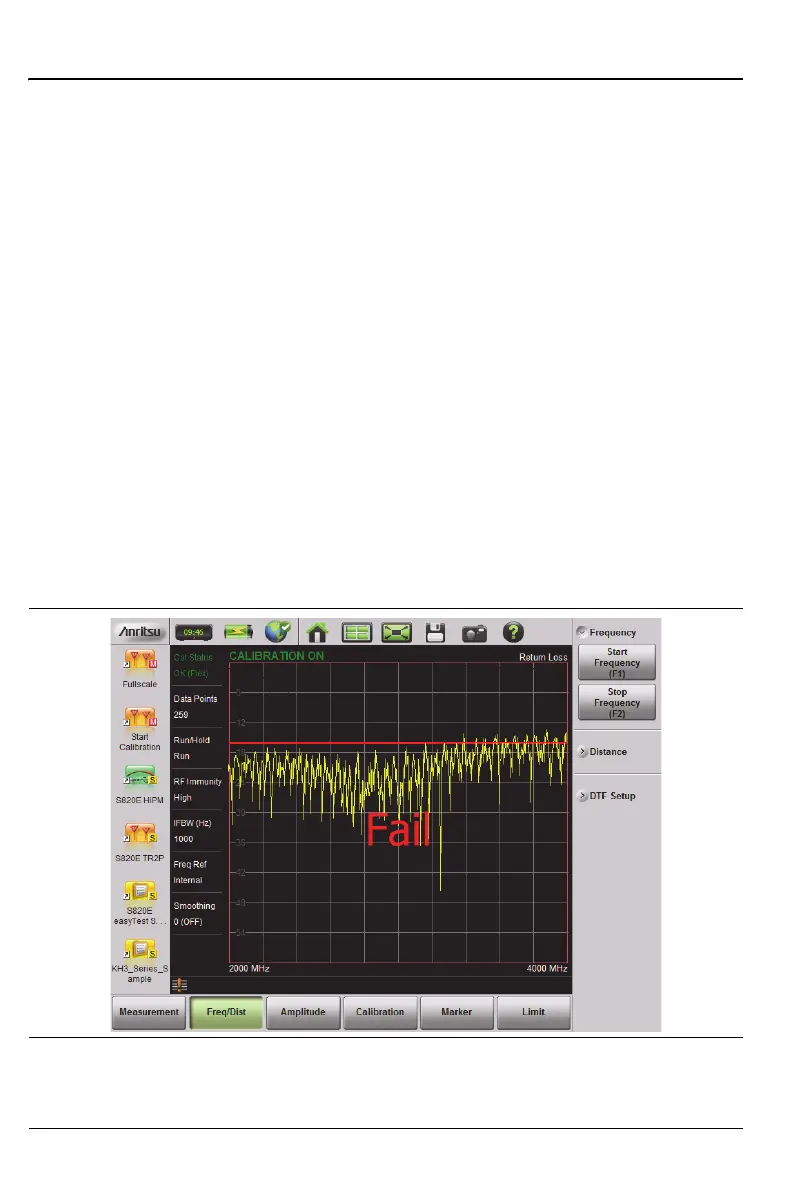
With a failed test, one or more components is at fault. Distance to Fault mode
is used to find the problem. Figure B-3 shows a failed Return Loss
measurement (part of the trace is above the limit line). Figure B-4
on page B-5 is a Distance to Fault measurement of the same system.
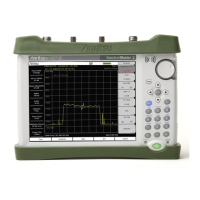
Figure B-3. Failed Return Loss Measurement






 To Next Page