4535 612 10261 HD11 Service Manual Page 61
CSIP Level 1 Theory of Operation: Introduction
4Theory of Operation
Introduction
This section provides a functional overview of the HD11 Ultrasound System by breaking down
the system into functional elements and describing their relationships and basic principles of
operation.
System
Architecture
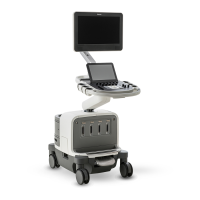
The HD11 system is fundamentally a combination of the following functional elements:
• Physical assemblies comprising the mobile cart and system components
• Electrical power functions
• Ultrasound signal generation and control functions
• Echo acquisition and control functions
• Signal and image data processing and analysis functions
• Visual and audio presentation functions (image management and review)
The HD11 physical structure is made of fabricated sheet metal and molded plastic parts and
commercial “off-the-shelf” (COTS) components.
At a basic level, the HD11 ultrasound hardware architecture consists of an E-box and a COTS
personal computer tower (PC). The E-box contains custom electronics (boards) that perform
many of the ultrasound imaging functions in the system, such as transducer selection, transmit
generation, beam forming, demodulation, detection, and image processing. The PC acts a a cen-
tral processing unit, performing further processing of the image data, including the generation of
the image display to the screen. The PC also serves as the main controller of the E-box and the
system user interface, as well as the organizer of all of the image management functionality.
The HD11 software architecture consists of four major executables: beam processing control
(E-box), signal processing control (E-box), imaging modalities (PC), and image management and



 To Next Page