4-2 Starling Monitor - User Guide
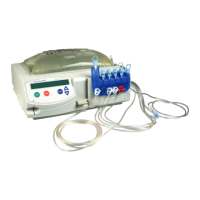
Positioning the Starling Monitor
Positioning the Starling Monitor
Recommended Guidelines for Monitor Positioning
When considering a suitable position for the Starling Monitor in the clinical environment, the
following is recommended:
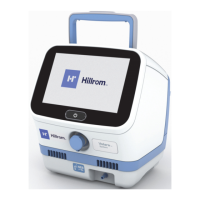
When lifting or carrying the Monitor, use the carry handle provided for this purpose. The handle
is located on top cover (see Figure 2-6 on page 2-11); its recessed design ensures safe
gripping.
Position the Monitor at an adequate distance from walls
etc
. to allow for cooling air to flow
through the vent in the rear panel, without obstruction. Verify that this air inlet is not
obstructed (see Figure 2-7 on page 2-12).
Use a mains power outlet located sufficiently close to the Monitor to prevent pulling or
stretching of the AC power cable. The cable length is 5 m (16.4 ft).
Position the Monitor at a suitable distance from the patient to prevent pulling, stretching or
entanglement of the Starling Patient Cable. This will also allow sufficient freedom of
movement for attaching the Starling Sensors to the patient, without placing strain on the
Adhesive Sensor Pads. The Starling Patient Cable length is 2.75 m (9 ft).
Make sure the Monitor is suitably positioned with adequate clearance around it to provide
easy access during use.
WARNING
To prevent possible damage to the Starling Monitor, always secure it to the Roll Stand or IV
Pole. Alternatively, place securely on a flat, stable surface that is free of dirt and debris.
When positioning the Starling Monitor, observe the following precautions:
Do not place the Monitor near a radiator or heating unit.
Do not use the Monitor adjacent to, or stack it with, other equipment.
Do not cover the Monitor while in use.





 To Next Page