III-1
Appendix III System Alarm Messages
Here we list some of the most important physiological and technical alarm messages.
If the problem still exists after you implement the relevant solution provided below, please contact our maintenance
engineers.
Technical alarm types: A fully clearable, B the alarm sound and light are clearable or C Not clearable.
The level of each technical alarm is not adjustable (Except for ECG and SpO
2
).
1) Physiological Alarm Messages:
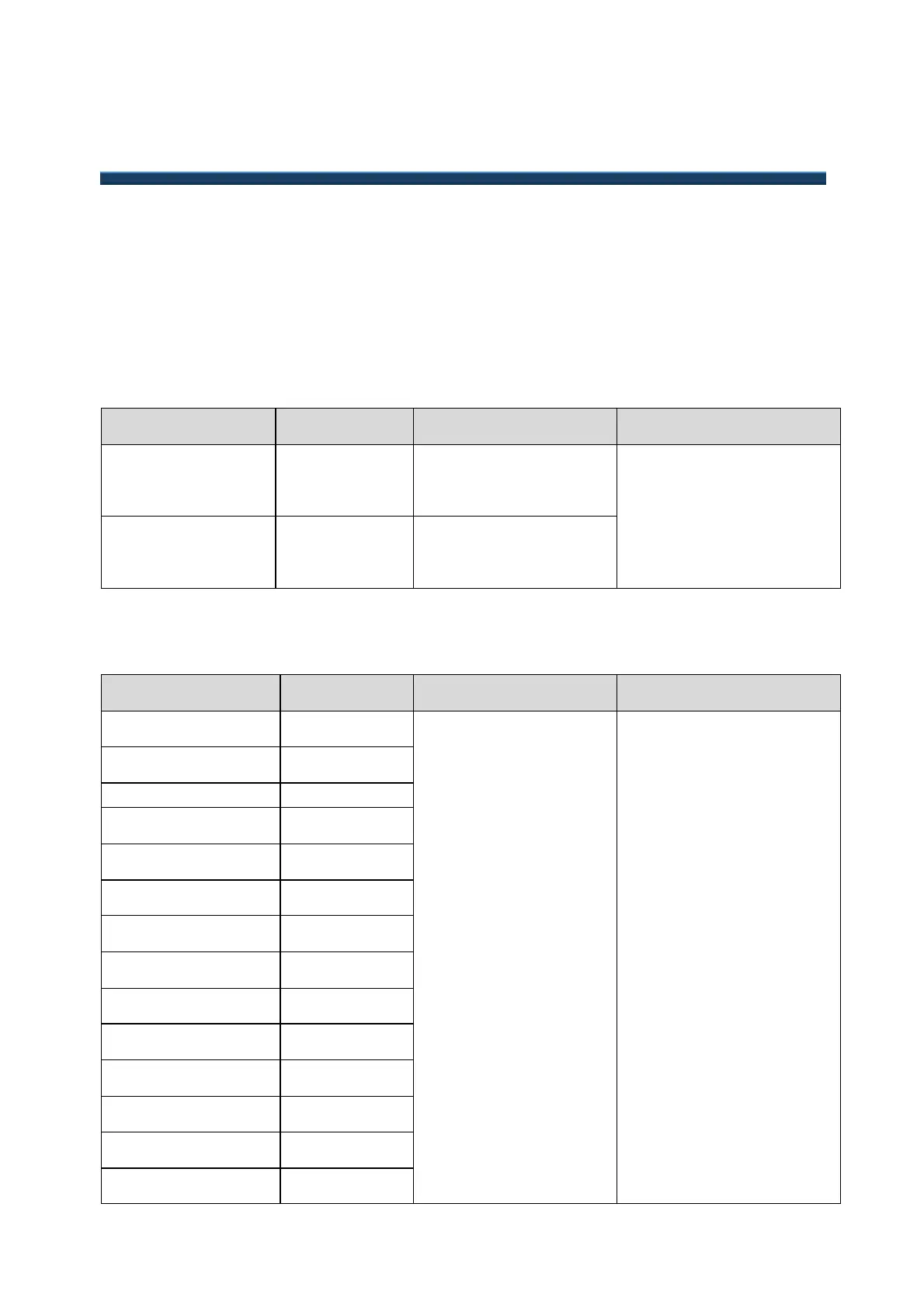
1.1) General Physiological Alarm
Configurable for
High and Med
alarms
The corresponding measured
parameter value exceeds the
alarm upper limit.
Check the patient's condition,
and confirm that the patient type
and alarm limits are appropriate
to the patient.
Configurable for
High and Med
alarms
The corresponding measured
parameter value goes below
the alarm lower limit.
Note: “XX” represents the label of physiological parameter such as HR, ST-I, ST-II, ST-III, ST-aVR, ST-aVL, ST-aVF, ST-
V1, ST-V2, ST-V3, ST-V4, ST-V5, ST-V6, RR, T1, T2, △T, SpO2, PR, etc.
1.2) Arrhythmia Alarm
The patient develops an
arrhythmia.
Check the patient’s condition,
electrodes, power cables and
lead wires.



 To Next Page