DL.3 Digital Light User Manual 83
Chapter 9:
Graphic Functions: Opacity and Effects
You can adjust opacity and apply a variety of color mixing and geometric
effects to each individual Graphic Object.
The parameters described in this chapter are set for each Graphic Objec
t you define. Parameters
for composite image intensity and effects are described in Chapter 11: Global Functions on page
115.
NOTE: The suggested default DMX values given for each parameter are
recommended to build libraries that provide the easiest and most
reliable content selection, rendering and output.
Opacity
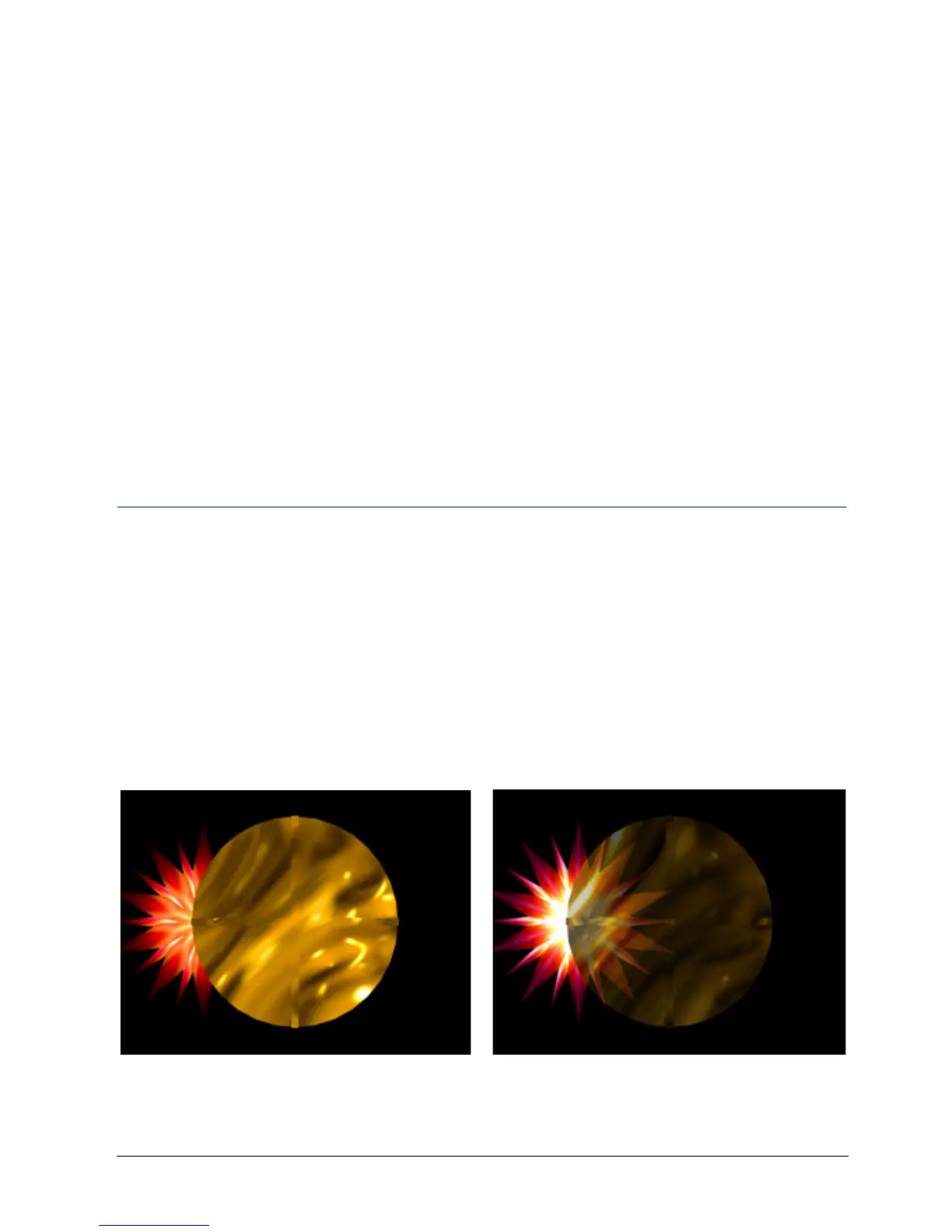
Adjusting an object’s opacity allows one object to “show through” another. You can adjust the
opacity of an individual 3-D object from completely transparent to full opacity using this
parameter. Increase opacity from not visible at a value of zero to full opacity at a value of 255.
Default DMX Value: 0 = completely transparent
The Global Intensity parameter pro
vides a similar adjustment to the combined image. This
global control parameter controls intensity levels on the overall image (see Global Intensity on
page 115). When you have multiple objects in relati
on to each other, the Global Intensity
parameter is the best way to apply a fade to the composite
image.
Tip: The Di
mmer, Object Opacity and Global Intensity parameters all have to be greater
than 0 to make a defined image visible.
Graphic Object 1 Intensity DMX = 255 (100%)
Graphic Object 2 Intensity DMX = 255 (100%)
Graphic Object 1 Intensity DMX = 255 (100%)
Graphic Object 2 Intensity DMX = 179 (70%)


 To Next Page