Table 3-1: Reference priority titles
Title Reference
ASCII Timecode ASCII serial timecode input
External 1PPS input External 1PPS input
Frequency External Frequency input
GNSS GNSS input
PTP PTP input
IRIG IRIG timecode input
Local System Built-in clock OR internal 1PPS generation
NTP NTP input
User Host (time is manually set by the user)
HAVEQUICK HAVEQUICK input
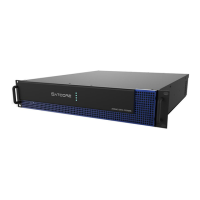
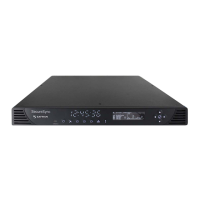
The number displayed indicates the number of feature inputs of that type
presently installed in the SecureSync– starting with “0” representing the first fea-
ture input. For example:
IRIG 0 = 1
st
IRIG input instance
Frequency 1 = 2nd frequency input instance
NTP 2 = 3rd NTP input instance
The columns of the Reference Priority table are defined as follows:
Priority—Defines the order or priority for each index (row). The range is 1 to
16, with 1 being the highest priority and 16 being the lowest priority. The
highest priority reference that is available and valid is the reference that is
selected.
Time—The reference selected to provide the necessary “Time” reference.
1PPS—The reference selected to provide the necessary “1PPS” reference.
Enabled—The reference is enabled.
Delete—Removes the Index (row) from the Reference Priority table.
3.3.1.1 Configuring Input Reference Priorities
SecureSync can use numerous external time sources, referred to as "references".
As external time sources may be subject to different degrees of accuracy and reli-
ability, you can determine in which order (= priority) SecureSync calls upon its
external time and 1PPS references.
For additional information, see also "Input Reference Priorities" on page204.
3.3 Managing References
CHAPTER 3 • SecureSync 2400 User Manual Rev. 5.2
205


 To Next Page