1.
First, disable DHCP using the front panel keypad and information display:
see "Setting Up an IP Address via the Front Panel" on page66.
2. Change the workstation IP address to be on the same network as
SecureSync.
3. Connect workstation and SecureSync with an Ethernet cable.
The remainder of the configuration settings will be performed via the Web UI
(accessed via an external workstation with a web browser such as Firefox
®
or
Chrome
®
). For more information, see "The Web UI HOME Screen" on page34.
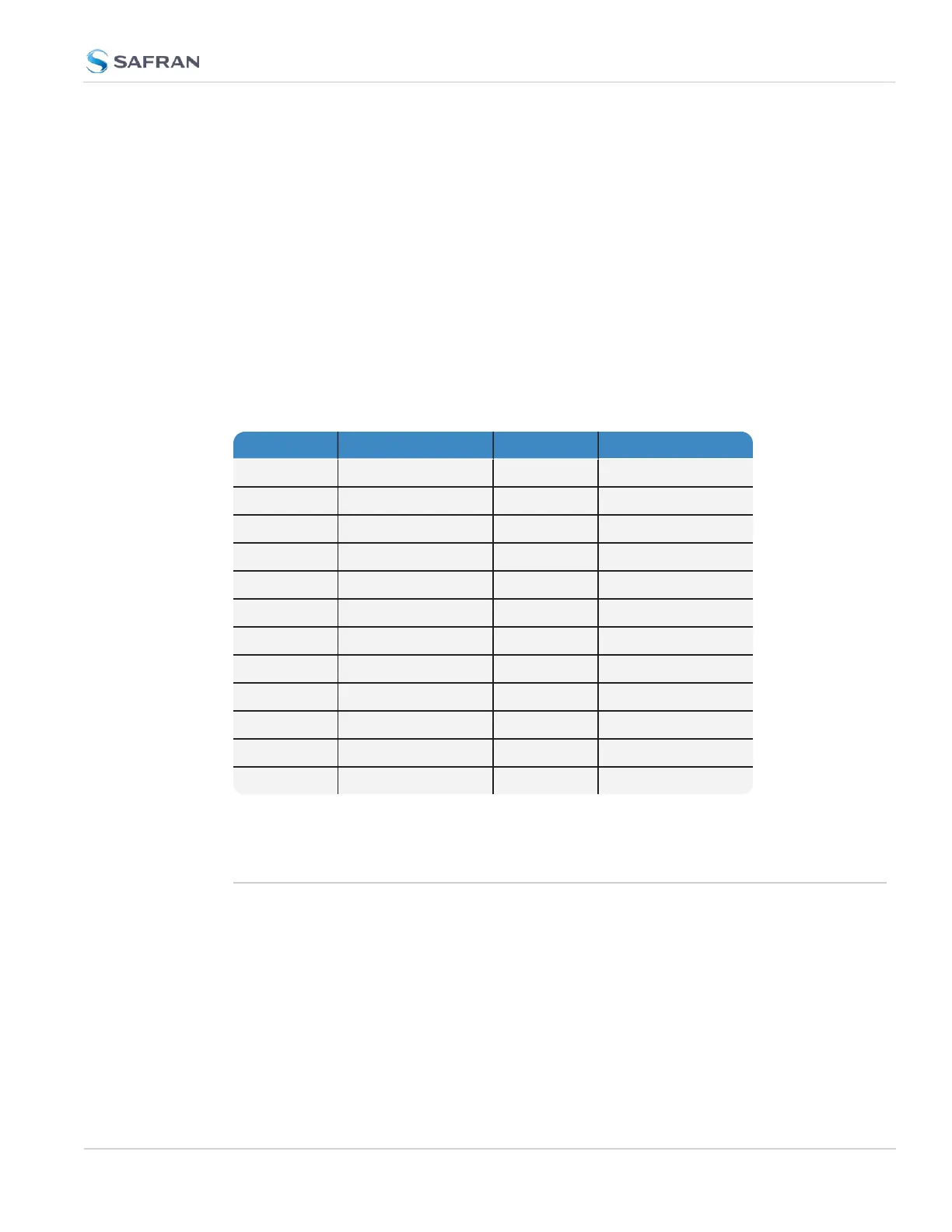
2.12.3 Subnet Mask Values
Table 2-3: Subnet mask values
Network Bits Equivalent Netmask Network Bits Equivalent Netmask
30 255.255.255.252 18 255.255.192.0
29 255.255.255.248 17 255.255.128.0
28 255.255.255.240 16 255.255.0.0
27 255.255.255.224 15 255.254.0.0
26 255.255.255.192 14 255.252.0.0
25 255.255.255.128 13 255.248.0.0
24 255.255.255.0 12 255.240.0.0
23 255.255.254.0 11 255.224.0.0
22 255.255.252.0 10 255.192.0.0
21 255.255.248.0 9 255.128.0.0
20 255.255.240.0 8 255.0.0.0
19 255.255.224.0
2.13 Accessing the WebUI
SecureSync's web user interface ("WebUI") is the recommended means to inter-
act with the unit, since it provides access to nearly all configurable settings, and
to obtain comprehensive status information without having to use the Command
Line Interpreter (CLI).
You can access the Web UI either by using the automatically assigned DHCP IP
address, or by using a manually set static IP address (see "Assigning a Static IP
Address" on page66):
2.13 Accessing the WebUI
CHAPTER 2 • SecureSync 2400 User Manual Rev. 5.2
71


 To Next Page