5.
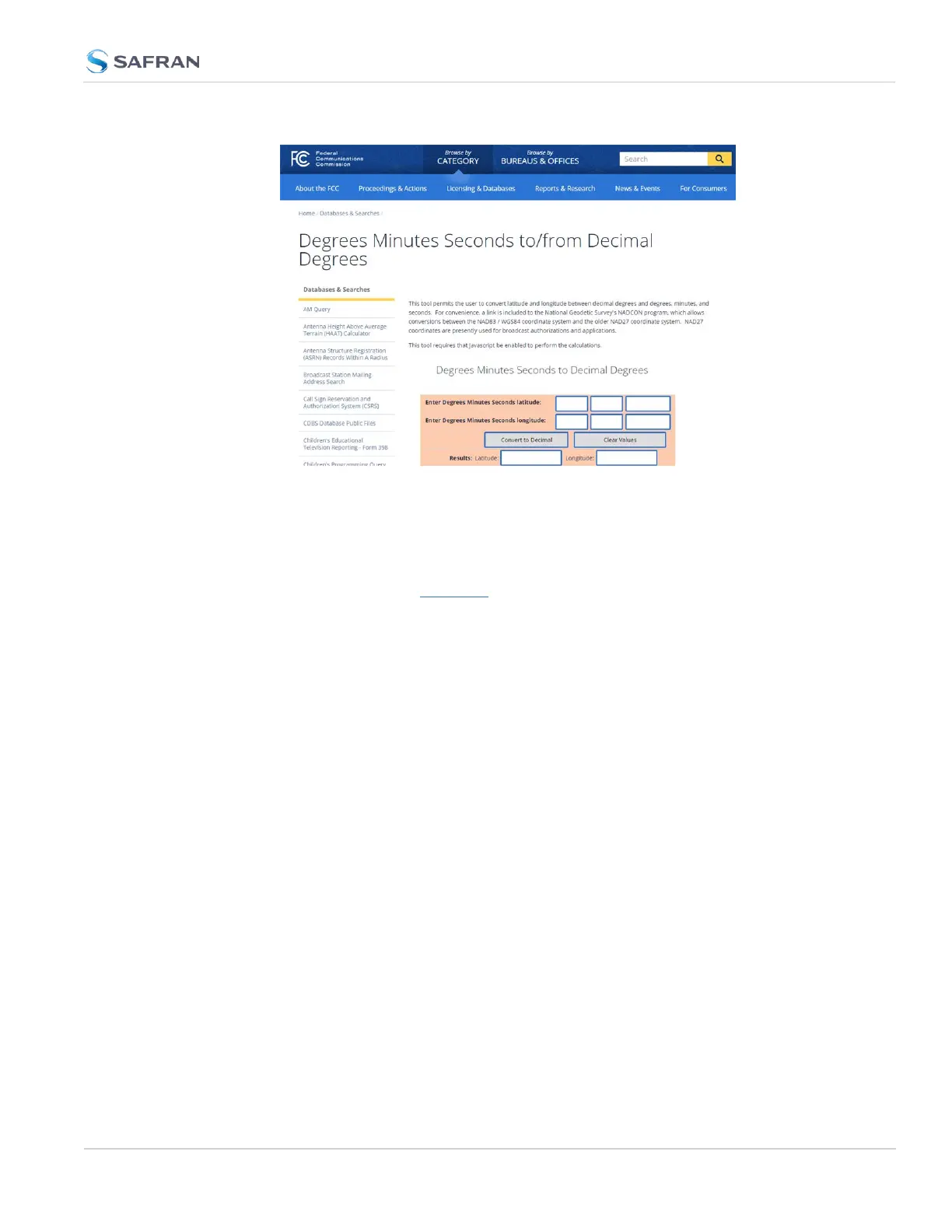
Determine your altitude: To find the elevation of your location, search
online for a Google Maps elevation finder tool. Do not forget to add the
height above ground for your antenna.
If a more exact altitude is desired, the use of a topographical map is recom-
mended. Applying the WGS 84 standard will likely yield the most accurate elev-
ation.
3.3.3.10 GNSS Constellations
SecureSync allows you to select which GNSS constellations can be tracked. For
example, you can determine if you want GLONASS satellites to be tracked
(besides GPS).
Selecting GNSS Constellations
our SecureSync is capable of tracking multiple GNSS constellations sim-
ultaneously.
To verify if satellite signals for the selected GNSS constellations are currently
received, see "Determining Which GNSS Satellites Are Received" on page245.
Configuring GNSS Constellations
To configure which GNSS constellations SecureSync's GNSSreceiver shall track:
1.
Navigate to INTERFACES > REFERENCES: GNSS Reference.
2.
Click the GEAR button next to GNSS 0. The GNSS0 window will open:
3.3 Managing References
CHAPTER 3 • SecureSync 2400 User Manual Rev. 5.2
243


 To Next Page