SV-EMS-220/221 Installation and Configuration
SkyView System Installation Guide - Revision AA 7-55
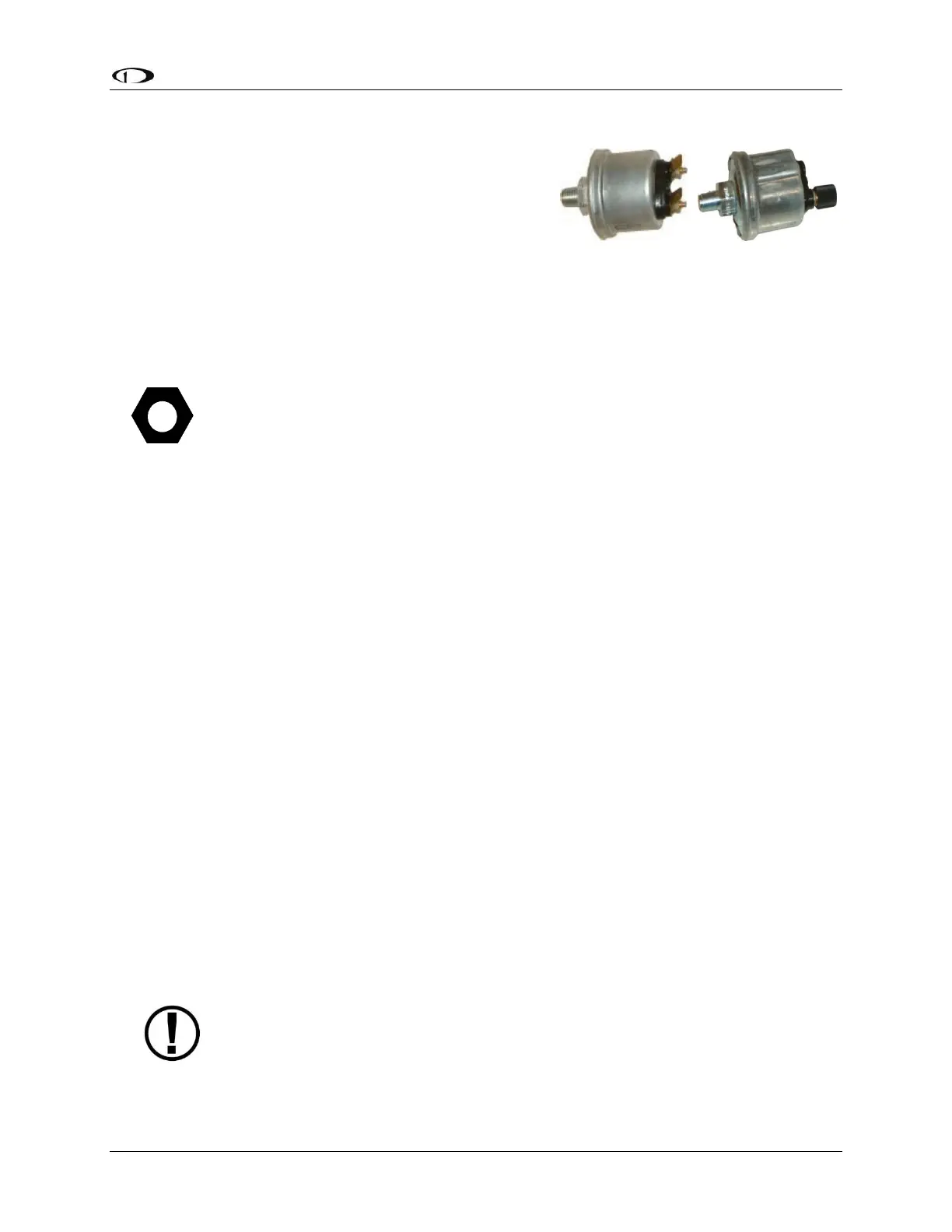
Legacy Dynon Avionics Fuel Pressure Sensors (P/N 100411-000 and 100411-001)
As of 2012, Dynon Avionics no longer supplies this
sensor. For new installations, use the Kavlico fuel
pressure sensors (above). If you have a carbureted
engine (legacy 30 PSI fuel pressure sensor), select from
the Kavlico 0-5 PSI fuel pressure sensor (P/N 101715-000)
or the Kavlico 0-15 PSI fuel pressure sensor (P/N 101690-
000). To retrofit an installation of these sensors with a
Kavlico fuel pressure sensor, see Retrofit Legacy Fuel
Pressure Sensors with Kavlico Oil Pressure Sensor,
above.
Mount the fuel pressure sensor to a fixed location using an Adel clamp or other secure method
such as using a transducer mounting block on the firewall. The fuel pressure sensor must not be
installed directly to the engine due to potential vibration problems. Next, connect the fuel
sensor to the engine using appropriate hoses and fittings. Its pressure port has a 1/8-27 NPT
pipe thread fitting; you may need adapters to connect to the pressure port on your engine.
Locate the correct fuel pressure port for your engine. This port must have a pressure fitting
with a restrictor hole in it. This restrictor hole ensures that, in the event of a sensor failure, fuel
leakage rate is minimized, allowing time for an emergency landing.
Carbureted engines – Use the 0-30 PSI sensor (Dynon Avionics P/N 100411-000). Crimp a
standard ¼” female Faston onto one of the ground wires coming from the EMS 37-pin Main
Sensor Harness or another ground source such as a local engine ground. Crimp another ¼”
female Faston onto a general purpose input pin wire. Push the two Fastons onto the two
terminals on the fuel pressure sensor. Polarity is not important. If you are converting from a
GRT EIS system, you must disconnect the external resistor pull-up from the fuel pressure
output. This will make the sensor output equivalent to the sensor supplied by Dynon Avionics.
Injected engines – Use the 0-80 PSI sensor (Dynon Avionics P/N 100411-001). Crimp a standard
#8 ring terminal onto the SV-EMS-220/221 general purpose input wire of your choice. Unscrew
the stud cap from the threaded stud. Place the ring terminal on the stud and secure the cap
down sandwiching the ring terminal. If the connection between the sensor and your engine is
non-metallic, you must connect the sensor case to ground through other means. The best way
to accomplish this is by sandwiching a ground-connected ring terminal between the sensor and
the mating fitting.





 To Next Page