Introduction
1-6 SkyView System Installation Guide - Revision AA
5. The EMS 37-pin Main Sensor Harness includes a 9-pin connector that is wired to pins 11
(Orange wire), 12 (Yellow wire), and 30 (Black wire). This connector is used for other Dynon
Avionics products, but is not used in SkyView installations. Thus, the 9-pin connector should
be removed to use these wires for connecting sensors to the SV-EMS-220. Remove the
connector by cutting the three wires close to the 9-pin connector.
6. SkyView SETUP MENU is accessed by pushing and holding Buttons 7+8 together for 2-3
seconds.
7. Setting the Tail Number is required for before you can configure your SkyView Network
(described below): SETUP > AIRCRAFT INFORMATION > TAIL NUMBER. If Tail Number has
not yet been issued for your plane, set TAIL NUMBER to something other than DYNON
AVIONICS. Note that for US planes, the leading N is a required part of the TAIL NUMBER.
TAIL NUMBER should not include dashes (-) or spaces. Examples:
Correct: N12AB
Incorrect: N-12AB or N 12AB
8. SkyView displays and modules communicate over a common set of wires – the SkyView
Network that terminates at the D9 connectors on the back of your SkyView display(s).
Getting all modules and displays “talking” on SkyView Network is done by going to SETUP
MENU > SYSTEM SETUP > SKYVIEW NETWORK SETUP > CONFIGURE > (click right one more
time). If a module is noted as “requires update”, press the UPDATE button. Otherwise, press
the FINISH button. Note that you will not see any flight instruments or engine instruments
before a network configuration is performed, even if the SV-ADAHRS-200/201 and SV-EMS-
220/221 have been wired properly and are connected.
9. Devices that do not utilize SkyView Network are connected via RS-232 serial port
connections. Dynon Avionics devices that use RS-232 serial ports include the SV-ADSB-470,
SV-GPS-250/2020, SV-XPNDR-261/262, and various third-party devices. As RS-232 serial
devices are not part of the SkyView Network, they will not be seen on the list of devices
seen as you configure SkyView Network above. Instead, configuring SkyView to
communicate with SV-GPS-250/2020 and SV-XPNDR-261/262 is done via a more manual
process in SETUP MENU > SYSTEM SETUP > SERIAL PORT SETUP.
10. If you have installed an SV-GPS-250/2020, its SERIAL IN FUNCTION must be set to POS 1.
11. After you’ve configured SkyView Network, have properly configured any serial devices, exit
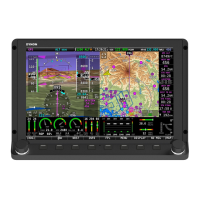
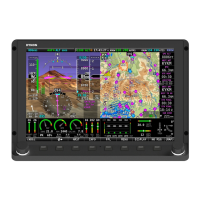
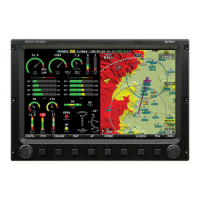
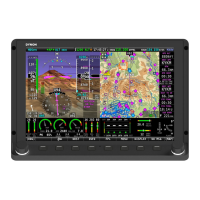
SETUP MENU. Your SkyView display should now display EMS, PFD, and MAP (SkyView SE
does not include MAP as a feature). Map will not display without a GPS fix (the airplane
symbol on the Map page will also flash with “?” if it does not have a GPS fix.
12. Your SkyView System may require various updates such as system Software, databases, and
Sensor Definitions. See http://downloads.dynonavionics.com for more details on the
updates available for SkyView. If you are a non-US customer, the display of aviation and
obstacle data on your SkyView system requires a database purchase from Jeppesen or
PocketFMS. Note that Software on each SkyView display must be updated individually.
13. Common issues for setting up SkyView engine monitoring:
a. The configuration of sensors installed on SkyView at the factory is generic; therefore
“Red X’s” on the EMS for various sensors are normal until sensor configuration for
your particular engine sensor configuration is complete.





 To Next Page