Configuring the ECN330-switch
232 1553-KDU 137 365 Uen D 2006-06-16
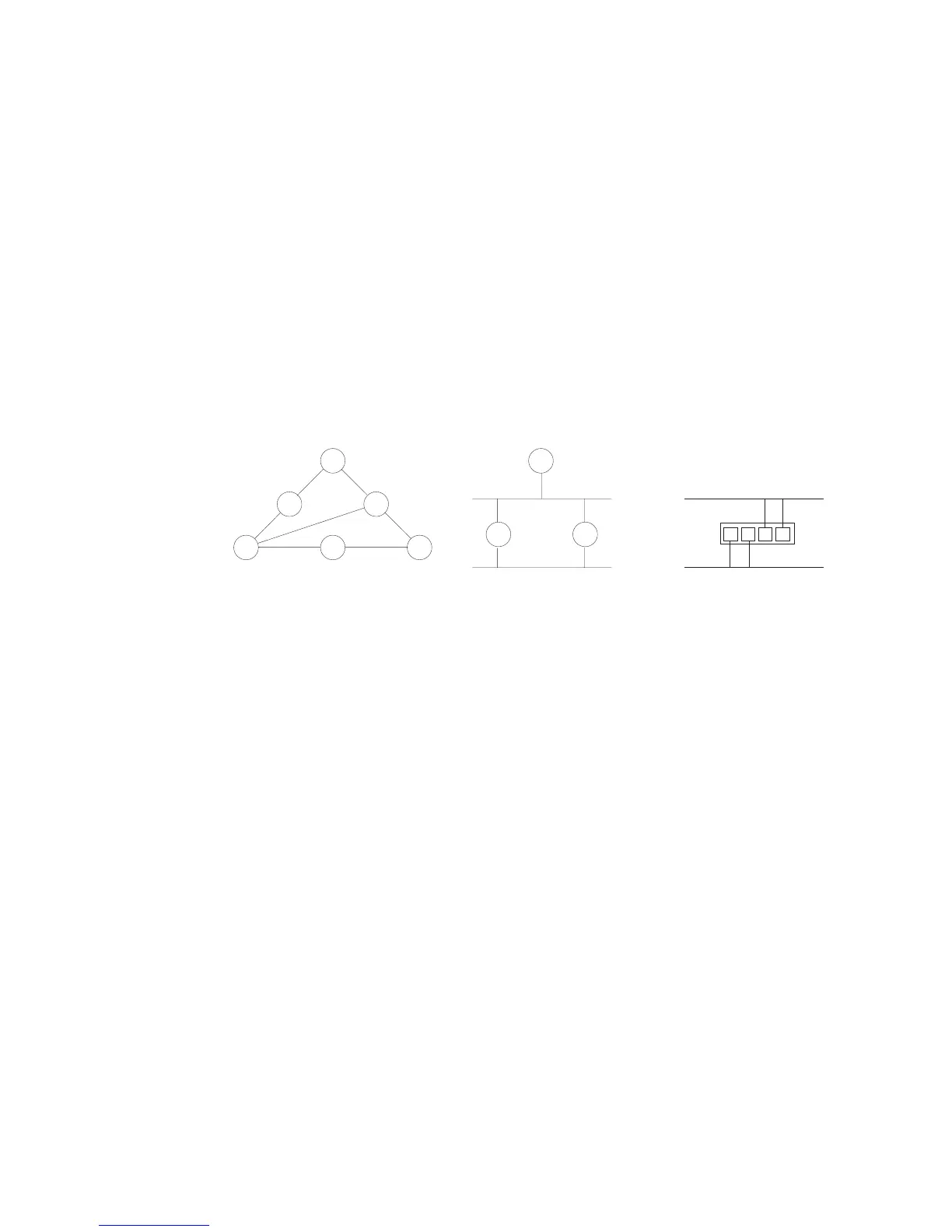
STP – STP uses a distributed algorithm to select a bridging device (STP-
compliant switch, bridge or router) that serves as the root of the spanning tree
network. It selects a root port on each bridging device (except for the root device)
which incurs the lowest path cost when forwarding a packet from that device to
the root device. Then it selects a designated bridging device from each LAN
which incurs the lowest path cost when forwarding a packet from that LAN to the
root device. All ports connected to designated bridging devices are assigned as
designated ports. After determining the lowest cost spanning tree, it enables all
root ports and designated ports, and disables all other ports. Network packets
are therefore only forwarded between root ports and designated ports,
eliminating any possible network loops.
Figure 92 STP Root Ports and Designated Ports
Once a stable network topology has been established, all bridges listen for Hello
BPDUs (Bridge Protocol Data Units) transmitted from the Root Bridge. If a
bridge does not get a Hello BPDU after a predefined interval (Maximum Age),
the bridge assumes that the link to the Root Bridge is down. This bridge will then
initiate negotiations with other bridges to reconfigure the network to reestablish
a valid network topology.
RSTP – RSTP is designed as a general replacement for the slower, legacy STP.
RSTP is also incorporated into MSTP. RSTP achieves must faster
reconfiguration (that is, around 1 to 3 seconds, compared to 30 seconds or more
for STP) by reducing the number of state changes before active ports start
learning, predefining an alternate route that can be used when a node or port
fails, and retaining the forwarding database for ports insensitive to changes in
the tree structure when reconfiguration occurs.
MSTP – When using STP or RSTP, it may be difficult to maintain a stable path
between all VLAN members. Frequent changes in the tree structure can easily
isolate some of the group members. MSTP (which is based on RSTP for fast
convergence) is designed to support independent spanning trees based on
VLAN groups. Using multiple spanning trees can provide multiple forwarding
paths and enable load balancing. One or more VLANs can be grouped into a
Multiple Spanning Tree Instance (MSTI). MSTP builds a separate Multiple
x
Designated
Root
Designated
Port
Designated
Bridge
x x
x
Root
Port
x



 To Next Page