11 Creating an Oven Temperature Program
11.2
11.
107
GC-2010 Plus
11.2 Temperature Programs
11.2.1 Isothermal analysis
The isothermal analysis technique keeps the column oven temperature at a constant value.
This method is useful for separating compounds within a narrow boiling point range.
11.2.2 Programmed analysis
Programmed analysis technique increases the column oven temperature.
When isothermal analysis is performed on a sample containing components over a wide
boiling point range at a temperature optimum for separating low-boiling components, elution
of high-boiling components is delayed. As a result, peaks become wide and the detection of
minor components is difficult. When isothermal analysis is performed at a temperature
where high-boiling components elute rapidly, low-boiling components elute extremely fast,
making separation difficult.
This means there is an optimal temperature for separating each component. In isothermal
analysis however, a temperature can be optimum for certain components but inadequate for
other components.
When analyzing samples containing components over a wide boiling point range, each com-
ponent elutes at a temperature suitable for it while the column oven temperature increases
gradually from lower temperature.
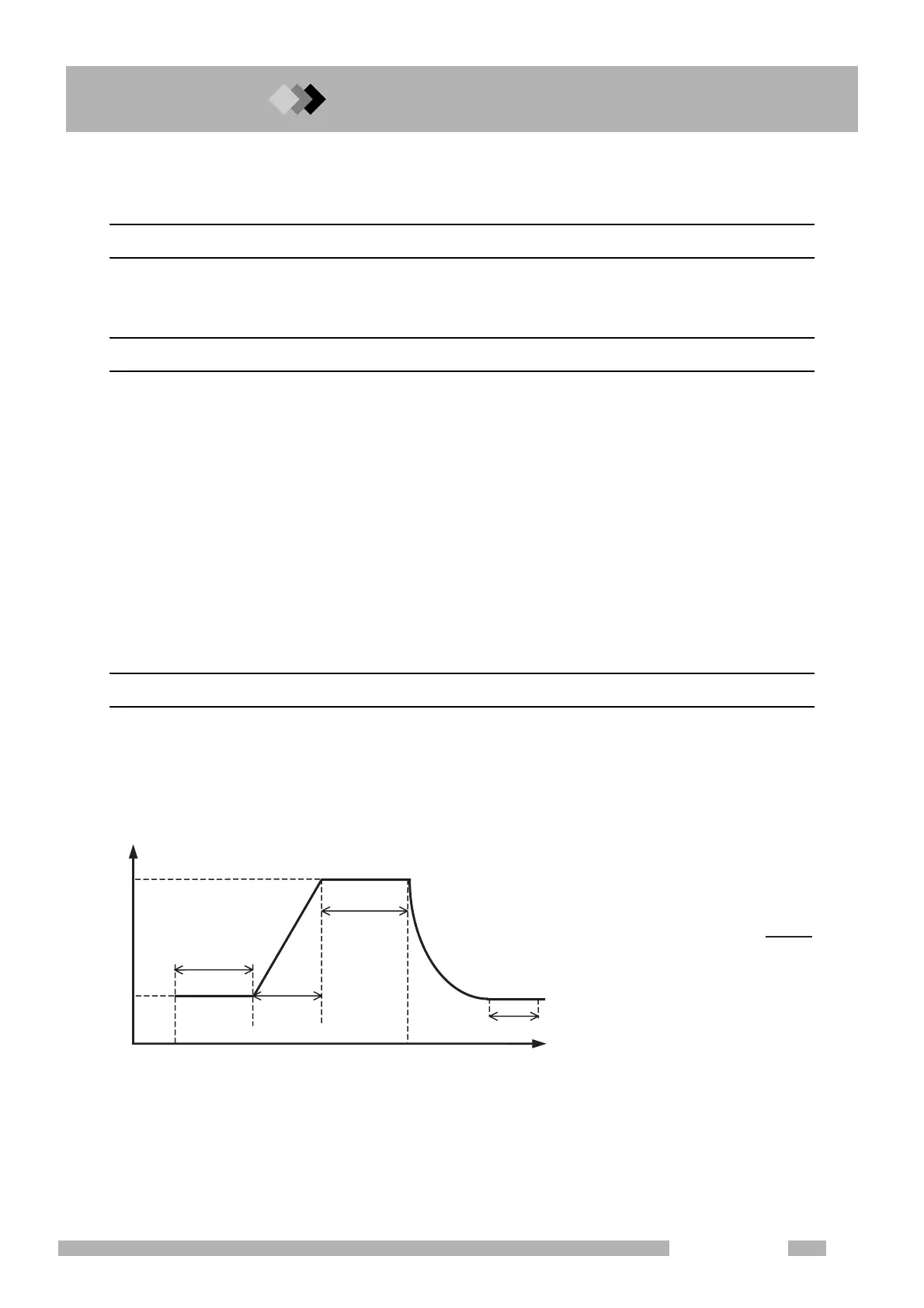
11.2.3 Creating a temperature program
Q Screen terminology
1-ramp temperature program
Initial setting (TEMP).... T1
Initial setting hold time (TIME)..... a
Program rate (RATE)....
Final temperature (TMP)...... T2
Final temperature hold time (TIM)....... c
Equilibration time (ETIM).....
d
Column oven
temperature
Time
T2
T1
a
c
d
b
Program
starts.
Program
finishes.
T2-T
1
b



 To Next Page
 Loading...