346 Matrix ETERNITY NE System Manual
• Forced: Select Forced if you want SARVAM UCS to use only SRTP (SAVP) for transporting the speech
packets. If the remote user does not support SRTP, SARVAM UCS will reject incoming calls from and drop
outgoing calls made to such users.
By default, SRTP Mode is Disabled.
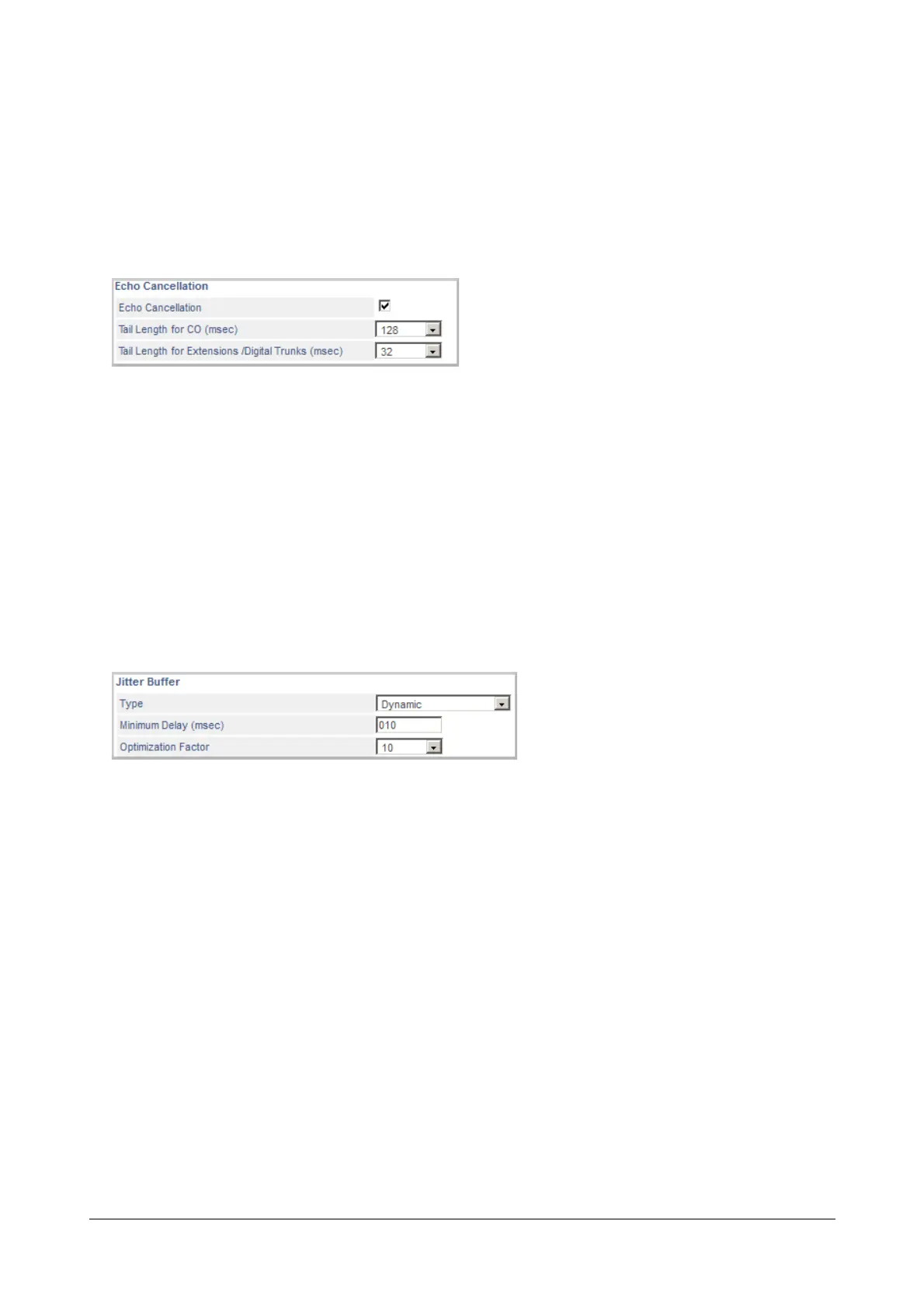
Echo Cancellation
SARVAM UCS supports Echo Cancellation for SIP to CO trunk calls and SIP to Digital Trunks (Mobile, SIP) and
Extensions (SIP). If you want to apply Echo Cancellation,
• Select the Echo Cancellation check box. Default: Enabled.
• Set the tail length for echo cancellation for SIP to CO trunks as Tail Length for CO (msec). The echo
cancellation Tail Length for SIP to CO trunks can be 32/64/128 milliseconds. Default: 128 milliseconds.
• Set the tail length for echo cancellation for SIP to Mobile/SIP trunks and SIP to SIP extensions as Tail
Length (msec) for Extensions/Digital Trunks (msec). The echo cancellation Tail Length for SIP to
Digital Trunks/Extensions can be 32/64/128 milliseconds. Default: 32 milliseconds.
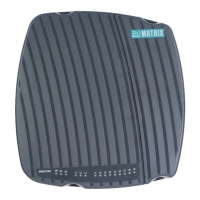
Jitter Buffer
The speed at which voice packets travel through a network depends on the condition of the network. All voice
packets may not come at the same speed. This variation in the delay in receiving packets, known as Jitter, affects
voice quality. Jitter Buffer helps overcome the delay in receiving voice packets and improves voice quality
. Jitter
Buffer receives voice packets, stores them and sends it to the DSP to process it at evenly spaced intervals, thus
improving voice quality.
SARVAM UCS supports two types of Jitter Buffer: Static and Dynamic. Static Jitter Buffer's internal delay is static,
whereas, the Dynamic Jitter Buffer's internal delay adapts itself to the jitter in the network.
• Select the Jitter Buffer Type as Static or Dynamic.
If you select Static Jitter Buffer, configure the 'Minimum Delay'. The value configured in the Minimum
Delay determines the size of the Static Jitter buffer.
If you select Dynamic Jitter Buffer, configure the 'Optimization Factor' and 'Minimum Delay'. The
minimum size of the Dynamic Jitter buffer depends on the 'Minimum Delay' configured. The Optimization
Factor determines the rate of adaptation of the Dynamic Jitter Buffer to the jitter in the network.
• Set the Minimum Delay (msec) (for both Static and Dynamic Jitter Buffer) to the desired value from 10 to
280 milliseconds. Default: 10.


 To Next Page