CAPINTEC, INC. CAPTUS
®
4000e
2-4 FUNCTIONAL & TECHNICAL DESCRIPTION July 16
Bioassay
All staff members who work with Iodine-131, Iodine-125, or Iodine-123 need to have regular
Bioassay measurements taken to monitor exposure levels. Most state and federal radiation
safety regulations mandate that these thyroid measurements be taken periodically.
The CAPTUS
®
4000e uses one bioassay protocol, which is user-defined. Before performing
bioassay measurements on the staff, the staff member names and ID numbers should be
added to the database and parameters for the bioassay protocol should be set up.
TECHNICAL DESCRIPTION
The CAPTUS
®
4000e is a PC based application running on the Windows
®
operating system.
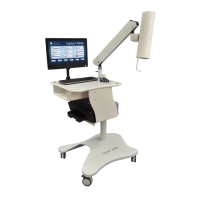
The basic Thyroid Uptake system consists of the following:
• Floor Stand or Optional Table Top Stand
• TUS Collimator
• Isolation Transformer
• NaI (sodium iodide) Detector with Detector Socket Base
Note: Two versions of detectors are available: Flat Face or Drilled.
• All-in-One Touchscreen Computer System with software installed to switch inputs and
perform multi-channel analysis
• CAP-MCA hardware
• Printer
• Cables for connecting Detector, CAP-MCA, etc.
• 15 foot power cord with hospital grade plug
• Windows 8.1 or later,
• CAPTUS
®
4000e Software Installation CD including Owner’s Manual
• Optional Well Counter with drilled Well Detector
Detector
The CAPTUS
®
4000e system is equipped with one or two NaI (Tl) (Thallium-activated
Sodium Iodide) crystal and photomultiplier tube detector assemblies, a 1024 channel MCA
(Multi-Channel Analyzer), along with associated electronics and electronic controls which
provide power and amplification of the pulses generated by the detectors, as well as software
modules which record, analyze, manipulate, and store the measured data.
Since NaI crystals are hygroscopic, the detector assemblies are hermetically sealed with an
aluminum coating. If the seal is broken, then water will be absorbed by the crystal, causing
deterioration of its measurement capabilities, and eventually it will require replacement. For
this reason, always handle the detector with care. Avoid scratching the surface with metal
objects such as pens.


 To Next Page