DMTA-10045-01EN, Rev. E, August 2016
Chapter 6
122
6.1 Common BondMaster 600 Applications
This section contains example procedures that are commonly used for aircraft
component inspections.
6.1.1 Detecting Skin-to-Core Disbonds in Honeycomb Composite — Flat or
Constant Geometry Using PC RF or IMPULSE Techniques
Because the pitch-catch (PC) RF or IMPULSE mode uses a fixed frequency tone burst,
it is well suited to inspect honeycomb composite parts that have constant geometry or
that are flat. The choice of the frequency (normally selected and recommended by the
part’s manufacturer) will make a huge difference in the detection observed, and
should be respected.
The procedure in this section is intended as a general guideline on how to prepare a
setup for a honeycomb composite part; a similar procedure can easily be applied to a
variety of skin and core materials.
Although PC RF or IMPULSE mode is a preferred technique for detecting skin-to-
core disbonds in honeycomb composite, a similar procedure can sometimes be used
to inspect metal-to-metal bonds or significant delamination in composite materials.
The following procedure is also intended to demonstrate the various important or
new features of the BondMaster 600 and as such, shows alternate displays at the end.
This purpose of this procedure is to detect and differentiate between near-side
disbonds and far-side disbonds.
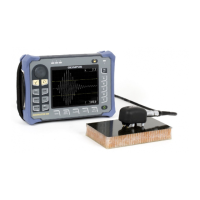
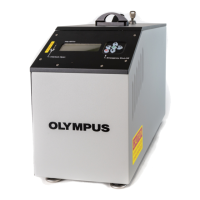
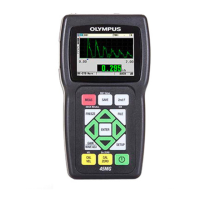
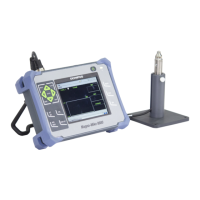
Inspection materials are shown in Figure 6-1 on page 123.





 To Next Page