15.39
Date Code 20171006 Instruction Manual SEL-400 Series Relays
Communications Interfaces
SEL-2600A RTD Module Operation
SEL-2600A RTD Module Operation
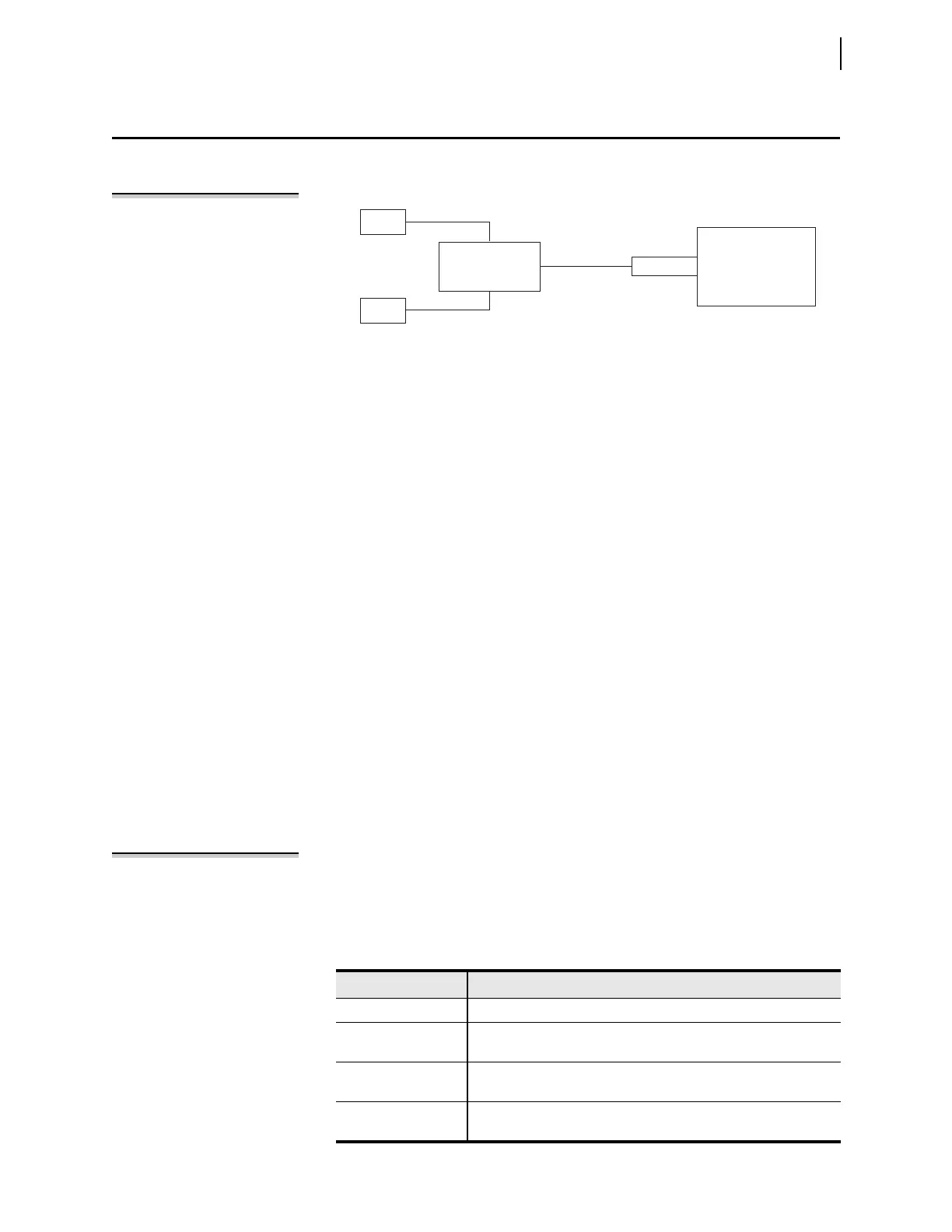
The SEL-2600A RTD Module Protocol (RTD) enables communication with an
SEL-2600A via an SEL-2800 (EIA-232 to Fiber-Optic) Transceiver.
NOTE: Not all SEL-400 series relays
support communication with
SEL-2600A RTD Modules.
This protocol supports data acquisition of as many as 12 temperature channels
and places the results directly into predefined analog quantities (RTD01–RTD12)
inside the relay for use in freeform SEL
OGIC applications. For more information
on the SEL-2600A or SEL-2800, contact your local technical service center, the
SEL factory, or visit the SEL website at selinc.com for a copy of the SEL-2600A
and SEL-2800 product fliers.
Initialization
Perform the following steps to prepare the relay for communicating with an
SEL-2600A RTD module:
Step 1. Set the desired port to RTD protocol.
Step 2. Set the port setting RTDNUM to the number of RTDs attached to the
SEL-2600A.
Step 3. Set the RTD type settings (RTDnnTY) to the appropriate RTD type.
Step 4. Connect the SEL-2600A RTD Module to the port via the SEL-2800
(EIA-232 to Fiber-Optic) Transceiver.
Operation
The SEL-2600A RTD module sends all temperature measurements to the relay
every 0.5 seconds. The relay places the received temperature measurements into
analog quantities RTD01–RTD12 for use in freeform SEL
OGIC applications. The
data range is from –50 to +250 °C.
NOTE: When a channel status bit is
not asserted, the data in the
respective analog quantity is the last
valid temperature, not the current
temperature.
If the relay stops receiving valid analog quantities from a certain channel, the
temperature stored in the relay freezes at the last received value. Fifteen status
bits help supervise decisions based on temperature measurements. Table 15.29
describes how to interpret the status bits.
Figure 15.7 SEL-2600A RTD Module and the Relay
SEL-2800
Relay
SEL-2600A
RTD Module
RTD
RTD
Ta b l e 1 5. 29 R T D S ta tus B i t s
RTD Status Bit Description
RTDFL Asserts if the SEL-2600A experiences an internal problem.
RTDCOMF Asserts if the relay does not receive a valid measurement from the
SEL-2600A for 1.25 seconds.
RTD01ST–RTD12ST Assert when an RTD is attached to a channel and the SEL-2600A is
able to read RTD.
RTDIN SEL-2600 input status bit. Asserts when the SEL-2600 is healthy and
the received data indicates the assertion of the input.


 To Next Page