6.97
Date Code 20171021 Instruction Manual SEL-421 Relay
Protection Applications Examples
EHV Parallel 230 kV Underground Cables Example
Quadrilateral Ground Polarizing Quantity
Advanced Settings are enabled, so you must enter two final settings for the quad-
rilateral ground-distance protection. With setting XGPOL, you can choose the
polarizing quantity for the quadrilateral ground-distance protection. You can
choose either negative-sequence current (I2) or zero-sequence current (IG).
Choose the appropriate quantity to reduce overreach and underreach of the reac-
tance line. The reactance line can underreach or overreach during high-resistance
single phase-to-ground faults because of nonhomogeneous negative-sequence or
zero-sequence networks, and prefault load flow.
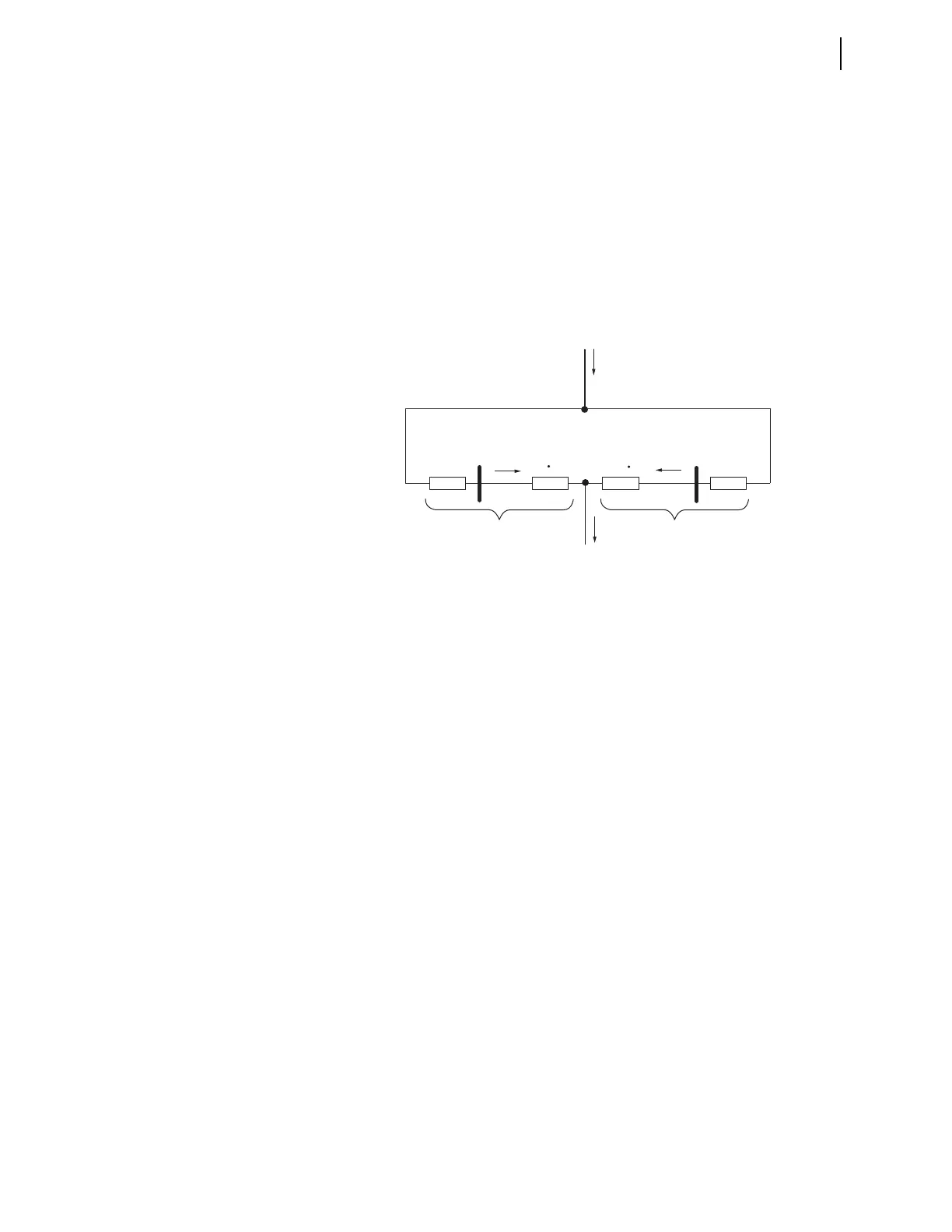
Figure 6.22 shows the network to determine negative-sequence or zero-sequence
homogeneity.
Z
left
is the total impedance up to the fault (F) on the left side of the fault location,
while Z
right
is the total impedance up to the fault on the right side of the network.
A network is homogeneous with respect to the particular fault location if
Equation 6.58 is satisfied:
Equation 6.58
Use Equation 6.59 and Equation 6.60 to determine the zero-sequence and nega-
tive-sequence homogeneity:
Equation 6.59
Equation 6.60
The values T
0
and T
2
represent how much the apparent fault impedance mea-
sured by XAG tilts up or down (electrical degrees) because of the nonhomogene-
ity of the corresponding network. Figure 6.23 illustrates the possible tilt
situations caused by a nonhomogeneous network.
Figure 6.22 Circuit to Determine Network Homogeneity
Z
left
Z
right
S
I
F
I
F
I
FS
I
FR
Z
S
Z
R
m Z
L
(1—m) Z
L
R
F
X
left
R
left
------------
X
right
R
right
---------------=
T
0
ARG
Z
0S
Z
0L
Z
0R
++
1m–Z
0L
Z
0R
+•
---------------------------------------------------
=
T
2
ARG
Z
1S
Z
1L
Z
1R
++
1m–Z
1L
Z
1R
+•
---------------------------------------------------
=


 To Next Page