RFL 9300 RFL Electronics Inc.
January 30, 2002 6-3 (973) 334-3100
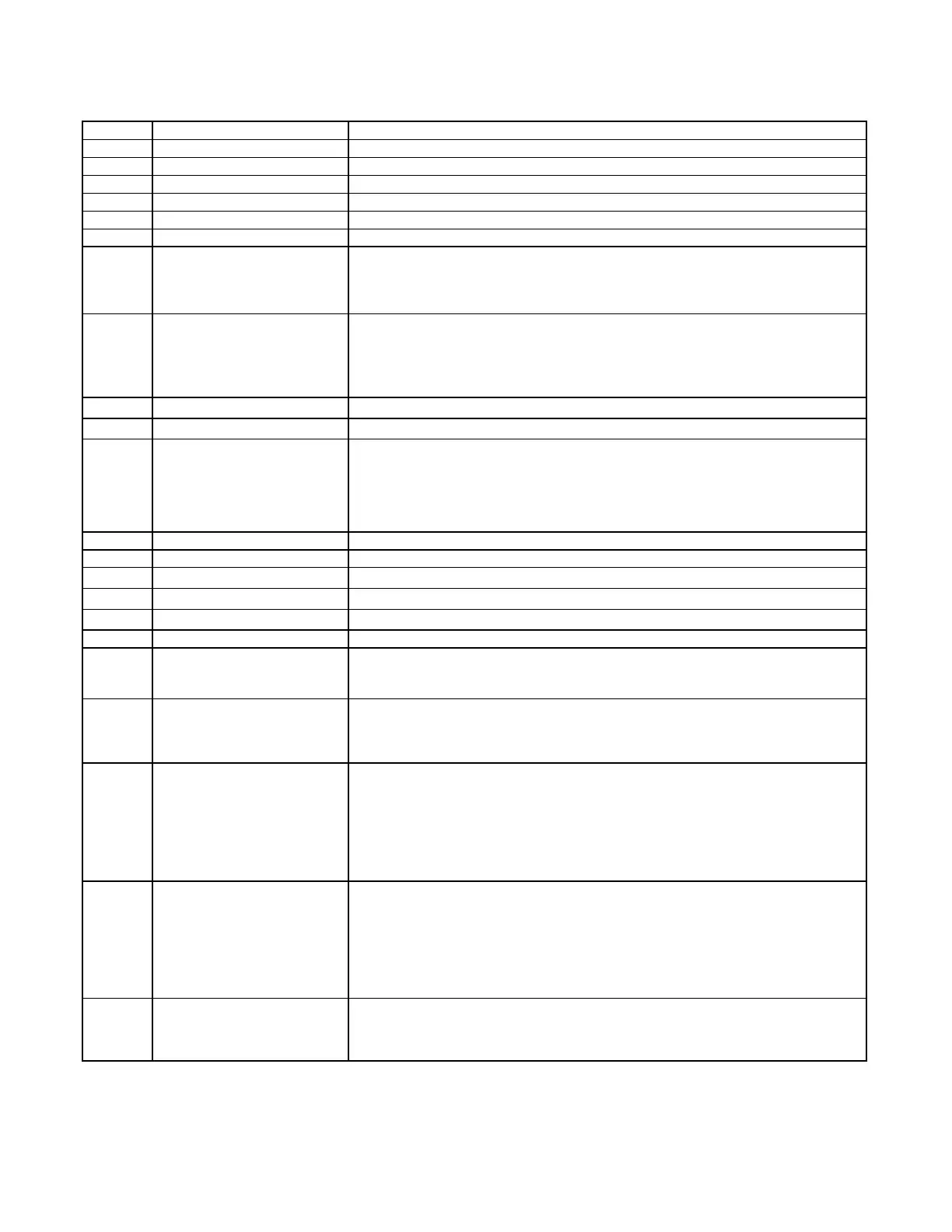
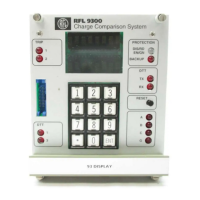
Table 6-1. Controls and indicators, typical three-terminal RFL 9300 Charge Comparison System
Item Description or Marking Function
1 CH1 ALARM indicator Lights when there is a failure in CH1 communication
2 CH2 ALARM indicator Lights when there is a failure in CH2 communication
3 CH1 P-P indicator Lights when a Channel 1 ping-pong test (round-trip delay measurement) is successful.
4 CH2 P-P indicator Lights when a Channel 2 ping-pong test (round-trip delay measurement) is successful.
5 TX/RX ALARM indicator Lights when a communications failure is detected.
6 ALARM indicators Lights when a problem is detected in a specific phase controller module.
7 TRIP relay target indicators Light when the CCS TRIP relay contacts are carrying dc trip currents of at least 0.2 ampere
(STD.).
These indicators are latched in non-volatile memory, and can only be reset by pressing the RES
button. (Can also be reset through APRIL)
8 Alphanumeric display Indicates operating status, parameter values, and alarm codes. The display contains
16 alphanumeric LED readouts, arranged in two eight-character lines. The top line
displays either the mode or the selected operating parameters within each mode.
The bottom line displays additional information about the mode or parameter
appearing on the top line.
9 PROTECTION indicator Lights green when protection is enabled; turns red when trip function outputs are disabled.
10 BACKUP indicator Lights red when RFL 9300 backup is active.
11 DTT targets Indicate direct transfer trip status:
TX:Lights when DTT command is sent to remote unit.
RX:Lights when DTT command is received from remote unit.
These indicators are latched in non-volatile memory, and can only be reset by pressing the
RESET button. (Can also be reset through APRIL)
12 CH1 TX ON indicator Lights when the CH1 transmitter is functioning
13 CH2 TX ON indicator Lights when the CH2 transmitter is functioning
14 CH1 BER indicator Lights when the CH1 bit error rate (BER) is within limits.
15 CH2 BER indicator Lights when the CH2 bit error rate (BER) is within limits. (Three-terminal systems only)
16 SYS ALARM indicator Lights when a system problem not involving communications is detected.
17 FD indicators Lights when fault detector for that phase produces an output.
18 DTT target indicators Light when the DTT trip circuit carries dc currents of at least 0.1 ampere.
These indicators are latched in non-volatile memory, and can only be reset by
pressing the RESET button. (Can also be reset through APRIL)
19 Keypad Used to enter security codes, parameter numbers and select parameter values.
(See Figure 6-2 and Table 6-2 for more information on keypad functions.)
If the RFL 9300 is in the PROGRAM mode or READ mode and the keypad is not used for 15
minutes, the RFL 9300 will automatically return to STANDBY mode.
20 TRIP indicators
Light to indicate the phase controller has issued a trip signal:
A: Phase A trip.
B: Phase B trip.
C: Phase C trip.
G: Ground (3I
0
) trip.
These indicators are latched in non-volatile memory, and can only be reset by
pressing the RESET button. (Can also be reset through APRIL)
21 RESET button
Used to manually reset alarms. When this switch is pressed, all indicators on the
display module (except PROTECTION and BACKUP) will light for three seconds to test
their function before they are reset. After the indicators on the RFL 93B DISPLAY
module go off, indicators 5, 6, 7 & 16 will light. If the RESET switch is pressed
while the RFL 9300 is in the READ or PROGRAM mode, the RFL 9300 will
return to the STANDBY mode. If the 9300 trip outputs are closed and the RESET button
is pressed, “TRIP ACTIVE” will appear on the display.
22 RS-232 connector
Allows a user to connect a PC to access the RFL 9300. See paragraph 6.5 for more information


 To Next Page