8.2.3.4.2 Internal A-B Faults
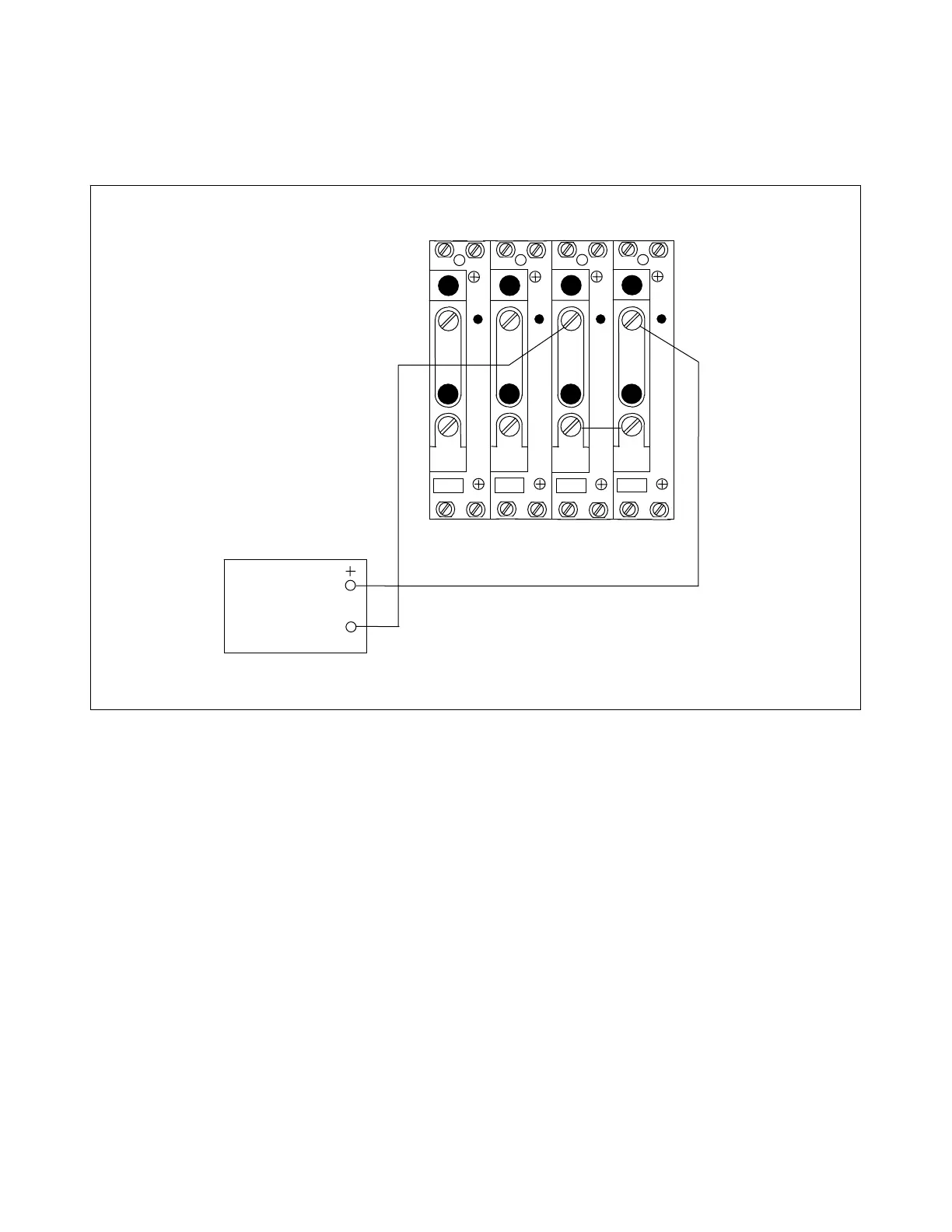
1. Connect the equipment as shown in Figure 8-3.
TB4
TB5
A
C
T
A
C
T
TB6
TB7
A
C
T
A
C
T
1
1 1 1
2
2
2
2
AC
CURRENT
SOURCE
3I
0
I
C
I
B
I
A
Figure 8-3. Test connections simulating an internal A-B fault
2. Starting from zero amperes, gradually increase the test current.
Between 1.5 amperes and 1.75 amperes, the display will read "ALARM 34 32 31
61 62." This means an LCCT and general phase controller alarm condition exists
on Phase A and Phase B.
Note: All alarms may not be visible on the display controller. Four alarm codes
can be displayed at one time. A partial list is considered normal for this test.
3. Starting from zero, apply 1.5 amperes suddenly.
The red FD indicators on all 93B PC modules will flash momentarily, and tripping
will occur. The A, B, and TRIP 1 indicators on the 93B DISPLAY module will light.
4. Continue to increase the test current to a level of 6 amperes or more.
The red FD indicators on the 93B PC modules monitoring Phase A and Phase B
will light.
5 (optional). Measure trip times for various current levels.
The results should be roughly the same as for A-G faults.
RFL 9300 RFL Electronics Inc.
October 20, 2004 8 - 15 (973) 334-3100


 To Next Page