4
The RFL 9300 is designed to work over the following types
of communication links:
• VF channel using a 7200-bps modem. (3-pole model only)
• Direct digital, at either 56 or 64 Kbps.
• G.703
• RS-449
• V.35
• X.21
• Fiber Optics:
• 850-nm multimode
• 1300-nm multimode
• 1300-nm singlemode (LED or laser)
• 1550-nm singlemode (laser)
• 850-nm Short Haul Fiber Interface(ANSI C37.94)
}
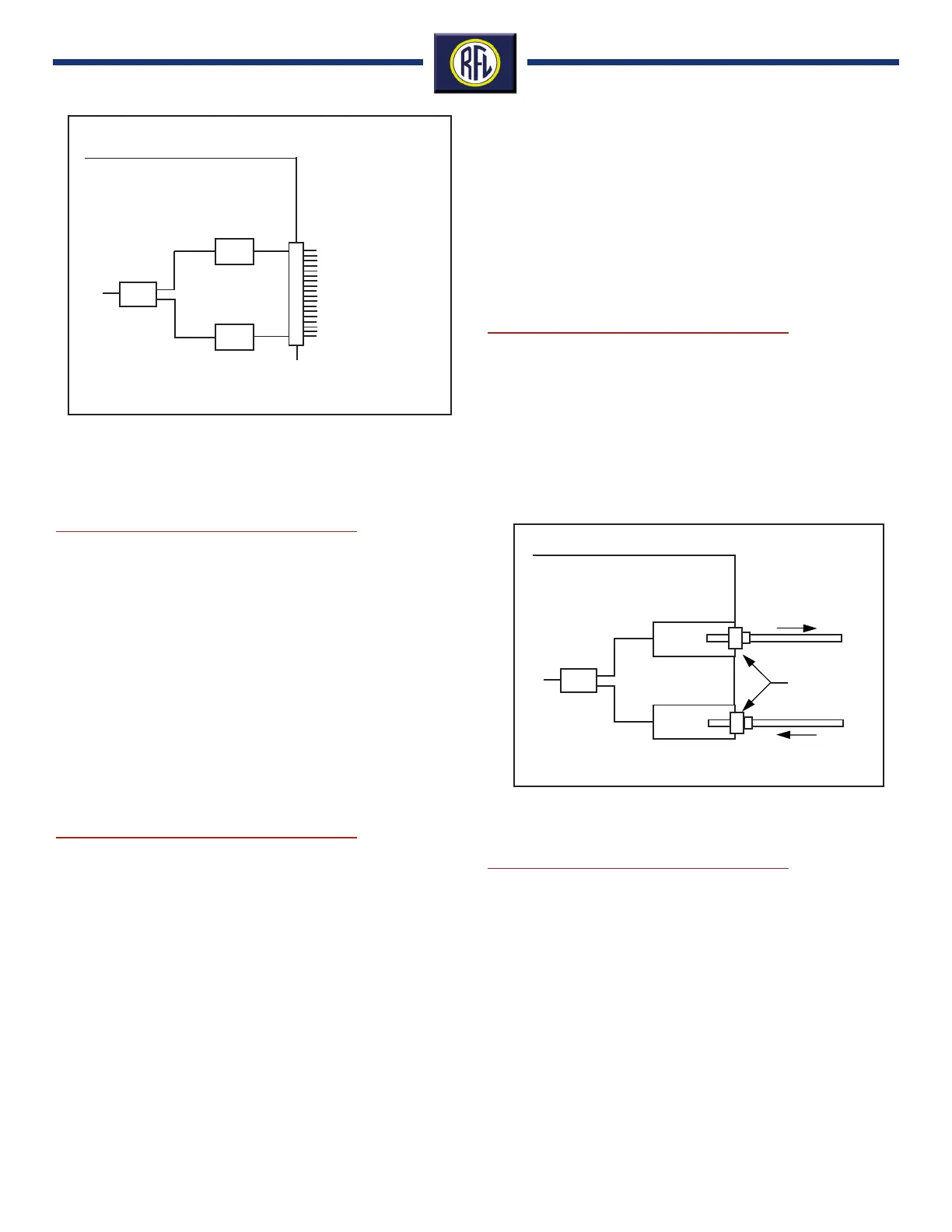
Figure 4. Communication connections for typical RFL
9300 equipped with RS-442 digital interface.
The RFL 9300 compares the local current with the remote
current on each phase and residual separately. This pro-
vides many advantages over the comparison of a single com-
posite quantity:
• Correctly detects the high resistance ground fault with
heavy through-load current.
• Provides fault-type identification for targeting.
• Provides optional reclose blocking for three-phase faults.
• Correctly responds to simultaneous faults.
• Redundancy (at least two comparisons sense all internal
faults).
• Same phase sensitivity for all fault types.
The RFL 9300 is suitable for application on three terminal
power lines. The basic operational concepts and setup pa-
rameters are largely unchanged for three terminal opera-
tion. The practice of prefault load subtraction has been added
to enhance the operation under wide generator angles and
communication delay compensation errors. Two terminal op-
eration is unchanged from previous versions. Existing re-
lays can be upgraded in the field from two to three terminal
capability with an available upgrade kit.
The concept of single pole tripping is to isolate only the faulted
phase for single line to ground faults. Combined with single pole
reclosing, this relaying technique maintains system stability by
retaining synchronization, and reducing the amount of system
voltage fluctuation. For persistent single line to ground faults, or
multiphase faults, all three poles are tripped.
Because the RFL 9300 Charge Comparison System operates
on a per phase basis, it is ideally suited for single pole trip
applications. The RFL 9300 correctly identifies the faulted phase
by comparing the local, and remote phase currents at both
terminals. The faulted phase is tripped locally, and phase specific
trip messages are also sent to the opposite terminal.
The relay provides pre phase protection over a single DS0/
56Kbps synchronous data channel, or a pair of dedicated fiber
RFL Electronics Inc. June 10, 2002
RFL 9300DCDR
37-Pin RS-449
Connector.
Signals Conform
to RS-422
Tx
Rx
CC
RFL 9300 Ordering Number CCSBDK5N5A
∅∅
∅∅
∅
Otherwise same as modem version, Figure 3
Advantages
Per-Phase Protection
Single Pole Trip Option
optic cables. For three terminal line applications, a second
communications channel is required. Depending upon the fault
conditions, tripping is obtained in 12 to 32 msec. providing almost
simultaneous tripping at both terminals.
The single pole trip option is provided in an auxiliary two rack unit
chassis that is mounted below the standard RFL 9300 chassis.
Six trip rated contacts are provided for each phase, two of which
control non-volatile LED trip indicators on
the front panel.
Three-Terminal Line Protection
CC
RFL 9300 Ordering Number CCSBPK5N5A
∅∅
∅∅
∅
Tx
Rx
ST Connec-
Singlemode
Fiber
Singlemode
Fiber
Otherwise same as modem version, Figure 3
Figure 5. Communication connections for typical
Communication Media


 To Next Page