Date Code 20171006 Instruction Manual SEL-400 Series Relays
Instruction Manual
SECTION 4
Front-Panel Operations
The relay front panel makes power system data collection and system control
quick and efficient. Using the front panel, you can analyze power system operat-
ing information, view and change relay settings, and perform relay control func-
tions. The relay features a straightforward menu-driven control structure
presented on the front-panel LCD. Front-panel targets and other LED indicators
provide a quick look at relay operation status. You can perform often-used con-
trol actions rapidly by using the large direct-action pushbuttons. All of these fea-
tures help you operate the relay from the front panel and include:
➤ Reading metering
➤ Inspecting targets
➤ Accessing settings
➤ Controlling relay operations
This section describes features found in many, but not necessarily all, SEL-400
series relays. See the relay-specific instruction manuals to determine which front-
panel features are supported in that relay. This section includes the following:
➤ Front-Panel Layout on page 4.1
➤ Front-Panel Menus and Screens on page 4.14
➤ Front-Panel Automatic Messages on page 4.31
➤ Operation and Target LEDs on page 4.33
➤ Front-Panel Operator Control Pushbuttons on page 4.34
Front-Panel Layout
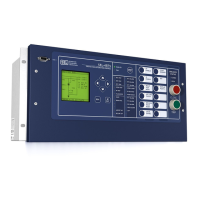
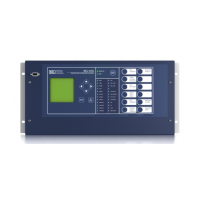
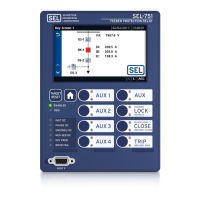
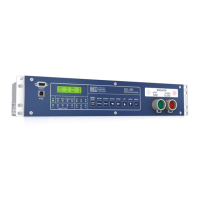
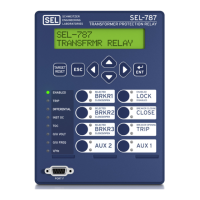
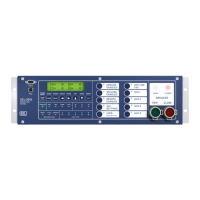
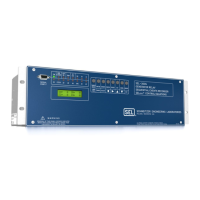
Some SEL-400 series relays come with a front panel with 16 target LEDs and 8
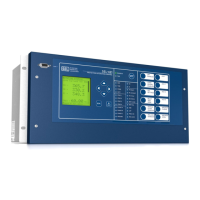
operator pushbuttons. Others come with 24 target LEDs and 12 operator pushbut-
tons. Refer to the product-specific instruction manual to see which displays are
available for any specific relay. Figure 4.1, Figure 4.2, and Figure 4.3 show what
these front panel options look like in the SEL-451 and the SEL-487E relays.
Some relays are also available with direct action pushbuttons for breaker control,
which is illustrated in Figure 4.2.


 To Next Page