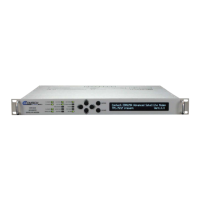
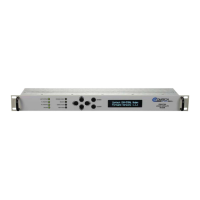
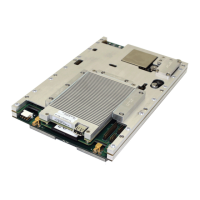
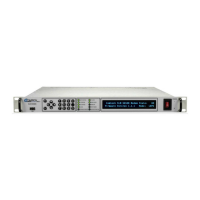
CDM-625 Advanced Satellite Modem Revision 13
Preface MN-CDM625
xxx
• For AC operation, the unit requires two common 4 Amp/250 volts 20mm x 5mm Slow-
blow fuses that are contained within a fuse holder that is press-fit into the body of the
IEC power inlet module (on the rear panel of the unit).
• For DC operation, the unit requires two different fuses that are contained within the
individual screw-in receptacles below the terminal block (on the rear panel of the unit).
These DC fuse requirements are as follows:
o Modem Operation – 3 Amp/250 volts 20mm x 5mm Slow-blow fuse.
o BUC Operation – 6.3 Amp/250 volts 20mm x 5mm Slow-blow fuse.
Operating Environment
DO NOT OPERATE THE UNIT IN ANY OF THESE EXTREME OPERATING
CONDITIONS:
• AMBIENT TEMPERATURES LESS THAN 0°C (32°F) OR MORE THAN 50°C
(122°F). (MAXIMUM STORAGE TEMPERATURE ALLOWED IS -25°C
(-13°F) TO 85°C (185°F)).
• PRECIPITATION, CONDENSATION, OR HUMID ATMOSPHERES OF MORE
THAN 95% RELATIVE HUMIDITY.
• UNPRESSURIZED ALTITUDES OF MORE THAN 2000 METRES (6561.7
FEET).
• EXCESSIVE DUST.
• FLAMMABLE GASES.
•
CORROSIVE OR EXPLOSIVE ATMOSPHERES.
European Union Radio Equipment and Telecommunications Terminal
Equipment (R&TTE) Directive (1999/5/EC) and EN 301 489-1
Independent testing verifies that the unit complies with the European Union R&TTE Directive, its
reference to EN 301 489-1 (Electromagnetic compatibility and Radio spectrum Matters [ERM];
ElectroMagnetic Compatibility [EMC] standard for radio equipment and services, Part 1:
Common technical requirements), and the Declarations of Conformity for the applicable
directives, standards, and practices that follow:
European Union Electromagnetic Compatibility (EMC) Directive
(2004/108/EC)
• Emissions: EN 55022 Class B – Limits and Methods of Measurement of Radio
Interference Characteristics of Information Technology Equipment.


 To Next Page