EasyManua.ls Logo

Comtech EF Data CDM-625 - D.4.1 Packet Structure; D.4.1.1 Start of Packet

Comtech EF Data CDM-625
690 pages
Print Icon
To Next Page IconTo Next Page
To Previous Page IconTo Previous Page
Loading...
CDM-625 Advanced Satellite Modem Revision 13
Appendix D MN-CDM625
D–3
D.4.1 Packet Structure
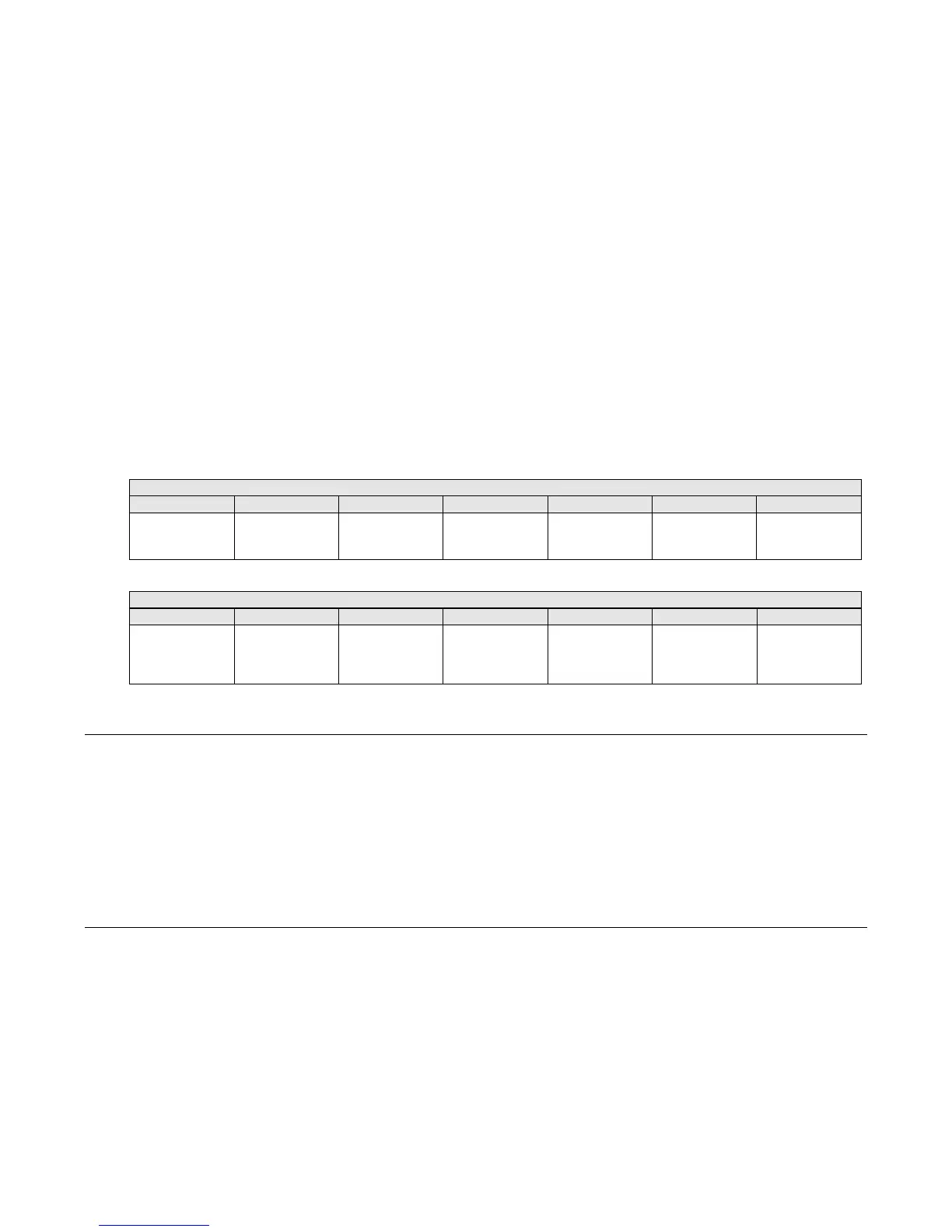
The exchange of information is transmitted, Controller-to-Target and Target-to-Controller, in ‘packets’. Each packet contains a finite
number of bytes consisting of printable ASCII characters, excluding ASCII code 127 (DELETE).
In this context, the Carriage Return and Line Feed characters are considered printable. With one exception, all messages from Controller-
to-Target require a response this will be either to return data that has been requested by the Controller, or to acknowledge reception of an
instruction to change the configuration of the Target.
Controller-to-Target
Start of Packet
Target Address
Address Delimiter
Instruction Code
Code Qualifier
Optional Arguments
End of Packet
<
ASCII code 60
(1 character)
(4 characters)
/
ASCII code 47
(1 character)
(3 characters)
= or ?
ASCII codes 61 or 63
(1 character)
(n characters)
Carriage Return
ASCII code 13
(1 character)
Example: <0135/TFQ=70.2345{CR}
Target-to-Controller
Start of Packet
Target Address
Address Delimiter
Instruction Code
Code Qualifier
Optional Arguments
End of Packet
>
ASCII code 62
(1 character)
(4 characters)
/
ASCII code 47
(1 character)
(3 characters)
=, ?, !, or *
ASCII codes
61, 63, 33, or 42
(1 character)
(From 0 to n characters)
Carriage Return, Line
Feed
ASCII codes 13,10
(2 characters)
Example: >0654/RSW=32{CR}{LF}
D.4.1.1 Start of Packet
Controller-to-Target: This is the character ‘<’ (ASCII code 60).
Target-to-Controller: This is the character ‘>’ (ASCII code 62).
The ‘<and ‘>’ characters indicate the start of packet. They may not appear anywhere else within the body of the message.

Table of Contents

Related product manuals