At high temperatures, cert ain ceramic materials,
su ch as zirconium-dioxide (ZrO2) become oxygen ion
conductor s. In a typical O2 sensor, the ZrO2 is used
as a solid electrolyt e, which conducts oxygen ion s.
The solid electrolyte is san dwiched between two plat-
inum electrodes. The sensor gener ates a small volt-
age when oxygen moves from t he high concentration
side to the low concen tra tion side.
The same h old t rue if the process is reversed. If
volt age is applied to t he pla tinum electrodes, oxygen
can be pum ped from one side of th e solid electr olyte
to th e other (from cathode to a node), becom ing an
oxygen pump. The amou nt of current flow is direct ly
pr opor tional to the a mount of ox ygen pu mped by th e
sensor. When the oxygen level on t he supply side
reach es zero, the cu rren t stops.
The E CM activa tes the integral heater element to
raise t he tempera ture of t he sensor to 700C (192°F)
for the ZrO2 to become conductive. The heat er ele-
ment is designed t o reach th is tempera ture wit hin 8
seconds an d mainta ining it a t this level. In cold tem-
perat ures, t his can be delayed up to 5 m inutes to
pr event damaging the cer amic coat ing of the sen sor
from water condensa tion. Once the sen sor is heated,
the exhau st gas componen ts diffuse t hrough the gas
sa mple cha mber. Upon rea chin g the electrodes on th e
oxygen pum p and concen tration cells t hey rea ch stat e
of thermodynam ic balance (Fig. 26).
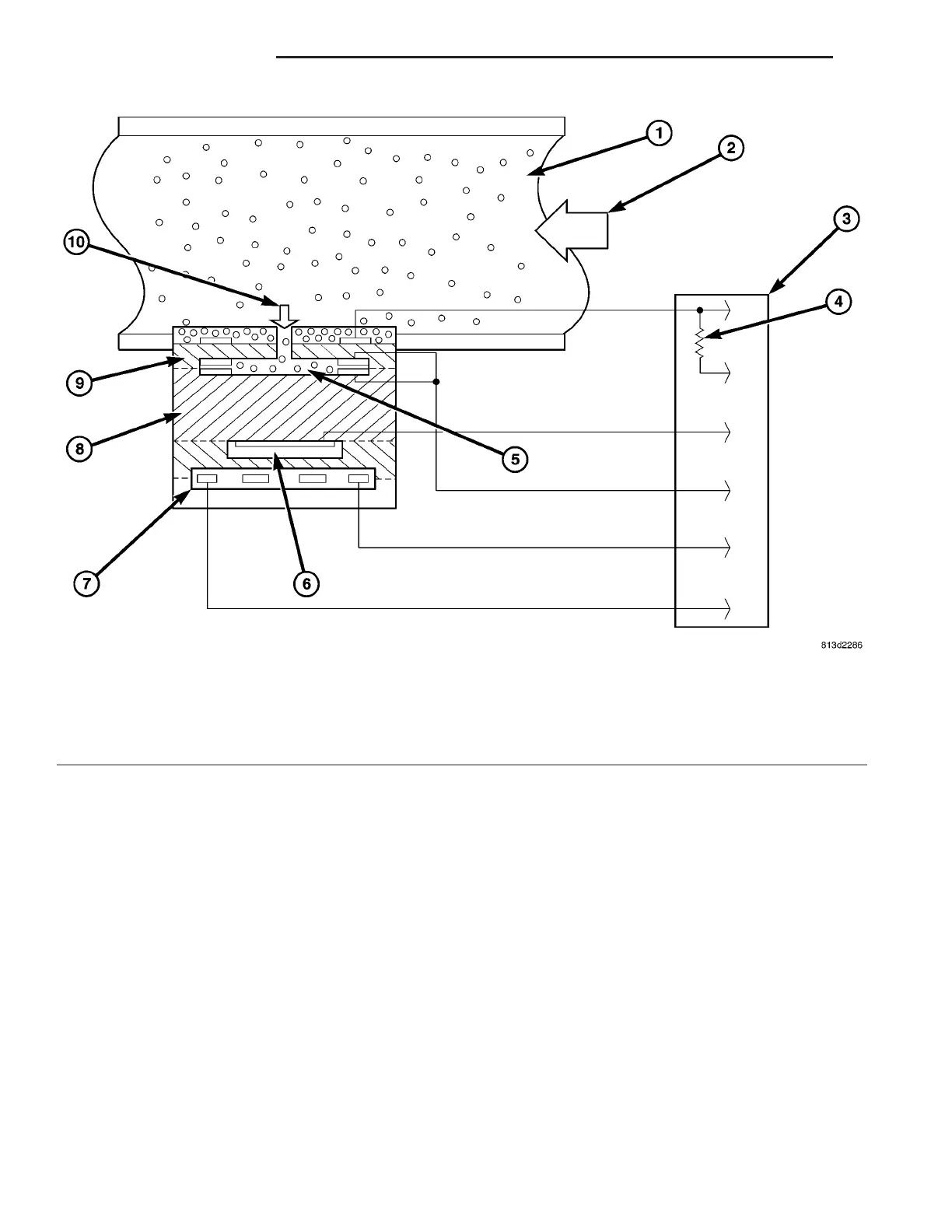
Fig. 25 O2 CONSTRUCTION
1 - EXHAUST PIPE 6 - REFERENCE AIR CHANNEL
2 - EXHAUST GAS FLOW 7 - HEATER ELEMENT
3 - O2 SENSOR CONNECTOR 8 - SENSOR CELL
4 - TRIMMING RESISTOR 9 - OXYGEN PUMP CELL
5 - GAS SAMPLE CHAMBER 10 - SAMPLE PASSAGE
14 - 46 FUEL INJECTION VA















 To Next Page