Overview
DSX™ System Service Manual 4-1
•
•
•
•
•
•
•
Chapter 4 Troubleshooting
4.1 Overview
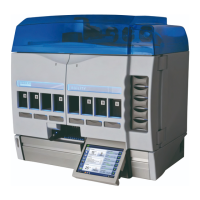
Although the DSX Automated ELISA System consists of several components, troubleshooting
can be simplified by a consideration of the following guidelines:
In almost all cases there is a single proximate cause for a problem.
A fundamental knowledge of each component in the system is extremely useful in
diagnosing the problem.
The availability of critical spare parts in the system is extremely useful. A list of spare
parts for the system and supplies is provided in the chapters that describe service for
each module.
If any aspect of the system is changed, run a before and after experiment to verify that
the effect of the change is well understood. Do not consider any change as trivial. As
an example, if the user has changed the brand/model of microplates, check that all
settings are correct.
A detailed troubleshooting table is presented as part of the on-line help file.
Three types of problems are typically observed:
Initialization Problems - the system does not power up (refer to the section entitled,
Initialization on page 4-2).
System Problems – the instrument powers up successfully but does not appear to be
functioning properly. In some cases, there is a communication fault; while in other
cases, a component of the system is faulty and must be repaired or replaced. Examples
of this type of problem include the inability of the system to deliver the desired
volume of sample into the wells or the inability of the lamp in the reader module to
illuminate (refer to the section entitled, System Problems on page 4-6).
Application Problems - in some situations, the system appears to be operating in an
acceptable manner but invalid concentration readings are presented. The service
engineer should note that there may be a problem with the reagents, the assay
protocol, etc. In this situation, it is worthwhile to use standards, independent test
solutions or a different assay to verify that the system is functioning properly (refer to
the section entitled, Application Problems on page 4-10).


 To Next Page