Application Problems
4-10 DSX™ System Service Manual
•
•
4.4 Application Problems
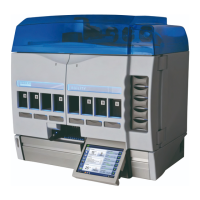
Two general types of problems may be noted with the DSX Automated ELISA System:
Hardware/Software Problem: When a hardware or software fault is noted, the
service engineer is expected to repair, replace, or remedy the problem as described in
this manual. Typically, the system is functioning in a satisfactory manner but a fairly
straightforward action is performed (for example, the lamp in the reader module is to
be changed).
Application Problem: In some instances, all components of the system are
functioning in an acceptable fashion but the reported results are incorrect or are not
being reported. In this situation, it may be necessary for the service engineer to
determine if there have been any changes in the assay protocol.
Note: Most application issues are due to small and seemingly trivial
changes that are made in the overall assay protocol.
If it is believed that the problem is due to an application issue, we suggest the following steps:
•
•
•
•
•
•
Verify that the assay file has not been edited or modified in any way.
Run standards (if they are not part of the assay protocol)
If any changes have been made in the assay protocol (for example, different lot,
pipette tips from a different manufacturer), run a before and after to determine if the
change (no matter how seemingly small) has caused the difficulty.
If the laboratory prepares wash solutions, reagents, etc., it may be necessary to ensure
that the quality of all components of these solutions has remained constant.
Determine if there has been any change in the laboratory environment or laboratory
personnel. While the standard operations that the technician must perform is quite
straightforward, it is not unlikely that a new technician may unwittingly introduce a
small difference that can lead to an error.
Run a different assay on the system. If the results from the new assay are acceptable,
investigate the details of the suspect assay.


 To Next Page