all been designed with unique fitt ings to ensur e th at
an R-134a system is not a ccident ally conta min ated
with th e wr ong refriger ant (R-12). There ar e also
labels posted in the engine compartment of t he vehi-
cle and on th e compressor iden tifying t o service t ech-
nicians t hat t he air condition ing syst em is equipped
with R-134a.
REFRI GERAN T OI L
DESCRIPTION
The refr iger ant oil used in R-134a refrigera nt sys-
tems is a syn thet ic-based, PolyAlkylene Glycol (PAG),
wax-fr ee lu brica nt. Mineral-based R-12 refr igerant
oils are not compat ible with PAG oils, an d should
never be int roduced to an R-134a refr iger ant syst em.
There are differen t PAG oils availa ble, a nd ea ch
contains a different addit ive package. The A/C com-
pr essor s for this vehicle are designed to use an ND-8
PAG r efrigerant oil. Use only t he refrigerant oil of
this type t o service the refr igeran t syst em.
OPERATION
After per forming a ny refr igeran t recovery or recy-
clin g oper ation, alwa ys r eplenish th e refr igerant sys-
tem with t he sa me amou nt of the recom mended
refriger ant oil as was removed. Too little refrigerant
oil can cau se com pressor dama ge, an d too much ca n
reduce air condition ing system per formance.
PAG refrigerant oil is much more hygroscopic t han
mineral oil, and will absorb any moisture it comes
into cont act with, even moistur e in t he a ir. The PAG
oil conta iner should always be kept tight ly capped
until it is r eady t o be used. After use, recap the oil
container immediat ely to prevent moisture cont ami-
nation.
STAN DARD PROCEDU RE
REFRIGERANT OIL LEVEL
When a n A/C system is assembled at the fa ctory,
all components except th e compressor ar e refriger ant
oil free. After the refr igerant system has been
charged and opera ted, t he r efrigera nt oi l in t he com -
pr essor i s disper sed throu ghout t he refrigera nt sys-
tem. The receiver-drier, evaporator, condenser, and
compressor will ea ch ret ain a significant am ount of
the n eeded refr iger ant oil.
It is im por tant to have the correct amount of oil in
the r efrigera nt system . This ensures proper lubrica-
tion of the A/C compressor. Too litt le oil will result in
da mage t o t he A/C compressor. Too much oil will
reduce the cooling capacity of the A/C system .
It will not be necessa ry to check the oil l evel in the
A/C com pr essor or to add oil, unless ther e h as been
an oil loss. An oil loss m ay occu r due t o a ruptur e or
leak from a refr iger ant lin e, a con nector fitting, a
component, or a componen t seal. If a leak occur s, add
30 m illiliter s (1 flu id ounce) of r efrigera nt oil to the
refriger ant system aft er the repa ir has been ma de.
Refrigerant oil loss will be eviden t a t t he leak point
by the presence of a wet , sh iny su rface a round th e
leak.
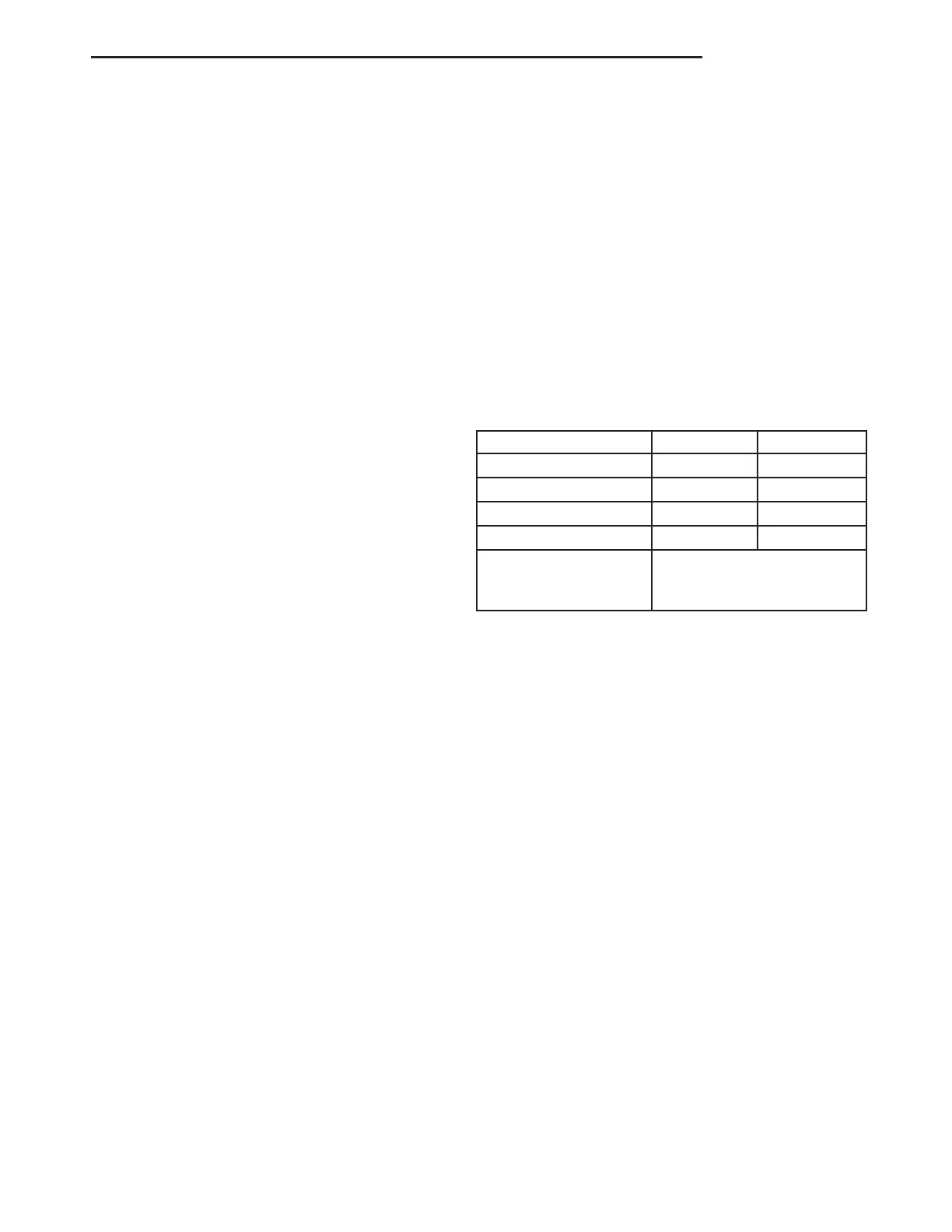
Refrigerant oil must be a dded when a receiver/
dr ier, A/C eva por ator, or A/C conden ser are r eplaced.
See t he Refriger ant Oil Ca pa cities ch art. When an
A/C compr essor is r eplaced, t he refrigerant oil must
be drained from the old compressor and measured.
Drain a ll of the refriger ant oil from the new compres-
sor, t hen fill the n ew compressor with th e same
amount of refr iger ant oil t hat wa s drained ou t of t he
old compressor.
REFRI GERAN T OI L CAPACI T I ES
Component ml fl oz
Total A/C System Fill 410 13.9
Receiver/Drier 30 1.0
A/C Condenser 30 1.0
A/C Evaporator 60 2.0
A/C Compressor
Drain and measure the oil
from the old compressor -
see text.
SU CT I ON LI N E
REMOVAL
WARNING: Refer to the applicable warnings and
cautions for this system before performing the fol-
lowing operation (Refer to 24 - HEATING & AIR
CONDITIONING/PLUMBING - WARNINGS) and (Refer
to 24 - HEATING & AIR CONDITIONING/PLUMBING -
CAUTIONS). Failure to follow the warnings and cau-
tions could result in possible personal injury or
death.
(1) Recover the refrigerant system. (Refer t o 24 -
HEATING & AIR CONDITIONING/PLUMBING -
STANDARD PROCEDURE - REFRIGE RANT SYS-
TEM RE COVERY)
(2) Disconn ect and isolate the negat ive ba tter y
cable.
(3) Remove the rout ing clip r etaining n ut and dis-
enga ge the metal routing clip from th e A/C su ction
line .
(4) Disengage the plastic rout ing clip locat ed near
the A/C expansion valve fr om the A/C su ction line.
(5) Remove the nut that secur es the A/C suction
and liquid lines to the stud on the A/C expansion
valve (F ig. 19).
VA PLUMBING 24 - 81














 To Next Page