iPECS eMG80/100& eMG800 & UCP & vUCP
Administration and Programming Manual Issue 2.5
92
4.3.3 Station Data –PGM 110-125
4.3.3.1 Station Type -PGM 110
Each station is assigned a type used by the system to recognize the station‘s capabilities and default Flex
button configuration. In addition, for the iPECS DSS/BLF Consoles, the associated station number is identified
here. Note that the maximum of three (3) DSS Consoles(LIP DSS & LDP DSS) can be associated and
connected to a station.
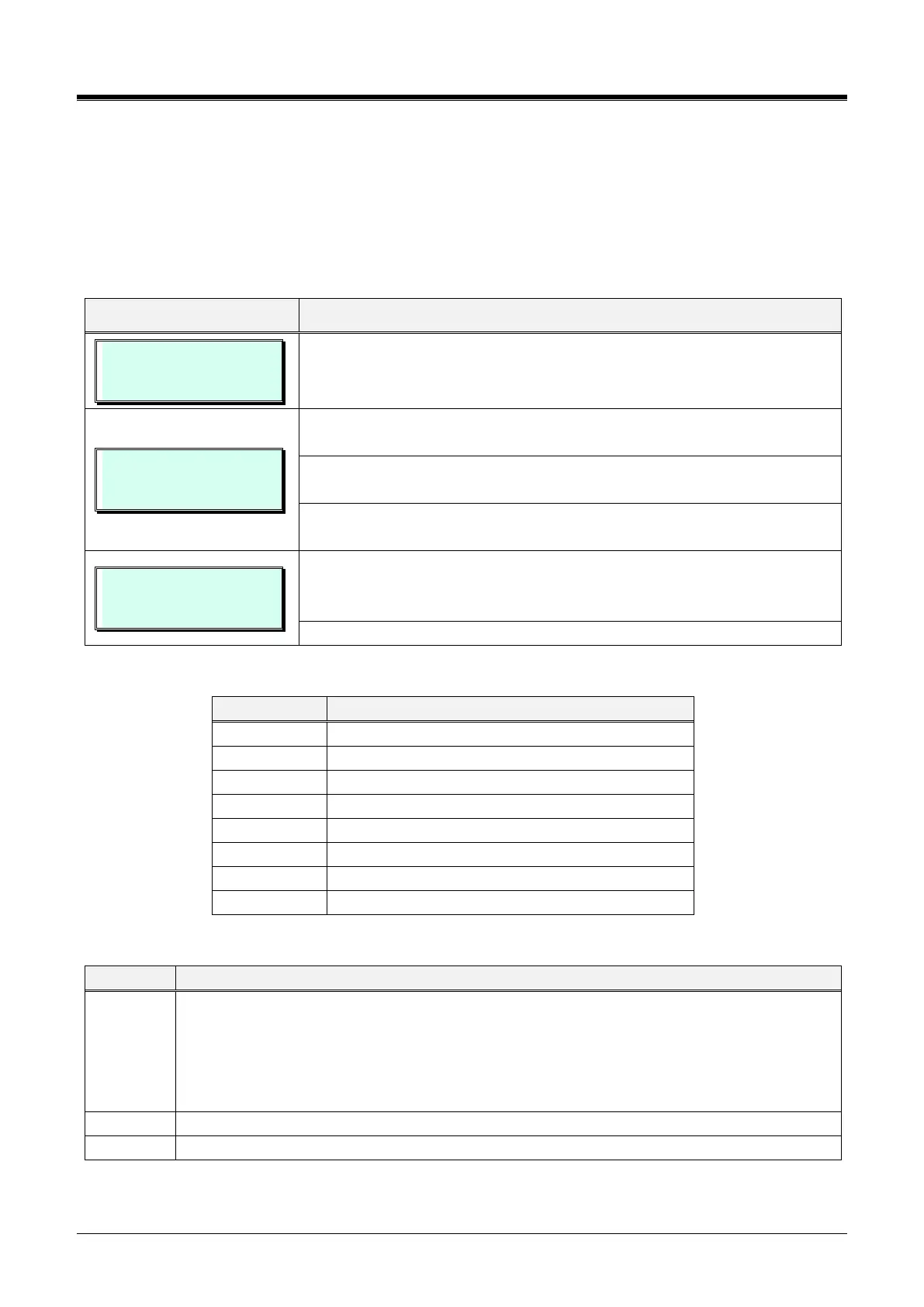
STATION TYPE ASSIGN
ENTER STA RANGE
Press the [PGM] button and dial 110.
100-110 F1:TY F2:ASC
IPKTU
Use the dial-pad to enter a station range (Ex 100~110). For a single station,
enter the same number twice; use this procedure for an iPECS DSS
Select Flex button 1, to set the station type and, for iPECS DSS Consoles
(types 2~4), Flex button 2 assigns the associated station.
Use the dial-pad to enter desired data:
- 4-1. For Flex button 1 (TYPE), enter the station TYPE; refer to 3.3.3.1–1.
111-111 F1:TYPE F2 :ASC
DSS MAP2 : STA . . . .
- 4-2. For Flex button 2 (Associated station), enter the number of the station
used with the console. Flex button 2 is only available for iPECS DSS
Consoles (Types 2~4). See Table 3.3.3.1-2 for default configurations.
Press the [Save] button to store the data entries.
Table 3.3.3.1-2 STATION TYPE ASSIGNMENT — (PGM 110)
SLT (DTMF) – Voltage Message lamp
SLT (DTMF) – FSK Message lamp
SLT (DTMF) – Polarity Reversal Message lamp
Table 3.3.3.1-1 CONSOLE BUTTON CONFIGURATION (PGM 110)
DEFAULT CONSOLE BUTTON CONFIGURATION
Button 4: Station Group 1
Button 6: Internal All Call Page
Button 8: Station Group 2
Button 10: Ext. All Call Page
Button 12: Station Group 3
Buttons 13 ~ 48: Station Ports 100 ~ 135



 To Next Page