iPECS eMG80/100& eMG800 & UCP & vUCP
Administration and Programming Manual Issue 2.5
144
4.3.5.4 DID Service Attributes – PGM 145
PSTN DID lines can be assigned the “Start” signaling and treatment of any received digits.
Digits can be used “as is” to route the call within the system, digits can be converted and used to route the call,
or digits can be converted to a Table index to determine the call routing based on the assigned conversion
method, see Table 3.3.9.7-1 (PGM 231).
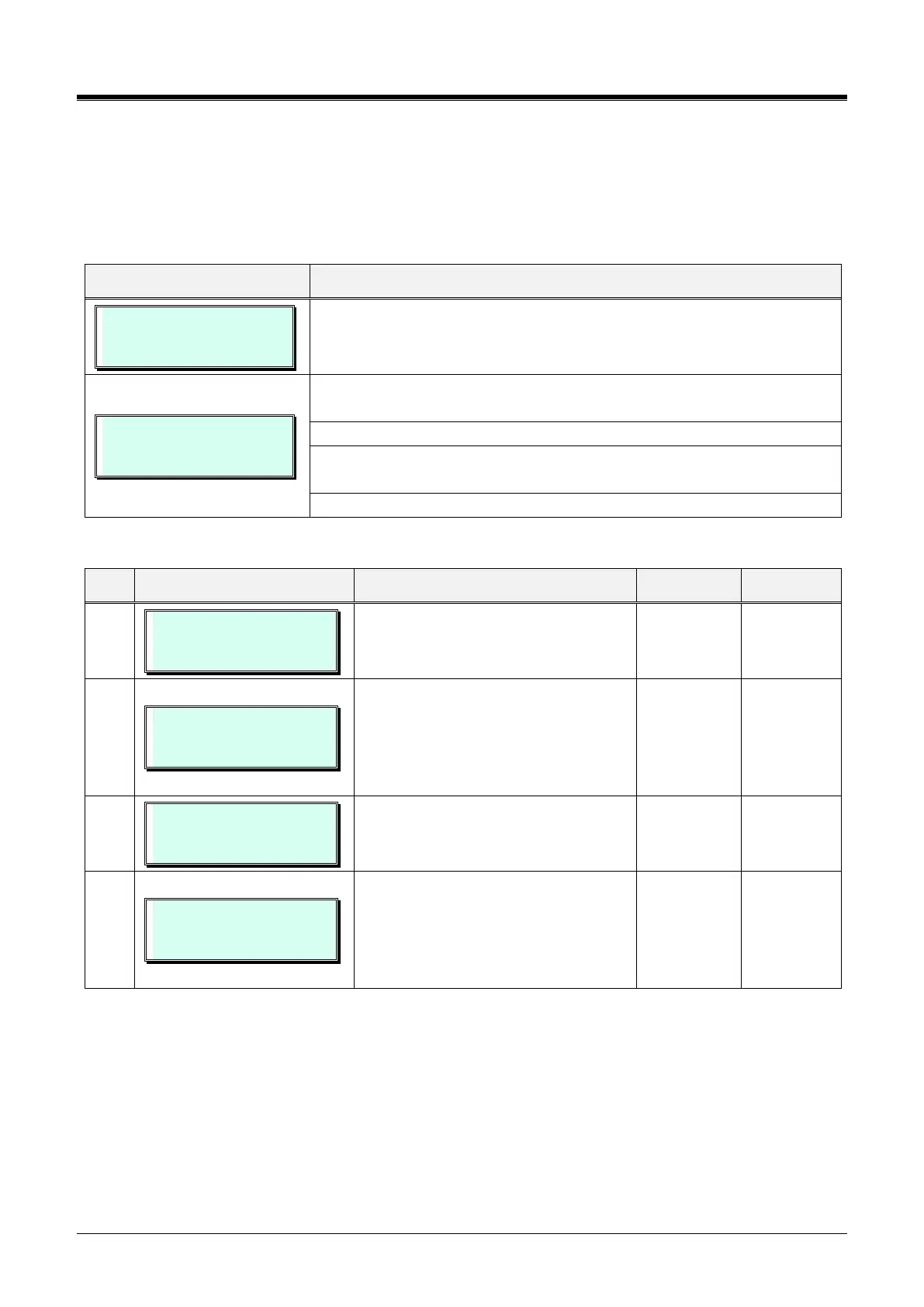
DID ATTRIBUTES
ENTER COL RANGE
Press the [PGM] button and dial 145.
01-02 DID ATTRIBUTE
PRESS FLEX KEY(1–4)
Use the dial-pad to enter the DID Line range. For a single DID Line, enter
the same number twice.
Select the desired Flex button; refer to Table 3.3.5.4-1.
Use the dial-pad to enter the desired value for the selected Attribute. Refer
to Table 3.3.5.4-1.
Press the [Save] button to store the data entry.
Table 3.3.5.4-1 DID LINE ATTRIBUTES (PGM 145)
01-02 SIG. TYPE: 1-3
WINK (2)
Assigns the type of DID that starts
signaling, Immediate, Wink, or Delayed.
1: Immediate
2: Wink
3: Delayed
01-02 DID CONV TYPE
(0 – 2) : 1
The received DID digits can be treated
to determine call routing, simple
conversion (PGM 230), “use as is” (no
treatment), or modify using look-up
Table (PGM 231).
0: Convert
1: Use as is
2: Look-up
01-02 DID DGT RCV NO
3 (2 – 4)
A number of digits are expected from
the PSTN DID circuit.
DID digit modification sequence: “#”
deletes the digit, “*” accepts the digit as
is, a digit (0~9) replaces the digit. The
modification is based on the position of
the digit (1~4) in the received number.



 To Next Page