Identification elements
71
System functions and features as of R4.1
syd-0570/1.2 – R4.1 – 08.2016
4 Identification elements
Correctly identifying and displaying a call is the essential requirement for adequately
implementing the system's networking philosophy. This Chapter looks at how the
origin of a call is identified using different ringing tone patterns and how the caller's
number (CLIP) or name (CNIP) is displayed. It describes how CLIP and CNIP displays
are created under different system conditions, how they can be influenced, and how
to suppress the CLIP display.
A call is identified firstly by the type of acoustic ringing (i.e. ringing pattern) and, sec-
ondly, by the display on the terminal.
The default values are selected in such a way that the ringing patterns and displays
appear correctly in most cases. Changes to the settings are necessary only in excep-
tional cases.
4. 1 Internal and External Ringing Patterns
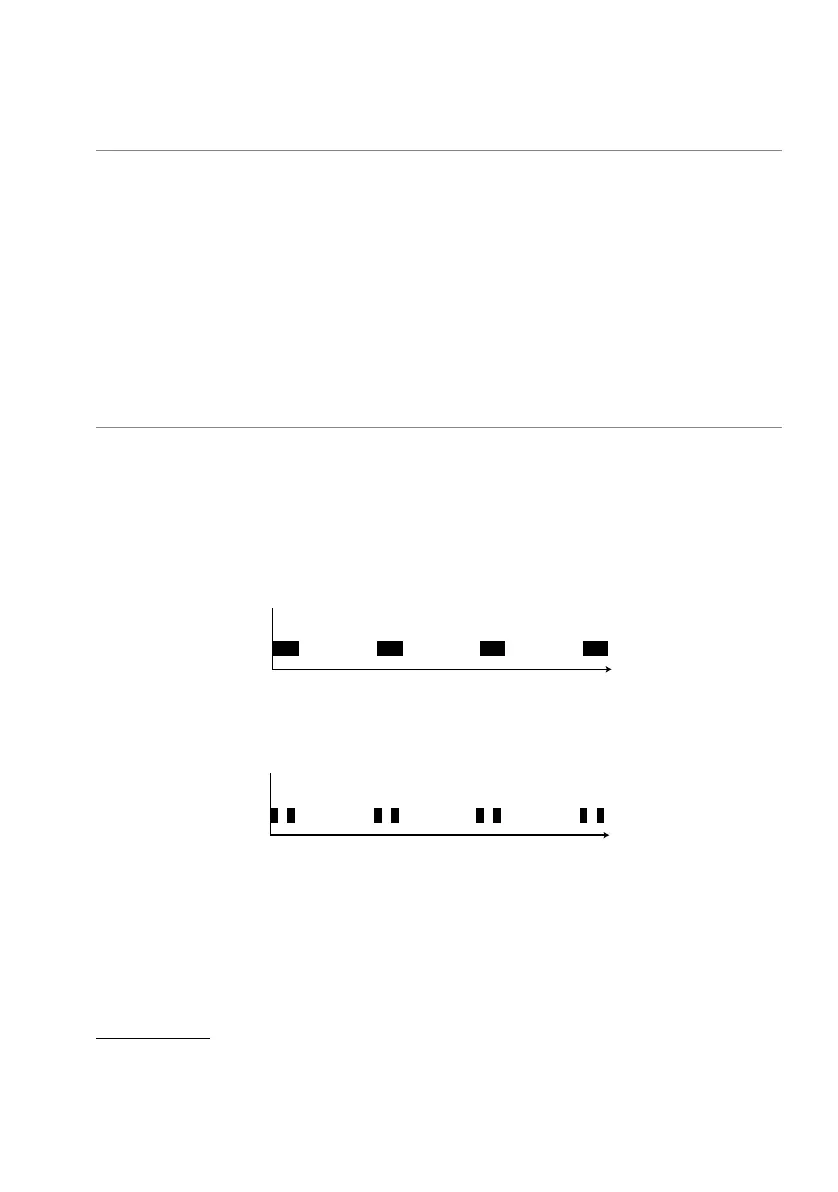
The ringing pattern provides a means of identifying whether the call originates from
within the PBX (internal call) or from the outside (external call). The rhythm of the ring-
ing pattern differs in each case
Fig. 28 Single ringing tone
1)
Fig. 29 Double ringing tone
1)
1) The way in which ringing patterns are assigned to internal and external calls varies from one country
to the next.


 To Next Page