Routing elements
149
System functions and features as of R4.1
syd-0570/1.2 – R4.1 – 08.2016
5. 10 General bell
Calls with the general bell as destination can be signalled visually or acoustically using
an external supplementary equipment. The call can be taken from any terminal (see
"Answer general bell", page 442).
5. 11 Key Telephones
Key telephones have several line keys and an personal key. For incoming traffic each
line key of a key telephone is a routing destination addressed using the relevant call
distribution element. This means for example that calls with a different DDI number can
be offered on any line key.
For outgoing traffic each line key is linked with a separate routing. This means for ex-
ample that a specific exchange line can be used for dialling by operating a line key.
With the personal key a key telephone can be operated like an ordinary featurephone.
5. 11. 1 Using Terminals as Key Telephones
The following system phones can be configured as key telephones:
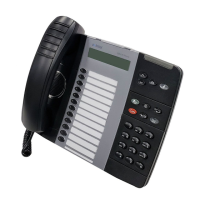
•Office35
• Office 45/45pro
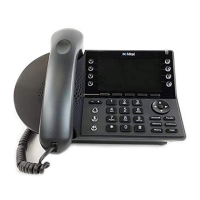
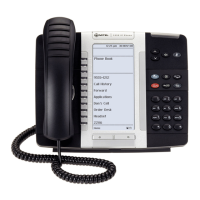
• MiVoice 5370 / 5370 IP
• MiVoice 5380 / 5380 IP
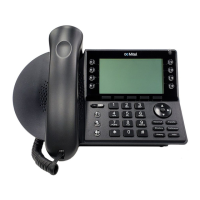
• Mitel 6700 SIP / 6800 SIP series SIP phones
A system phone automatically becomes a key telephone as soon as a KT line is placed
on one of the phone's line keys.
Key Functions
After a featurephone is converted to a key telephone, it gets one or more line keys and
a personal key. The other keys remain freely configurable in the same way as on a fea-
turephone.
The locations of the line keys and personal key can be configured independently of
each other. It can be this, a configurable keypad on the phone or an expansion keypad.
The personal key allows the key telephone to be addressed and used in the same way
as an ordinary internal user, in accordance with the settings in the user configuration.
The maximum number of line keys possible depends on the type of system phone.
The key telephone can be set in such a way that an incoming or outgoing call on a line
key is either automatically allocated a KT line or automatically answered, as the case


 To Next Page