Applications
Issue 8.0 July 2002
2-3
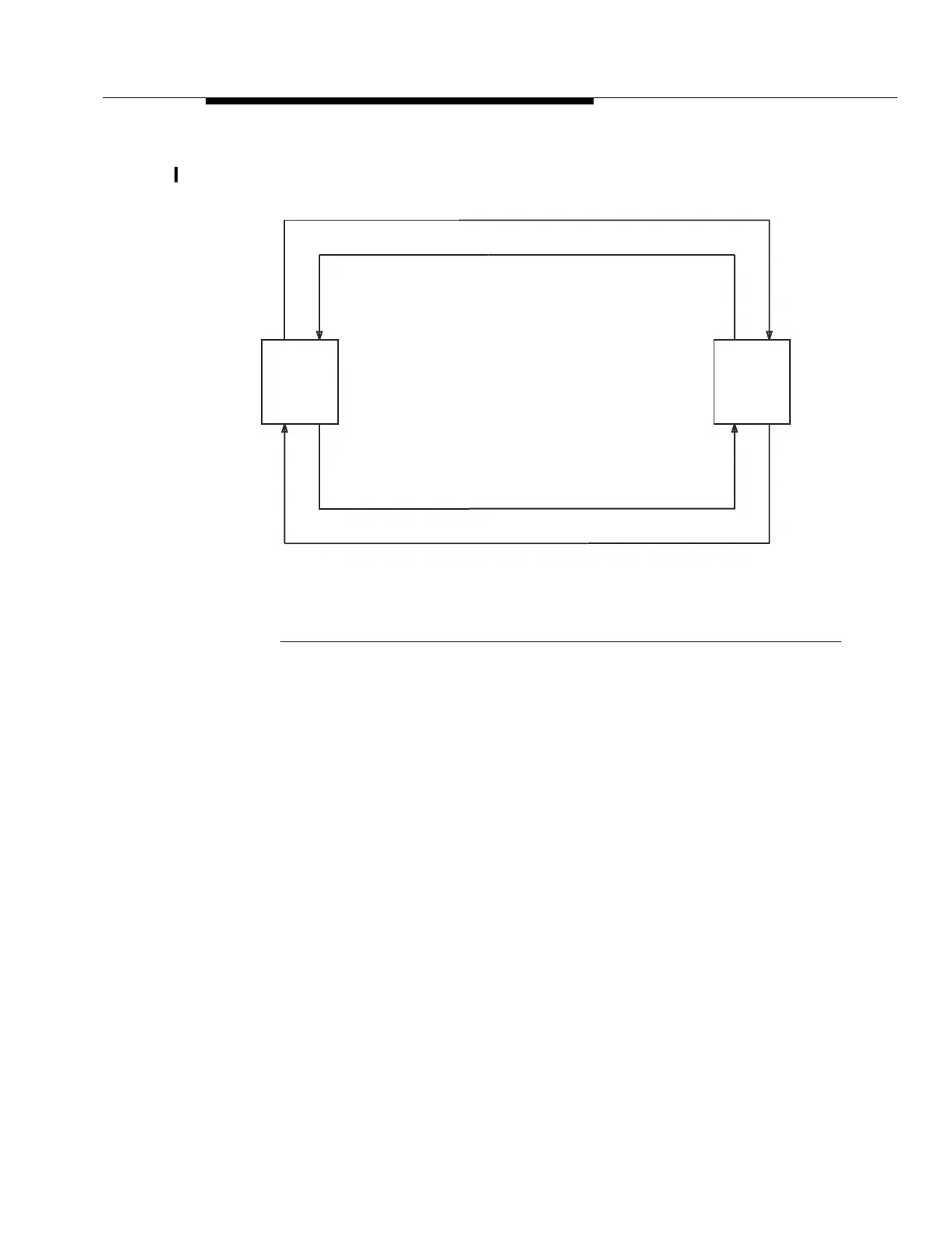
Figure 2-1 shows an example of a two-fiber bidirectional line-switched ring with
two nodes.
Figure 2-1. Two-Fiber Bidirectional Ring Application
The FT-2000 OC-48 Add/Drop-Rings Terminals and FT-2000 OC-48 Dual
Lightwave Terminating Bay may be equipped with Release 3.0.1-ADR or later
software. In a two-fiber bidirectional ring, all FT-2000 OC-48 Add/Drop-Rings
Terminals must be equipped with the same release of software.
The FT-2000 OC-48 Repeater Bay equipped with Release 4.1.0-RPTR or
6.0.0-RPTR software is also available to increase the distance between two
FT-2000 OC-48 Add/Drop-Rings Terminals or FT-2000 Dual Lightwave
Terminating Bays.
Each node in a two-fiber bidirectional ring interfaces with two OC-48 high-speed
lines (1W and 1E). Each OC-48 high-speed line consists of sixteen 155 Mb/s
(STS-3) tributaries. The STS-3 tributaries 1 through 8 are service tributaries and
STS-3 tributaries 9 through 16 are protection tributaries. In Figure 2-1, the
Eastbound service STS-3 tributaries are identified as
Service 1
, and the
Westbound service tributaries are identified as
Service 2
. The Eastbound
protection STS-3 tributaries are identified as
Protection 2
, and the Westbound
protection STS-3 tributaries are identified as
Protection 1
.
Under normal conditions, traffic travels over the service STS-3 tributaries of the
OC-48 high-speed lines in a ring. When a fiber cut occurs, traffic is switched from
FT-2000* FT-2000*
* FT-2000 OC-48 Add/Drop-Rings Terminal
Service 1/Protection 2
Tribs 9-16/Tribs 1-8
Service 2/Protection 1
Tribs 1-8/Tribs 9-16
1W
1E
1E
1W
Node A Node B
1W
1E
1W
1E


 To Next Page