3.7. What are executors
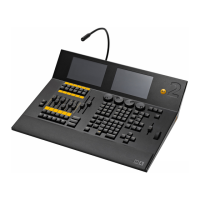
Executors are the faders and keys below the screens (except the right screen).
They come in two versions. One with two keys and a fader and the other is just one key.
The keys have a printed symbol on them. It's and for the ones with two keys there's also a . You can
change the function of these keys using the Change Functions of Executor window or in the Settings of Executor
menu.
You can have many pages with executors. As a default, if you have an active executor and change page then
your executor will automatically be fixed and will stay visible. Anything that might be on that executor on the new
page will not be available before the other executor (from the previous page) isn't active anymore. When it
becomes inactive then it is automatically returned to the original page. This is called Autofix and can be globally
disabled in Setup -> Global Settings.
You can also choose to fix the executors using the Fix commands and Key.
Active executors have a brighter colored frame then non active faders. You can make an executor non-active by
pressing the Off key and then a key associated with the executor. Many executors will become non-active when
the fader reach 0%, but not the Special Masters (read below for more on this).
The executors can have different roles. The following is a description of them.
Cues
You can have cues and cue lists. When you store cues on an executor, then you get a cue list with one or more
cues.
Now you can play back these cues using the executor keys and faders.
This is the default use for Executors.
Chaser
A cue list can run in Chaser mode. Then it ignores the timing in the cue list and instead runs the cues in a loop
with an overall timing. This can be changed in the Settings of Executor menu.
Group Masters
You can store groups to executors and then you get groups masters. These can be used to limit the dimmer
output on the fixtures in the group. It doesn't affect other attributes (e.g. Pan/Tilt, Color, Gobo, etc.) than dimmer.


 To Next Page