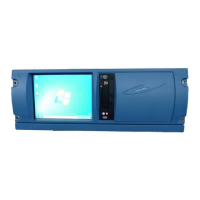
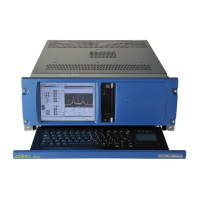
HIGH DATA RATE RECEIVER
HDR-4G+ USER’S MANUAL
Ref. DTU 100782
Is.Rev 3.5
Date: June 1, 2021
© Safran Data Systems – IMP000074 e14r1
This document is the property of Safran Data Systems.
It cannot be duplicated or distributed without expressed written consent.
Viterbi Convolutional Decoding 1.6.1.6
(notes 1)
Viterbi ½ 1.6.1.6.1
Convolutional decoding and error-correction comply to CCSDS recommendations 101.0-B-3 (Blue
Book, 05/1992).
Code rate 0.5 information bit per encoded bit
Constraint length 7 bits
Code generators G1 = 1111001; G2 = 1011011
Phase relationship Programmable association of G1 or G2 with first symbol:
Programmable inversion on output path of G2:
G1 - G2 Inverted (CCSDS) (G1 is associated with first symbol)
G1 - G2
G2 Inverted - G1 (G2 is associated with first symbol)
G2 – G1
Decoding mode Single decoder or separate decoders on I & Q (dual mode)
Puncturing
2
/
3
3
/
4
4
/
5
5
/
6
6
/
7
7
/
8
or programmable in the registry.
Parallel processing 1 to 16 parallel rate ½ Viterbi decoders on each I & Q with symbol
sequence compliant with NASA Space Network User’s Guide (450-
SNUG)
Maximum (encoded) bit rate In single Viterbi mode: up to 240 Mbps or 1160 Mbps with the high
rate menus
In dual Viterbi mode: up to 480 Mbps or 1160 Mbps with the high
rate menus (for Viterbi ½. else puncturing rate dependent).
In parallel processing mode (> 4xI / 4xQ): > 600 Mbps
Decoder status Locked/unlocked. Symbol error rate (obtained by comparing the
input data to the re-encoded decoded data).
Viterbi ¼ 1.6.1.6.2
Application example: ERS-2 low bit rate satellite.
Code rate 0.25 information bit per encoded bit
Constraint length 4 bits
Code generators G1 = 1000; G2 = 1100; G3 = 1010; G4 = 1001
Maximum (encoded) bit rate 240 Mbps


 To Next Page