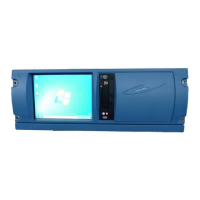
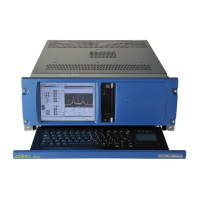
HIGH DATA RATE RECEIVER
HDR-4G+ USER’S MANUAL
Ref. DTU 100782
Is.Rev 3.5
Date: June 1, 2021
© Safran Data Systems – IMP000074 e14r1
This document is the property of Safran Data Systems.
It cannot be duplicated or distributed without expressed written consent.
Viterbi Convolutional Decoding 3.3.3
General 3.3.3.1
Convolutional coding technique is well suited for telemetry channels with predominant Gaussian noise.
Convolutional decoding and error-correction by the CORTEX HDR complies to the CCSDS
recommendation 101.0-B-3 (Blue Book - May 1992) and to the NASA Space Network User’s Guide
(450-SNUG, June 2002):
Viterbi decoding of the data received from the bit synchronizer.
Viterbi de-puncturing if required.
Operating mode: single or dual Viterbi mode.
Processing mode: single decoder or parallel decoders (up to 16 decoders on each I & Q).
BER estimate by re-encoding the Viterbi decoded data and comparing the re-encoded data to
the data fed to the Viterbi decoder. Note: if the Viterbi decoder(s) fails to lock (BER too high),
check the Viterbi characteristics (Normal or inverted G2, single or dual Viterbi, G1G2 or
G2G1 sequencing) and verify the setting of the I & Q output mode parameter (Demodulator
output to the Viterbi decoder(s) input).
Test & Monitoring: a number of status enable to monitor the Viterbi decoding process: decoder lock
status, BER (in %), etc…


 To Next Page