10-9
General periodic maintenance
Checking the battery
Battery electrolyte is dangerous; it contains
sulfuric acid, which is poisonous and highly
caustic. Always follow these preventive
measures:
• Avoid bodily contact with electrolyte as it
can cause severe burns or permanent eye
injury.
• Wear protective eye gear when handling
or working near batteries.
Antidote (EXTERNAL):
• SKIN - Wash with water.
• EYES - Flush with water for 15 minutes
and get immediate medical attention.
Antidote (INTERNAL):
• Drink large quantities of water or milk fol-
lowed with milk of magnesia, beaten egg,
or vegetable oil. Get immediate medical
attention.
Batteries generate explosive, hydrogen
gas. Always follow these preventive mea-
sures:
• Charge batteries in a well-ventilated area.
• Keep batteries away from fire, sparks, or
open flames (for example, welding equip-
ment and lighted cigarettes).
• DO NOT SMOKE when charging or han-
dling batteries.
KEEP BATTERIES AND ELECTROLYTE
OUT OF REACH OF CHILDREN.
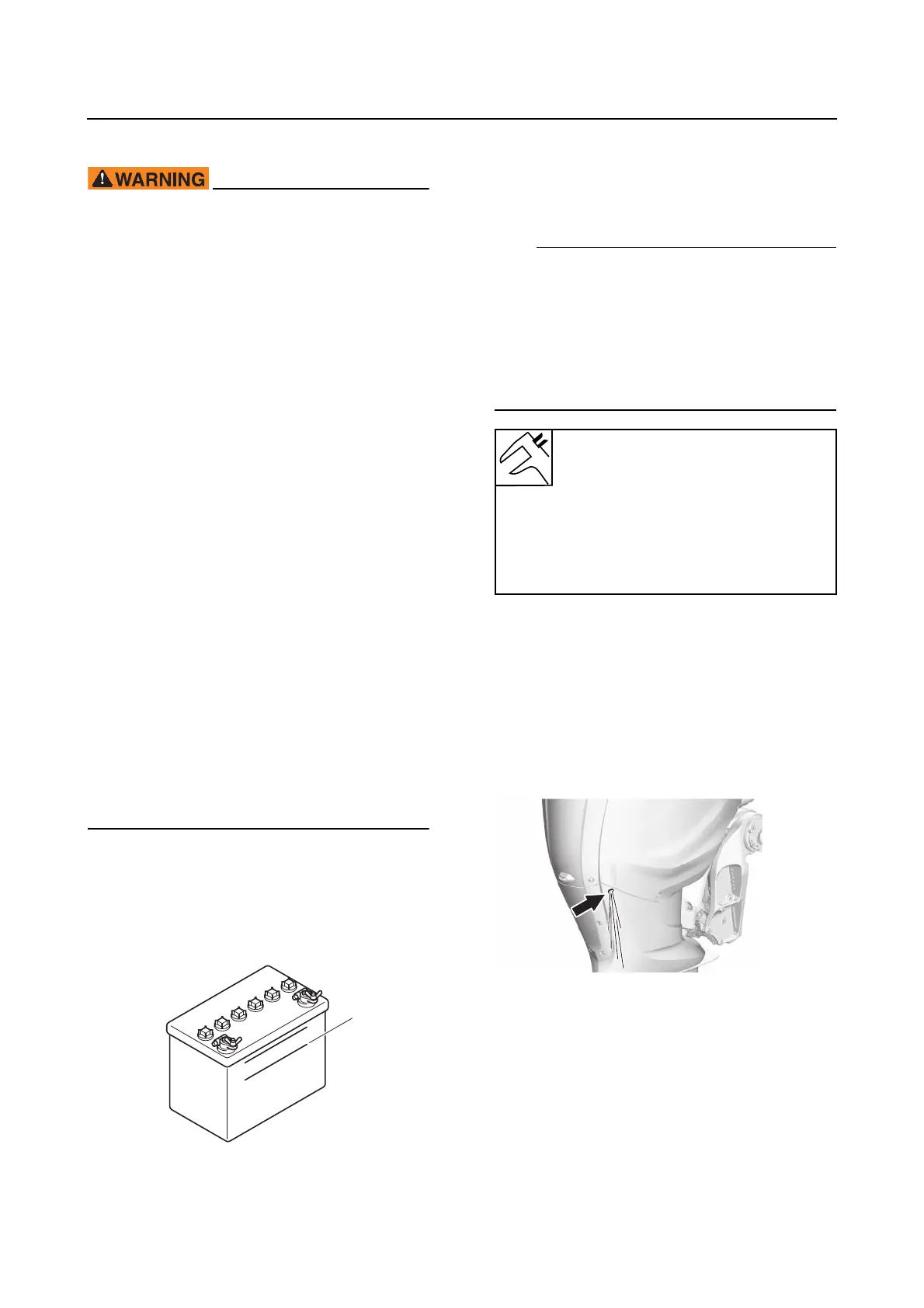
1. Check:
• Battery electrolyte level
Below the minimum level mark “a” → Add
distilled water until the level is between the
maximum and minimum level marks.
2. Check:
• Specific gravity of the electrolyte
Below specification → Fully charge the
battery.
• Batteries vary depending on the manufac-
turer. The procedures mentioned in this
manual may not always apply. Therefore,
see the instruction manual of the battery.
• Disconnect the negative battery cable first,
and then disconnect the positive battery ca-
ble.
Checking the cooling water pilot hole
1. Place the lower unit in water, and then
start the engine.
2. Check:
• Cooling water is discharged from the
cooling water pilot hole.
Not discharged → Check the cooling pas-
sages for clog.
Checking the engine idle speed
1. Check:
• Engine idling speed
Out of specification → Perform the trou-
bleshooting procedures. See “Trouble-
shooting procedure” (4-4).
a. Check the engine idle speed using the
YDIS. See the YDIS (Ver. 2.49 or later)
instruction manual.
Recommended battery capacity
Battery rating
700 A (CCA/SAE)
900 A (MCA/ABYC)
170 minutes (RC/SAE)
670 A (CCA/EN)
110 Ah (20 HR/IEC)



 To Next Page