A
B
C
D
E
F
G
H
L
M
N
P
section
P 2
391098/1098S - M.Y. 2007 - edition 00
Electric system
2 - Battery charging system
Checking the battery charging system
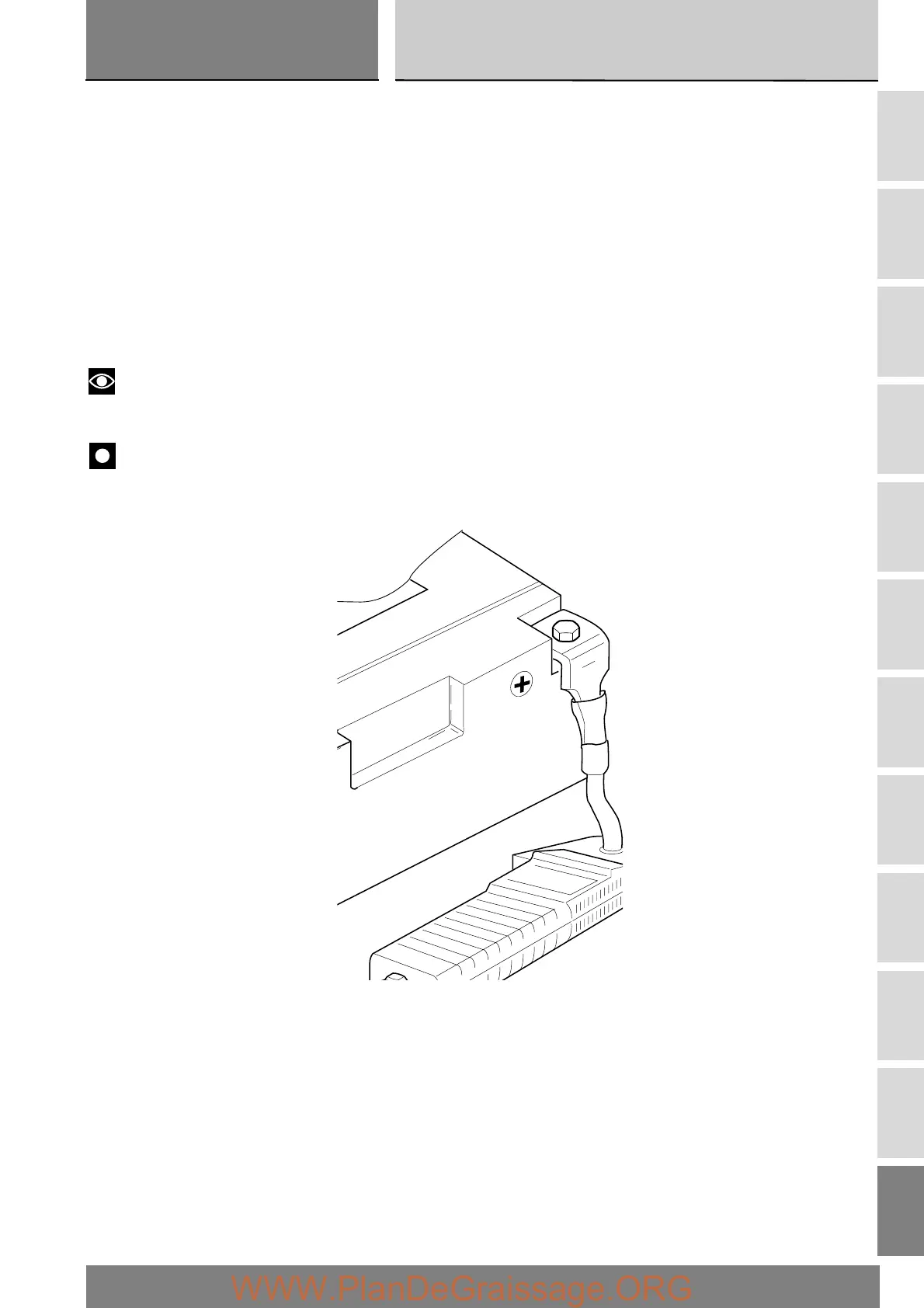
To check the current flow in the charging circuit, use the “DDS” tester, which is equipped with an inductive clamp-type ammeter.
see the chapter “Testing the battery charging system” Sect. D 5.
With the “DDS” tester you can determine the engine rpm required for the alternator to produce sufficient current to charge the
battery, power the injection/ignition system and all the electrical equipment on the motorcycle. When applied to a cable, the
ammeter clamp detects the magnetic field generated by the current passing through that cable.
The tester performs an automatic calibration routine using its own transducer. If the measured current is a positive quantity, this
means that alternator is powering all the electrical loads and charging battery at the same time. A negative value means that
charging system is not powering the loads and a significant amount of current must be supplied by the battery, which is
discharging at the time of the measurement.
Alternatively, a multimeter can be used (Sect. P 9, Diagnostic instruments): connect the multimeter probes to the battery
terminals, select the DC scale on the instrument and check for the presence of 14.5 V±0.5 at an engine speed of 3000 rpm.
Notes
As well as this type of check, it is also possible to check the operation of the charging system directly from the instrument panel
(Sect. P 7).
Important
If polarity is reversed when clamping the ammeter onto the cable, the sign of the readings will also be reversed, giving rise to
incorrect diagnosis.
1











 To Next Page