2-31
Electrical system
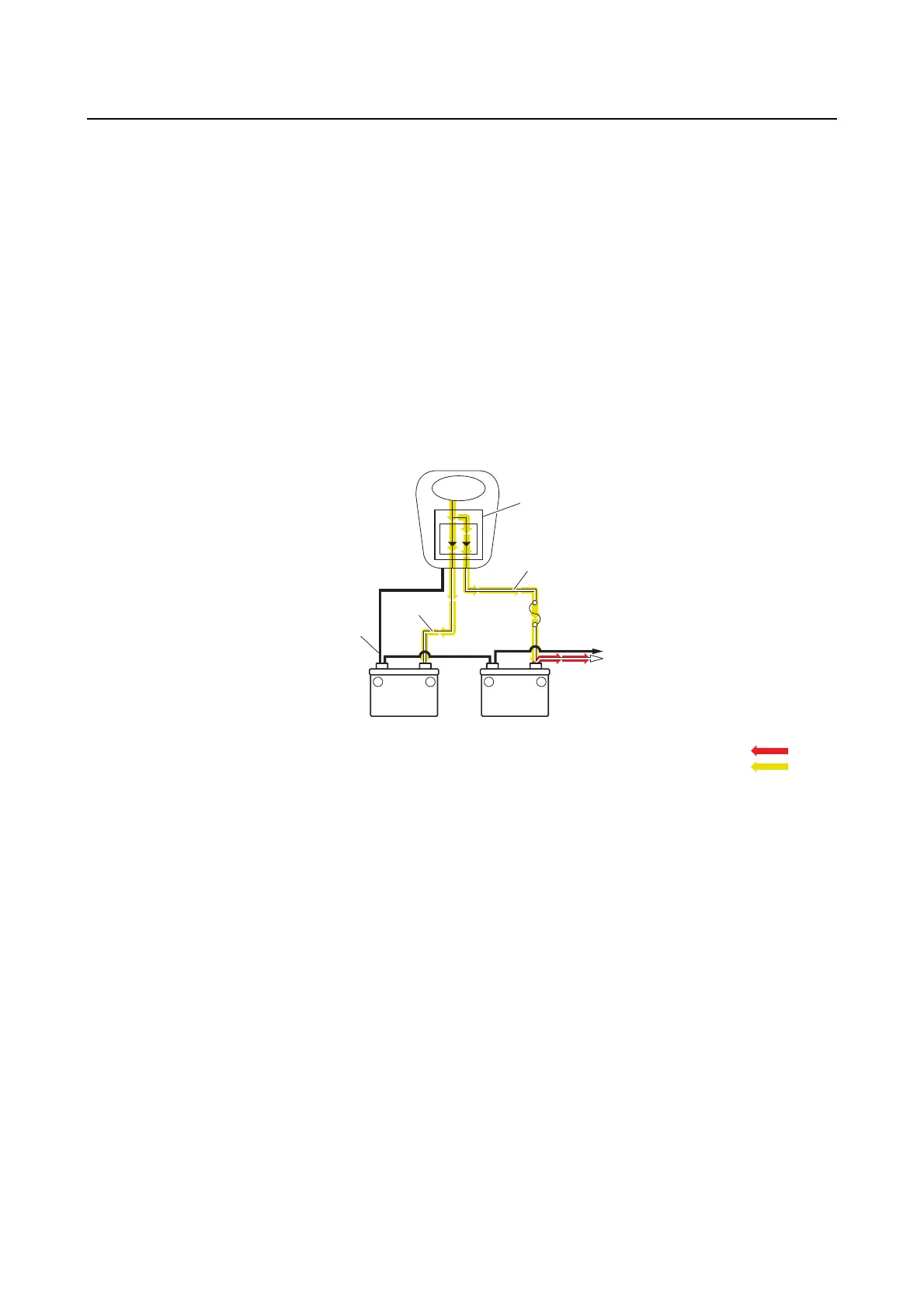
Simultaneous charging
Traditionally outboard engines use a dedicated isolator lead to ensure that the start and house batter-
ies are separated unless manually paralleled by the captain in an emergency. This allowed simultane-
ous charging of both the start and house batteries.
As boat-side electrical demand grew, boat side systems such as voltage sensing relays (VSR’s) and
diode-based isolator systems appeared.
The 450-horsepower models incorporate these modern systems while offering a significant increase
in charging performance.
During periods of high consumption of the house battery, the 450-horsepower models new rectifier/
regulator can supplement its isolator output by sourcing current from the starting battery.
If the starting battery voltage drops below 13.0 V, the system will turn off the isolator output and apply
full charging current to the starting battery. Once the starting battery voltage reaches 14.0 V the iso-
lator output will be switched back on.
Isolator system (conventional)
-
+
-
+
A
B
2. Rectifier/regulator
1. GEN
6. House battery
for accessory
5. Main battery
for cranking
14.5 V 14.5 V
4. Red
3. Black
4. Red
1. GEN
2. Rectifier/regulator
3. Black
4. Red
5. Main battery for cranking
6. House battery for accessory
A. Discharging current
B. Charging current












 To Next Page