Page 3 2
nd
Edition – Rev 0
34-20
POSITION DETERMINING – DESCRIPTION AND OPERATION
Alternative navigation receiver
The secondary navigation receiver is the Garmin Apollo SL30 which includes a 760-channel VHF
COMM transceiver and 200-channel VOR/LOC/GS navigation (see also Chapter 23).
The NAV radio features are the following:
200 channel Nav with solid state DSP technology
VOR/Localizer and Glideslope receivers
Built-in VOR/Localizer converter
Frequency range: VOR 108.00 – 117.95 MHz
Localizer 108.00 – 111.95 MHz
Glideslope 328.60 – 335.40 MHz
Digitally decoded OBS setting
Manual selection of back course approach
Automatic display of station ID by decoding Morse code
Interfaces to most CDI (w/resolver), HSI, and autopilot systems
VOR receiver displays To or From radial of the active channel
VOR monitor displays From radial of the standby channel
Back course annunciator output
LOC enable annunciator output
Internal RF diplexor
Active and standby flip/flop frequencies
DME tuning and data display
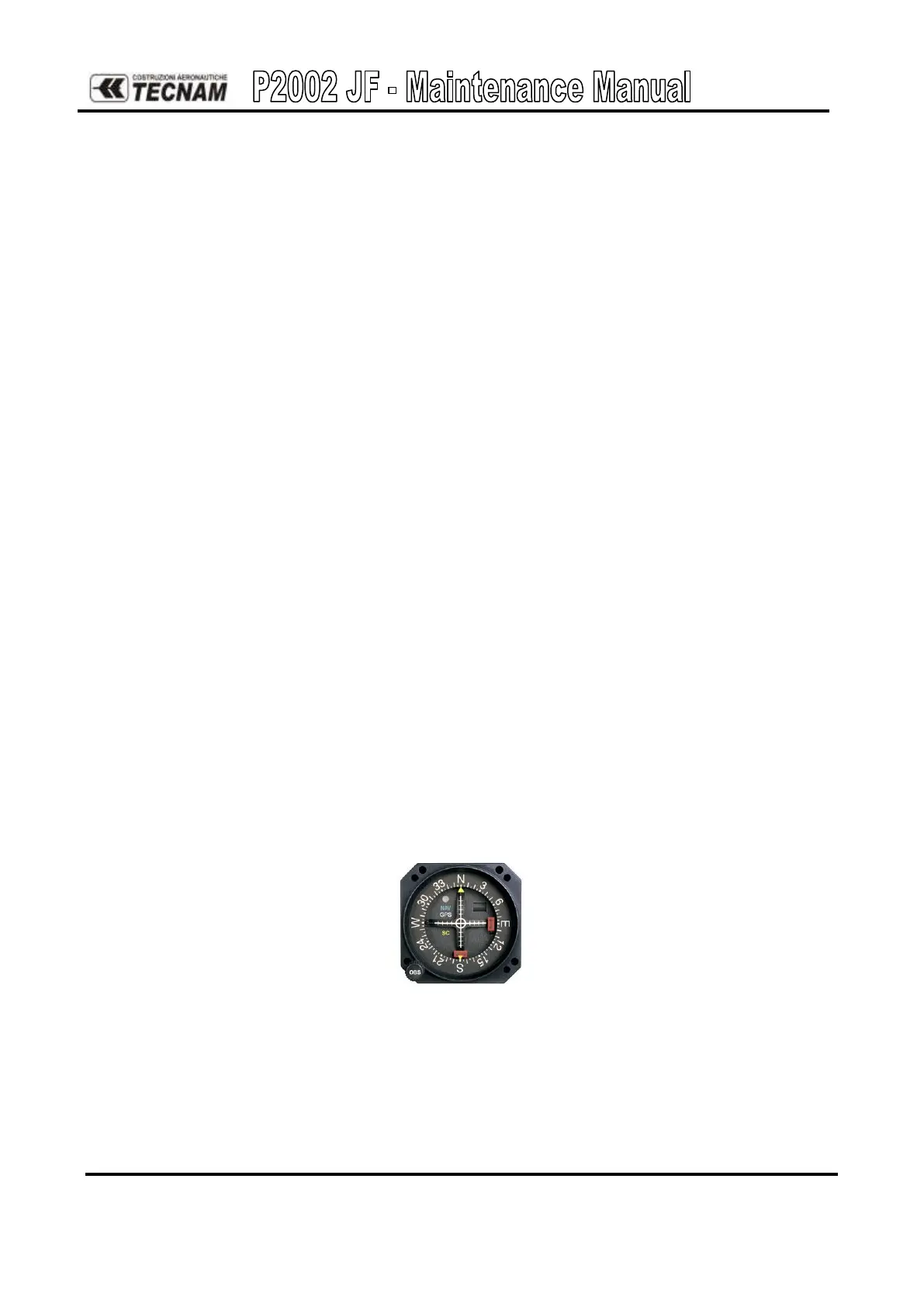
The secondary navigation receiver is coupled to the MD200-306 VOR/LOC/GS/GPS indicator: see
figure below.
Figure 2: MD200-306 Indicator
MD200 displays rectilinear needle
movements and contains integral
GPS, NAV and BC mode
annunciators. It adds a glideslope
needle and flag including a
VOR/LOC/GPS needle, TO/FROM indicator and NAV warning flag.
MD200 also contains an integral resolver for OBS feedback.



 To Next Page