Page 2 2
nd
Edition – Rev 0
51-20
DAMAGE CLASSIFICATION AND REPAIRS - GENERAL
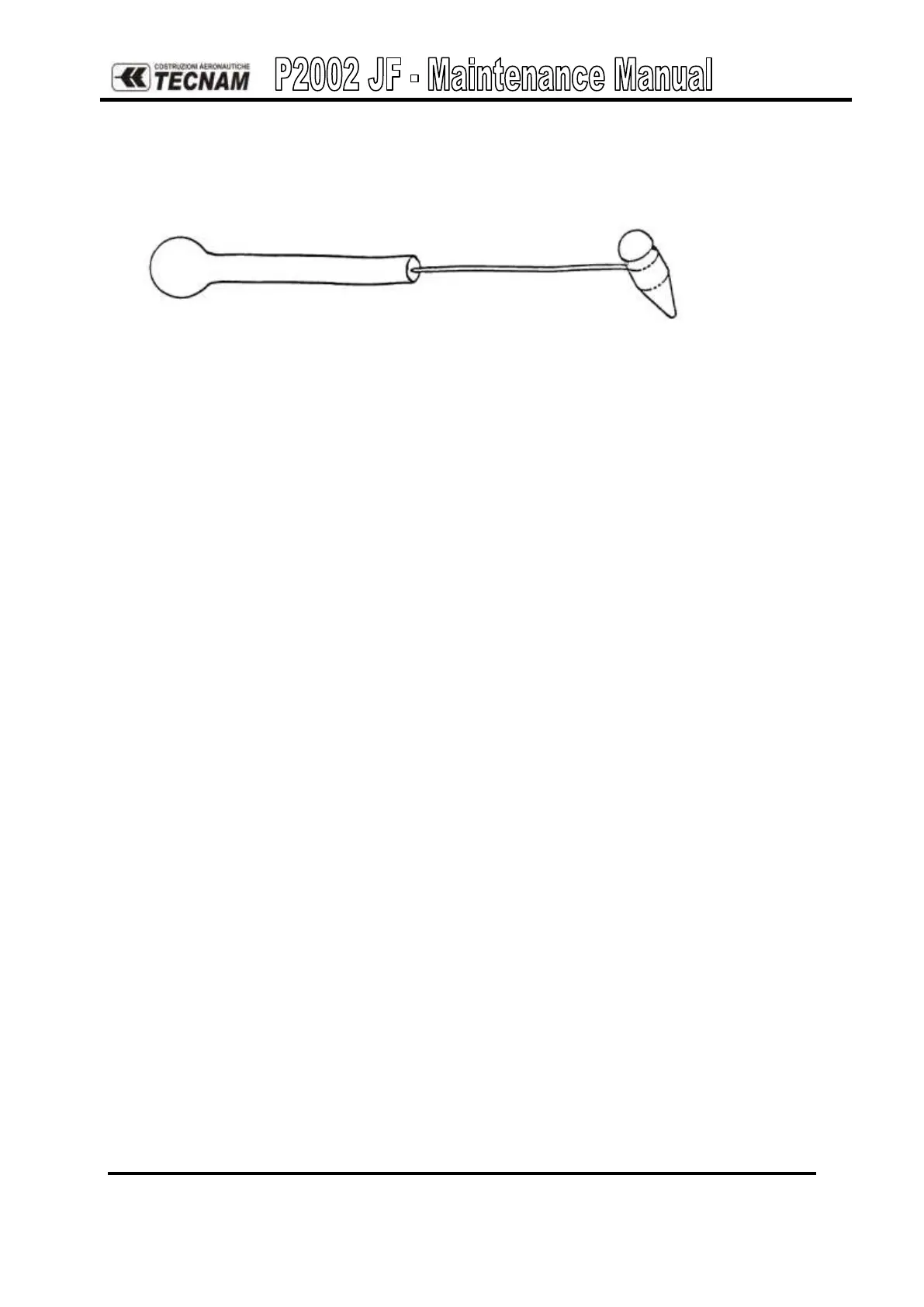
For composite materials, tap testing is widely used for a quick evaluation of any accessible
aircraft surface to detect the presence of delamination: procedure consists of lightly tapping
the surface of the part with a coin, light special hammer with a maximum of 2 ounces (see
figure below), or any other suitable object.
The acoustic response is compared with that of a known good area.
A “flat” or “dead” response is considered unacceptable. The entire area of interest must be
tapped. The surface should be dry and free of oil, grease, and dirt. Tap testing is limited to
finding relatively shallow defects in skins with a thickness less than 0.80 inch.
The accuracy of this test depends on the inspector’s subjective interpretation of the test
response; therefore, only qualified personnel should perform this test.
Examine castings and machined parts for cracks, if necessary use a non
destructive test method.
Check rivets for security: cracked or flaking paint is usually a sign of rivet
disturbance.
Care must be applied to the secondary damages, likely to occur when a
shock is sustained or when weakening of the structure allows for fatigue:
in the first case a detailed examination of the structure surrounding the
primary damage must be made to find any secondary damage which could
be located away from the primary damage. A sign of this could be a
structural deformation, drawn rivet and deformed bolt holes.
Document all discrepancies by written report The full value of visual
inspection can be realized only if records are kept of the discrepancies
found on parts inspected. The size and shape of the discontinuity and its
location on the part should be recorded along with other pertinent
information, such as rework performed or disposition.


 To Next Page