214733 357 Revision A
5.14.4 Checking Engine Coolant Strength
Check the anti-freeze in the pressurized coolant tank with a tester every year, preferably before off-season storage. Anti-
freeze is essential in any climate. It broadens the operating temperature range by lowering the coolant freezing point and
by raising its boiling point. Anti-freeze also contains rust inhibitors and other additives to prolong engine life.
CAUTION
To avoid personal injury from hot coolant, do NOT turn pressurized coolant tank cap until engine cools.
WARNING
To avoid bodily injury or death from unexpected startup of the machine, always stop the engine and remove the key
from the ignition before leaving the operator’s seat for any reason.
1. Stop the engine and remove the key.
2. Open the hood. Refer to 5.3.1 Opening Hood, page 256.
IMPORTANT:
If anti-freeze strength is not adequate, do NOT drain cooling system to protect against freezing. System may not drain
completely, and damage from freezing could still result.
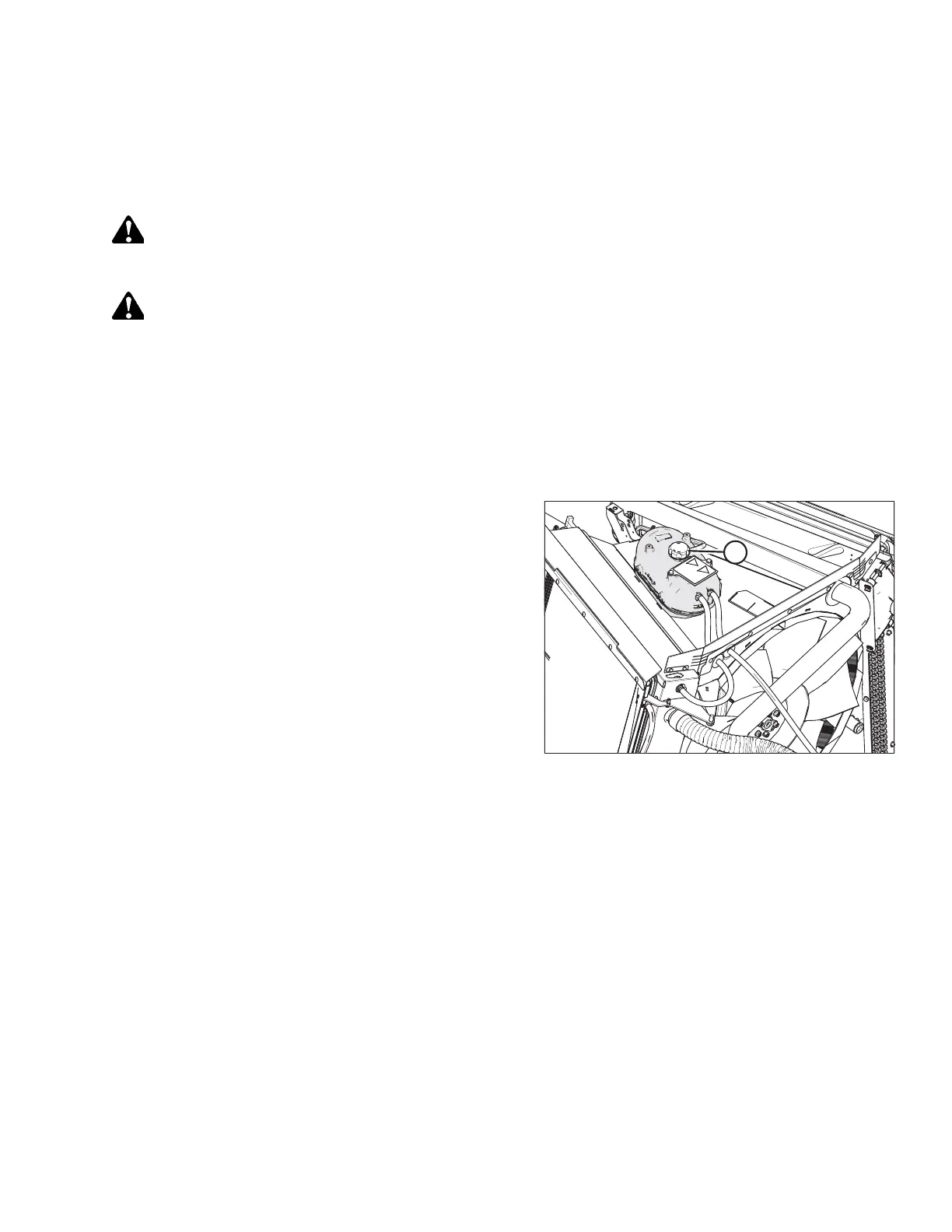
Figure 5.157: Coolant Tank
3. Remove the pressurized coolant tank cap (A).
IMPORTANT:
Turn the cap (A) counterclockwise to the first notch to
relieve pressure before removing cap completely.
4. Check the coolant in the pressurized coolant tank using an
antifreeze tester. Tester should indicate protection to
temperatures of -34°C (-30°F).
5. Inspect the pressurized coolant tank cap as follows before
reinstalling:
a. Check the gasket for cracks or deterioration, and
replace the cap if necessary.
b. Check that the spring in the cap moves freely. Replace
the cap if spring is stuck.
6. Install pressurized coolant tank cap (A).
7. Close the hood. Refer to 5.3.2 Closing Hood, page 257.
MAINTENANCE AND SERVICING



 To Next Page