MAINTENANCE AND S ERVICING
The exhaust system requires no regular m aintenance, but
it should be inspected periodically as follows:
1. Open the hood to its highest position. For instructions,
refer to 5.2.3 Opening Hood (Highest Position), page
307.
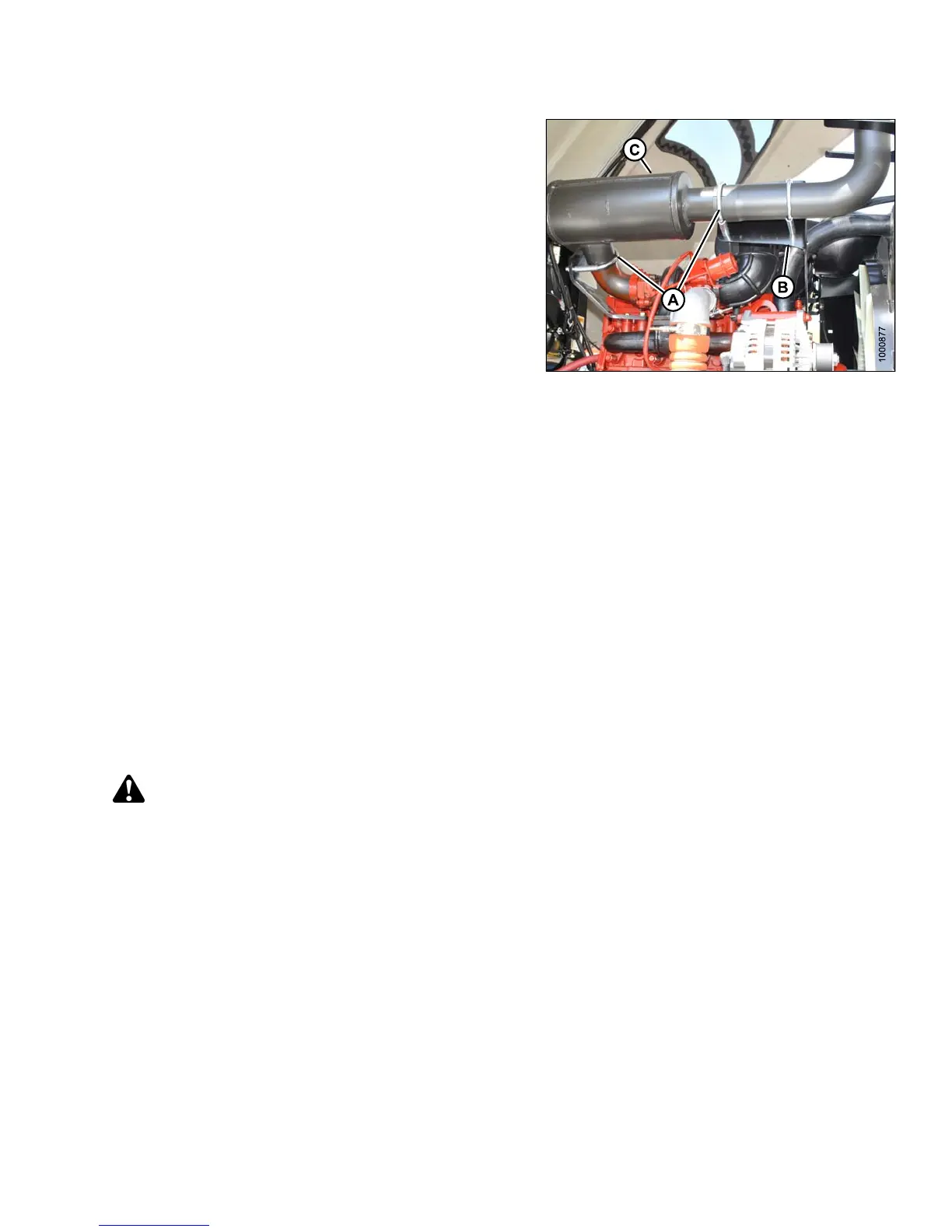
2. Inspect the area around clamps (A) for breakage,
cracks, and rust-through. In addition to excess noise,
a leaky exhaust system may allow exhaust gases to
escape to the cab.
3. Check tubing for dents or crushed areas. Dents or
crushed portions of any tubing create e xhaust flow
restriction and increase back pressure significantly.
Even relatively small dents will cause decreased fuel
economy and increased turbo wear. If dents are
relatively large, increased bearing and cylinder wear
will occur due to increased exhaust temperature.
4. Make sure the exhaust system is secured to eliminate
vibration. The brackets (B) should fit securely to the
muffler (C) and to th e engine.
IMPORTAN T:
Do NOT change muffler typ e, p iping sizes, or
exhaust configuration. See your Dealer for proper
replacement parts.
Figure 5.111: Exhaust System
Belts
Tensioning Alt
ernator/Fan Belt
The alternator, water pump, and fan belt are automatically tightened. Manual adjustment is NOT required.
Replacing Fan Belt
DANGER
To avoid bodily injury or death from unexpected startup of the machine, always stop the engine and remove
the key from the ignition before leaving the operator ’s seat for any reason.
1. Shut down the engine and remove the key.
2. Open the left cab-forward platform, refer to 5.3.1 Opening Platforms (Standard Position), page 309.
3. Open the hood, refer to 5.2.1 Opening Hood (Lower Position), page 306.
147649 365 Revision A


 To Next Page